Tesla's Cybercab Robotaxi Network Hits Immediate Software Glitch After Limited Public Launch
Tesla's highly anticipated Cybercab, unveiled as the cornerstone of Elon Musk's ambitious robotaxi network, has commenced limited public operations, though its initial rollout has been marred by a software glitch that temporarily halted service in a designated test zone.
✨ This content was summarized and interpreted by AI; it may contain errors — please verify accuracy with the original sources. Learn more
Listen to this story
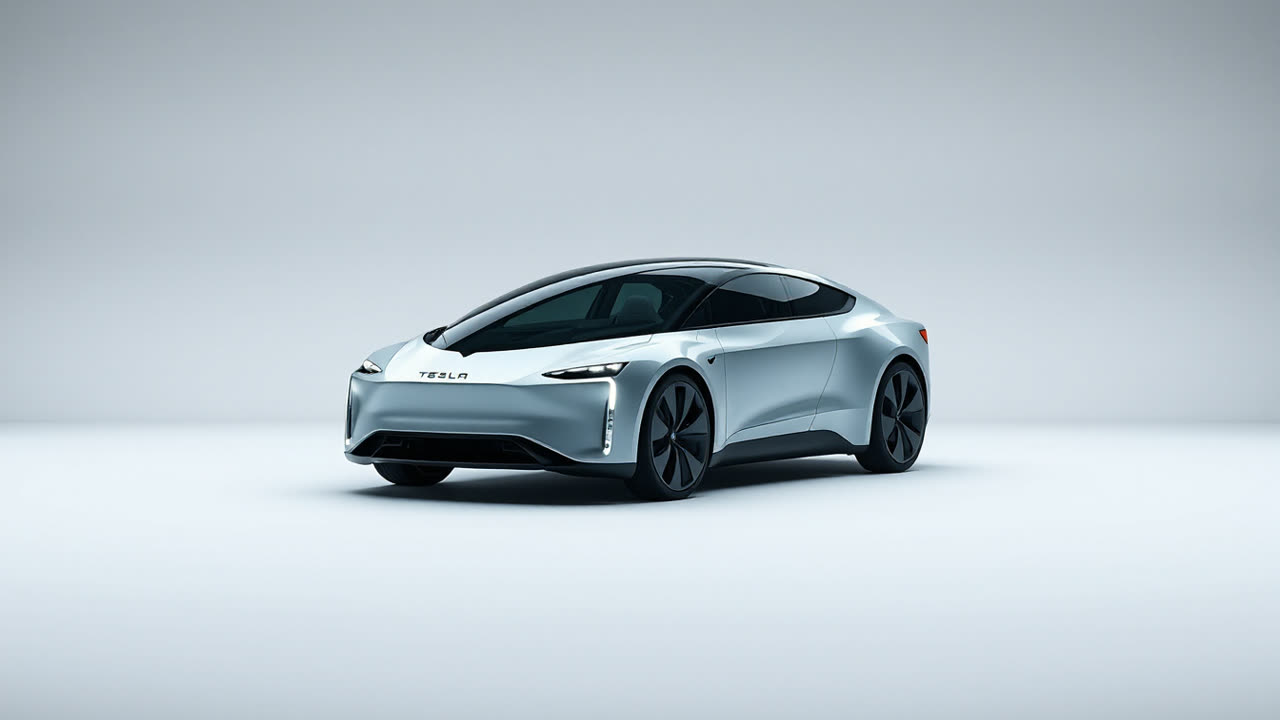
Tesla's highly anticipated Cybercab, unveiled as the cornerstone of Elon Musk's ambitious robotaxi network, has commenced limited public operations, though its initial rollout has been marred by a software glitch that temporarily halted service in a designated test zone. This incident, occurring just days after its much-heralded debut in a pilot program targeting specific urban corridors, underscores the persistent complexities of achieving truly autonomous mobility at scale, even for a company as deeply invested in AI and automotive technology as Tesla. While the exact nature of the software anomaly remains under wraps, early reports suggest an issue with object recognition in low-light conditions, leading to unexpected braking and disengagements that required human intervention. This immediate "snag" is more than a minor technical hiccup; it challenges the narrative of imminent, widespread Level 5 autonomy and forces a re-evaluation of the timelines for fully driverless urban transportation.
The Cybercab's entry into the nascent robotaxi market carries immense significance for both users and the broader transportation industry. For consumers, the promise of a sleek, purpose-built autonomous vehicle offering on-demand, cost-effective transport could fundamentally alter urban living, reducing reliance on personal car ownership and alleviating traffic congestion. Tesla's vertically integrated approach, combining vehicle design, AI software, and a potential charging infrastructure, positions it uniquely to control the entire user experience, potentially driving down per-mile costs significantly below traditional ride-hailing services. However, the initial snag highlights that the transition will not be seamless, potentially eroding early public trust and delaying widespread adoption. The reliability and safety of these early deployments are paramount, as public perception of autonomous vehicles remains fragile, heavily influenced by every reported incident.
Industrially, the Cybercab's deployment intensifies the already fierce competition in the autonomous vehicle sector. Tesla, leveraging its vast dataset from millions of FSD-enabled vehicles, aims to leapfrog rivals who have taken a more cautious, geo-fenced approach. Unlike Waymo and Cruise, which have relied heavily on expensive lidar and meticulously mapped routes, Tesla's strategy emphasizes vision-only AI, a more scalable but inherently more complex technical challenge. This philosophical divergence is now being tested in real-world conditions. Waymo, for instance, has been operating fully driverless services in Phoenix and San Francisco for years, demonstrating impressive safety records and gradually expanding its operational design domains (ODDs). Cruise, despite recent operational setbacks and a temporary suspension of its California permit in late 2023, is also pushing for wider deployment with a focus on specific urban environments. The Cybercab, with its futuristic design reminiscent of the Cybertruck aesthetic, aims to offer a distinct brand experience, but its ability to consistently deliver on the "robotaxi" promise without human intervention will be the ultimate differentiator. Tesla's prior generation of autonomous technology, primarily its Full Self-Driving (FSD) Beta, has been lauded for its capabilities but has also faced scrutiny over its reliance on human supervision and the frequency of disengagements. The Cybercab represents a significant leap from FSD Beta, requiring a level of robustness and infallibility that consumer-facing FSD has not yet fully achieved.
Looking ahead, the road for Cybercab and the broader autonomous vehicle industry remains fraught with both opportunity and significant hurdles. Tesla’s ability to swiftly diagnose and rectify the recent software issue will be critical in regaining momentum and public confidence. The company’s long-term vision includes a fleet of millions of Cybercabs generating substantial revenue, a projection that hinges entirely on the technology's flawless execution. Regulatory bodies globally are still grappling with frameworks for widespread autonomous vehicle deployment, and each incident, even minor ones, can influence policy decisions and public acceptance. Furthermore, the integration of such a service into existing urban infrastructure—from designated pick-up/drop-off zones to seamless interaction with traffic management systems—presents another layer of complexity. The next phase will likely see Tesla expanding its pilot programs cautiously, gathering more data, and iteratively refining its AI models. While the allure of a fully autonomous future powered by Cybercab is strong, the initial "snag" serves as a potent reminder that the journey to widespread driverless mobility is less a sprint and more a marathon of meticulous engineering, rigorous testing, and continuous adaptation. The industry's trajectory will be defined not just by technological breakthroughs, but by the painstaking process of ensuring absolute reliability in every mile driven.