Tesla's Cybercab Set for Austin Launch, Redefining Autonomous Mobility
Tesla is poised to launch its Cybercab in Austin, Texas, as soon as late August 2026, marking a pivotal moment for the entire autonomous mobility sector with its first steering wheel- and pedal-free design.
✨ This content was summarized and interpreted by AI; it may contain errors — please verify accuracy with the original sources. Learn more
Listen to this story
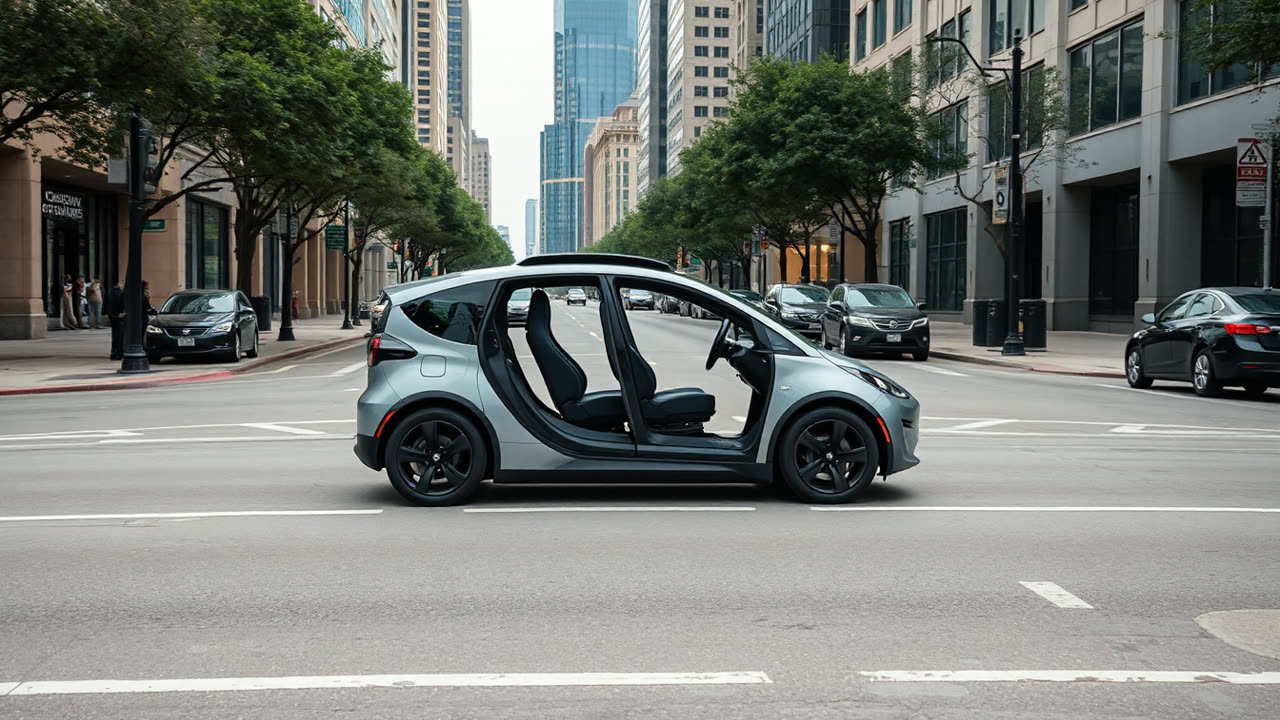
Tesla is poised to launch its Cybercab in Austin, Texas, as soon as late August 2026, marking a pivotal moment not just for the electric vehicle giant, but for the entire autonomous mobility sector. This isn't merely another autonomous vehicle; it is the first Tesla designed from the ground up without a steering wheel or pedals, a stark departure from its current "Full Self-Driving (Supervised)" (FSD) offerings and a definitive leap towards true Level 4 autonomy. The rollout will reportedly begin with employee rides on public roads, followed swiftly by integration into Austin's existing Robotaxi service, which has been operating with modified Model Y vehicles since June 2025.
This audacious move fundamentally matters because it forces the industry and regulators to confront the reality of a fully driverless future, rather than the incremental advancements seen with assisted driving systems. While Tesla has accumulated 6.9 billion miles of *supervised* FSD data from its consumer fleet, the Cybercab's design inherently demands a system capable of operating without any human intervention, even for emergencies. Tesla's FSD, currently categorized as SAE Level 2, explicitly requires active driver supervision. The Cybercab's success hinges entirely on its ability to transcend this limitation, demonstrating a level of AI robustness and reliability that has, to date, been elusive for any company at scale. This public deployment in Austin will serve as an unprecedented real-world stress test for Tesla's long-promised autonomous capabilities, far beyond the geofenced, modified Model Y services already in operation across several U.S. cities like Dallas, Houston, Orlando, and Tampa.
The implications for users are profound. A truly autonomous, purpose-built robotaxi could redefine urban mobility by offering on-demand, potentially lower-cost transportation without the need for human drivers. Elon Musk has boldly stated that Tesla expects to produce "far more CyberCabs than all of our other vehicles combined," underpinning a vision where autonomy dramatically expands the global market for transportation services. The Cybercab, a two-passenger vehicle with an estimated 293-mile range and a target price of $30,000, is positioned to serve this high-volume, low-occupancy segment of the market, which Tesla believes accounts for a significant portion of current driving distance. Such a shift could alleviate traffic congestion, reduce parking demand, and democratize access to personal transportation for non-drivers.
However, the industry impact is not without significant competitive and regulatory hurdles. Rivals like Waymo (Alphabet) and Zoox (Amazon) are already established leaders in the autonomous ride-hailing space, operating fully driverless fleets in multiple U.S. cities and accumulating millions of autonomous miles weekly. Waymo, for instance, commanded between 15% and 19% of gross ride-hailing bookings in its San Francisco, Los Angeles, and Phoenix operating zones as of June. These companies have generally pursued more cautious, geofenced rollouts, often with robust sensor arrays including lidar, a technology Tesla has famously eschewed in favor of a camera-centric "vision-only" approach. Tesla's Cybercab launch, without traditional human controls, will intensify the debate over the safety and efficacy of different autonomous driving philosophies.
The regulatory landscape is a critical crucible for the Cybercab. The absence of a steering wheel or pedals presents unique challenges to existing Federal Motor Vehicle Safety Standards (FMVSS), which were designed for human-driven vehicles. While the U.S. Department of Transportation and the National Highway Traffic Safety Administration (NHTSA) are actively working to modernize regulations and provide exemptions for driverless designs, including the proposed SELF DRIVE Act of 2026, the deployment of a vehicle entirely devoid of human controls pushes these frameworks to their absolute limit. NHTSA has already expressed concerns about driverless AVs interfering with first responders, highlighting the need for robust coordination protocols and performance standards. Tesla's recent emergency training with Austin first responders underscores this critical aspect of public acceptance and operational safety.
Financially, the launch presents a high-stakes gamble. While some analysts project Tesla's robotaxi revenue could soar to $250 billion by 2035, contributing over half of the company's valuation, others remain skeptical due to the immense capital expenditures required and the fierce competition. The news of the Cybercab launch immediately caused a dip in the shares of ride-hailing incumbents Uber and Lyft, indicating the perceived threat to their business models. However, profitability hinges not just on technological capability, but also on efficient scaling, high utilization rates, and navigating a complex patchwork of state-by-state regulations that currently hamper national deployment.
Looking ahead, the Cybercab's public debut in Austin is less about immediate widespread disruption and more about establishing a tangible proof point for Tesla's long-term autonomous vision. If successful, it could validate Tesla's camera-only approach to autonomy and accelerate the regulatory acceptance of truly driverless vehicles. However, any significant public safety incidents or operational failures could severely undermine consumer confidence and invite heightened regulatory scrutiny, potentially delaying broader deployment. The coming months will determine whether the Cybercab is indeed the least exciting vehicle Tesla has made due to unfulfilled software promises, as some skeptics suggest, or the vanguard of a new era of urban mobility that finally delivers on Elon Musk's ambitious robotaxi pledges. The stakes are nothing less than the future architecture of personal transportation.