Tesla's Cybercab to Exclude Children Under 13, Even with Adults
Tesla's upcoming autonomous Cybercab ride-hailing service will implement a strict policy barring children under 13, even when accompanied by an adult, a decision that diverges from existing robotaxi operations and introduces complex market and regulatory challenges.
✨ This content was summarized and interpreted by AI; it may contain errors — please verify accuracy with the original sources. Learn more
Listen to this story
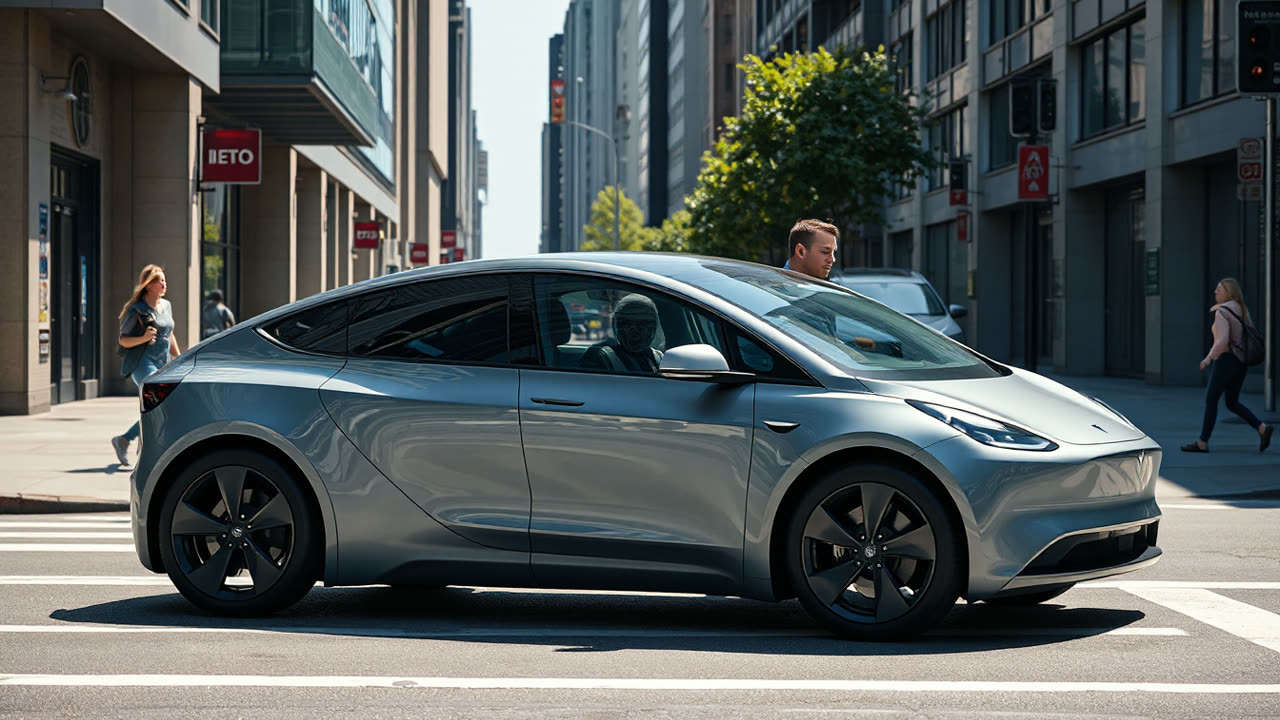
Tesla's highly anticipated Cybercab, poised to redefine urban mobility, will paradoxically exclude a significant demographic from its initial service: children under the age of 13, even when accompanied by an adult. This stringent policy, confirmed as the company gears up for its broader rollout, marks a notable divergence from Tesla's existing Model Y robotaxi operations, which currently permit minors with adult supervision, and introduces a complex layer of market segmentation and regulatory scrutiny for the autonomous ride-hailing sector.
The decision to bar pre-teen passengers from Cybercab service is a critical operational and strategic choice with far-reaching implications for both Tesla and the burgeoning autonomous vehicle (AV) industry. While specific justifications from Tesla remain limited beyond the policy itself, industry experts speculate that the restriction likely stems from a confluence of factors, primarily centering on liability, safety protocols, and the current limitations of AV sensor and AI interpretation for child-specific scenarios. Children, especially younger ones, present unique challenges for autonomous systems due to their unpredictable movements, smaller stature which can affect sensor detection, and varying compliance with safety instructions. The absence of a human driver means there's no immediate adult to intervene in situations where a child might unbuckle, move around, or tamper with vehicle controls, raising the bar for system robustness and legal accountability. This cautious approach contrasts sharply with conventional ride-hailing services and even Tesla's own Model Y robotaxis, where the presence of an adult driver or guardian is implicitly assumed to mitigate such risks.
For users, this policy significantly curtails the utility of Cybercab for families, a demographic often reliant on ride-hailing for school commutes, errands, and leisure activities. A parent needing to transport a child under 13, even if the parent themselves is eligible to ride, would be forced to seek alternative transportation, potentially undermining Cybercab's promise of seamless, on-demand urban transit. This demographic exclusion could impede broader adoption in family-centric neighborhoods and cities, limiting the service's total addressable market in its early stages. Furthermore, it creates a fragmented user experience where families might use Cybercab for adult-only trips but be forced to revert to traditional ride-hailing or personal vehicles for journeys involving younger children, diminishing the "one-stop-shop" convenience autonomous services aim to provide.
Comparing Cybercab's policy to rivals reveals a nascent but evolving landscape. Waymo, a leader in autonomous ride-hailing, generally requires passengers to be 18 years or older to ride alone but permits minors to ride with an adult guardian, albeit with specific guidelines for child seats if needed. Cruise, another prominent player, has also navigated similar complexities, with past incidents highlighting the intense scrutiny surrounding AV safety and passenger welfare, particularly for vulnerable groups. The Cybercab's outright ban on under-13s, even with parental supervision, positions it as one of the most restrictive in the nascent AV ride-hailing space, potentially setting a precedent or, conversely, creating a competitive disadvantage if rivals adopt more inclusive policies as their technology matures and regulatory frameworks solidify. The Model Y robotaxi service, for instance, has allowed children with appropriate car seats and adult supervision, indicating a potential differentiation in regulatory or technological confidence between Tesla's current FSD-powered offerings and the purpose-built Cybercab platform.
Looking ahead, the Cybercab's "no little kids allowed" policy is unlikely to be a permanent fixture, but rather a strategic, risk-averse posture for its initial deployment. As Tesla's autonomous technology, particularly the Full Self-Driving (FSD) stack, continues to evolve and gain more real-world data, and as regulatory bodies establish clearer guidelines for AVs transporting minors, this restriction may be relaxed. The company's long-term vision for mass robotaxi deployment, especially in dense urban environments, would inherently benefit from catering to all demographics, including families. Future iterations of Cybercab hardware could also integrate child-specific safety features, such as advanced occupant detection for smaller passengers or integrated booster seats, which could help mitigate current liability concerns. However, such changes would require not only technological advancements but also extensive validation, new certification processes, and a shift in public perception and trust. The immediate impact is clear: Tesla is prioritizing a cautious, controlled rollout, even if it means sacrificing a significant portion of the immediate market, underlining the profound challenges and responsibilities inherent in deploying truly autonomous public transport. The industry will be watching closely to see if this conservative stance pays off in terms of safety record and regulatory approval, or if it cedes valuable market share to competitors willing to embrace a broader user base sooner.