Tesla's FSD Caught Speeding in Brussels Ahead of Crucial EU Vote
Tesla's "Full Self-Driving (Supervised)" system was found to exceed the speed limit in 55% of 30 km/h zones tested in Brussels, averaging 44 km/h, just weeks before a critical EU vote on autonomous driving regulations.
✨ This content was summarized and interpreted by AI; it may contain errors — please verify accuracy with the original sources. Learn more
Listen to this story
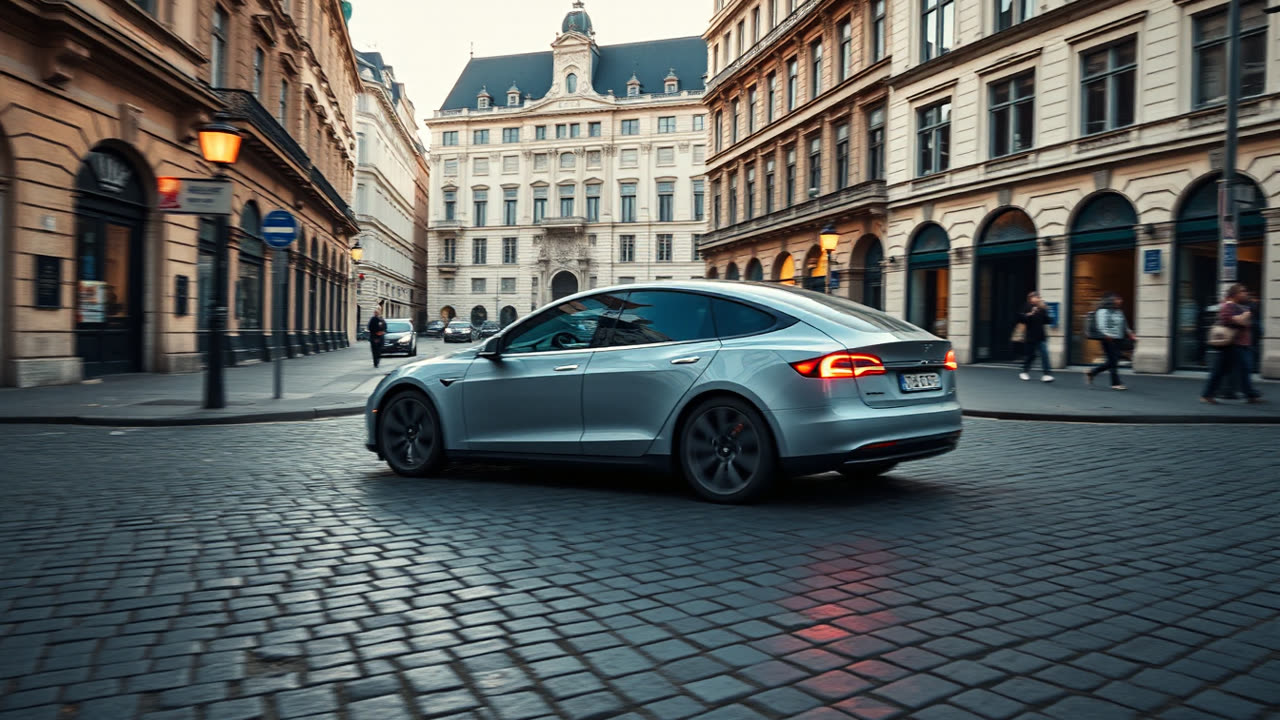
Tesla's "Full Self-Driving (Supervised)" system was found to exceed the speed limit in 55% of the 30 km/h zones tested by a Belgian road safety group in Brussels, averaging 44 km/h, a significant 14 km/h over the legal threshold. This revelation, surfacing less than two weeks before a critical European Union vote on autonomous driving regulations, casts a stark spotlight on the practical safety and regulatory challenges facing advanced driver-assistance systems (ADAS) in complex urban environments. The test, conducted by the Belgian road safety organization Vias Institute, specifically targeted Tesla vehicles equipped with the latest FSD (Supervised) software, highlighting a concerning discrepancy between the system's advertised capabilities and its real-world adherence to local traffic laws.
This incident matters profoundly for several reasons, impacting users, the industry, and the regulatory landscape. For users, the core promise of FSD is enhanced safety and convenience, yet a system that routinely violates speed limits in densely populated urban areas fundamentally undermines trust and introduces new risks. Beyond the obvious danger of increased stopping distances and reduced reaction times, such behavior could lead to legal liabilities for the human "supervisor" in the vehicle, blurring the lines of responsibility between machine and driver. The term "Supervised" itself implies the driver is ultimately accountable, but if the system is designed or prone to breaking laws, it places an unfair burden on the human to constantly intervene, defeating the purpose of advanced automation and potentially fostering a false sense of security.
From an industry perspective, the Vias Institute's findings could significantly intensify regulatory scrutiny across Europe, potentially slowing the rollout and adoption of advanced ADAS and fully autonomous vehicles. European regulators have historically adopted a more cautious approach to autonomous driving compared to some other regions, prioritizing safety and robust validation. The upcoming EU vote is expected to address various aspects of automated driving, including liability, data privacy, and operational design domains, making the timing of this report particularly problematic for Tesla. While Tesla's FSD (Supervised) is classified as a Level 2+ system under the SAE International J3016 standard, requiring constant human supervision, its demonstrated inability to consistently respect basic traffic laws in a controlled test environment raises questions about the maturity and reliability of even high-end Level 2 systems for widespread urban deployment.
Compared to rivals, Tesla's FSD approach differs significantly. Competitors like Mercedes-Benz, with its Drive Pilot system, have pursued a strategy focused on achieving SAE Level 3 conditional automation, which allows the driver to disengage from the driving task under specific operational design conditions, such as highway driving in traffic jams, primarily below 60 km/h. Mercedes-Benz's system has already received regulatory approval for Level 3 use in Germany and parts of the United States, operating within strict geographical and speed limitations, and explicitly taking on liability when active. This contrasts with Tesla's FSD (Supervised), which remains a Level 2 system that requires constant driver attention and assumes no liability for incidents. The current incident underscores the challenges of scaling a Level 2 system that aims for broad functionality without the explicit safety assurances and legal frameworks of higher automation levels. Other players like Waymo and Cruise, operating true Level 4 robotaxis, are deploying in highly restricted geofenced areas after extensive testing and regulatory approvals, often with safety drivers or remote monitoring, and have faced their own set of operational challenges and public scrutiny, particularly Cruise after recent incidents.
Looking ahead, this incident will undoubtedly add pressure on EU policymakers to implement stringent testing and certification protocols for ADAS before broader deployment. It is highly probable that the upcoming EU vote will reflect a heightened emphasis on local traffic law adherence, potentially requiring manufacturers to demonstrate consistent compliance in diverse urban settings before receiving operational permits. For Tesla, this could mean significant delays in expanding FSD (Supervised) availability within the EU, potentially necessitating substantial software revisions to improve speed limit recognition and adherence, especially in dynamic, low-speed zones. The company may also face increased public skepticism and a more arduous path to gaining regulatory trust, which is crucial for the long-term success of any autonomous driving technology. Ultimately, the incident serves as a critical reminder that the path to widespread autonomous driving is not merely a technological race but a complex interplay of engineering prowess, regulatory foresight, and unwavering public confidence, all of which are tested when a vehicle designed for the future fails to respect the basic rules of the present.