Tesla's FSD to Require Cabin Camera Identity Check
Tesla's latest iOS app update reveals code for a new cabin camera-based identity verification feature that will be required to activate Full Self-Driving.
✨ This content was summarized and interpreted by AI; it may contain errors — please verify accuracy with the original sources. Learn more
Listen to this story
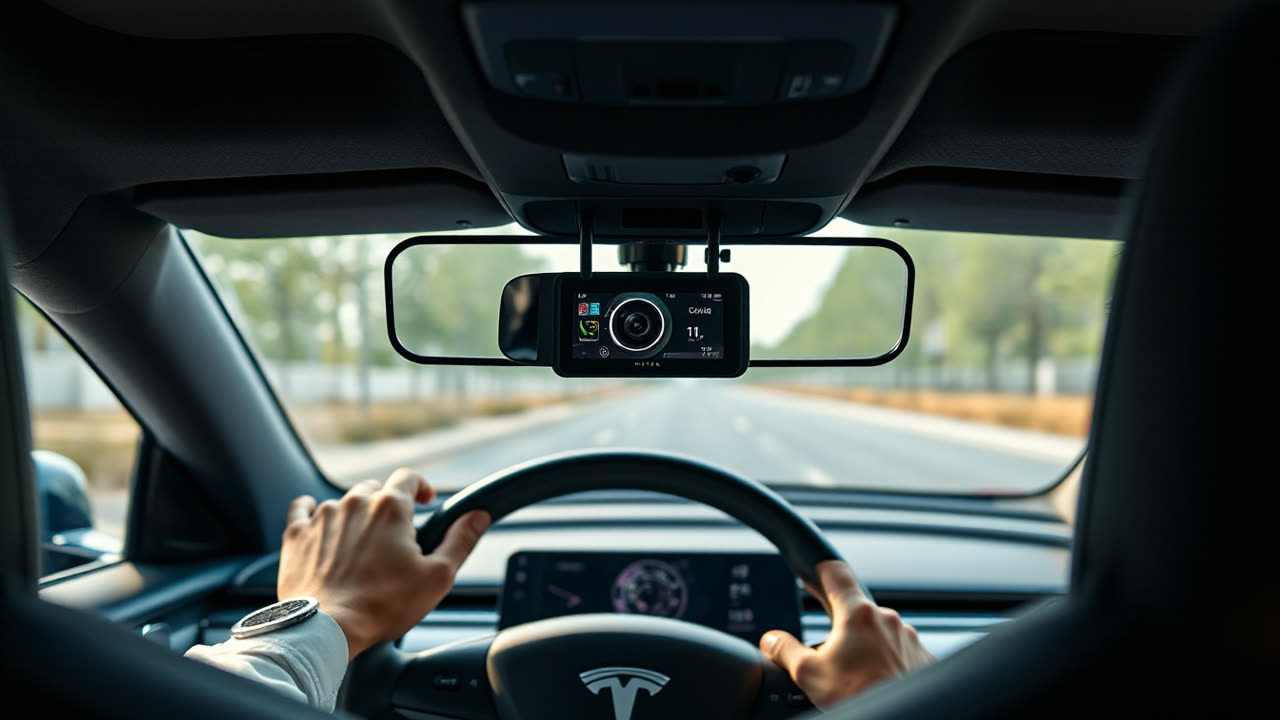
Tesla's latest iOS app update contains compelling code that indicates a significant shift in how the automaker will manage its "Full Self-Driving" (FSD) system, introducing a cabin camera-based identity verification feature before FSD can be activated. Discovered in version 4.58.5 of the Tesla app, strings like `fsdIdentityCheckFailedTitle` and `showFsdIdentityCheckFailedDialog` reveal a new protocol where the in-car camera will confirm the driver's identity against an authorized profile. Should the system fail to match the person behind the wheel, FSD will be blocked, accompanied by an error message in the app.
This development marks an evolution beyond Tesla's existing driver monitoring, which has utilized the cabin camera since 2021 to track attention, drowsiness, and eye position, becoming the primary monitor with FSD v12.4 in 2024. Unlike attention monitoring, this new feature acts as a "permission gate," verifying *who* is driving rather than just *if* they are attentive. The implications are far-reaching, particularly as FSD is now offered as a subscription service. Identity verification could serve as a crucial access control mechanism, preventing unauthorized individuals, such as teenagers or borrowers, from engaging the advanced driver-assistance system. It also aligns with Tesla's long-term Robotaxi ambitions, where verifying a passenger's identity against a booked ride would be essential.
While the code hints at an imminent feature, it's important to note that this is not yet a live rollout and would require a corresponding vehicle firmware update. Concerns have been raised regarding the cabin camera's limitations as a standard RGB sensor, which is less secure for biometric identification than infrared depth-mapping systems like Apple's Face ID, and its performance can be compromised in poor lighting or by obstructions. This move suggests Tesla is tightening its grip on FSD access, potentially leading to "Netflix-like" restrictions on sharing subscriptions or even new tiered plans for multiple authorized users. Such increased accountability, however, could also serve to address ongoing regulatory scrutiny and enhance overall FSD safety.