Tesla's Long-Awaited Second-Gen Roadster Set for October 1 Unveiling
Tesla’s long-anticipated second-generation Roadster, first announced in November 2017, is finally set for an official unveiling on October 1, marking a pivotal moment for the electric vehicle (EV) giant and the broader high-performance automotive sector.
✨ This content was summarized and interpreted by AI; it may contain errors — please verify accuracy with the original sources. Learn more
Listen to this story
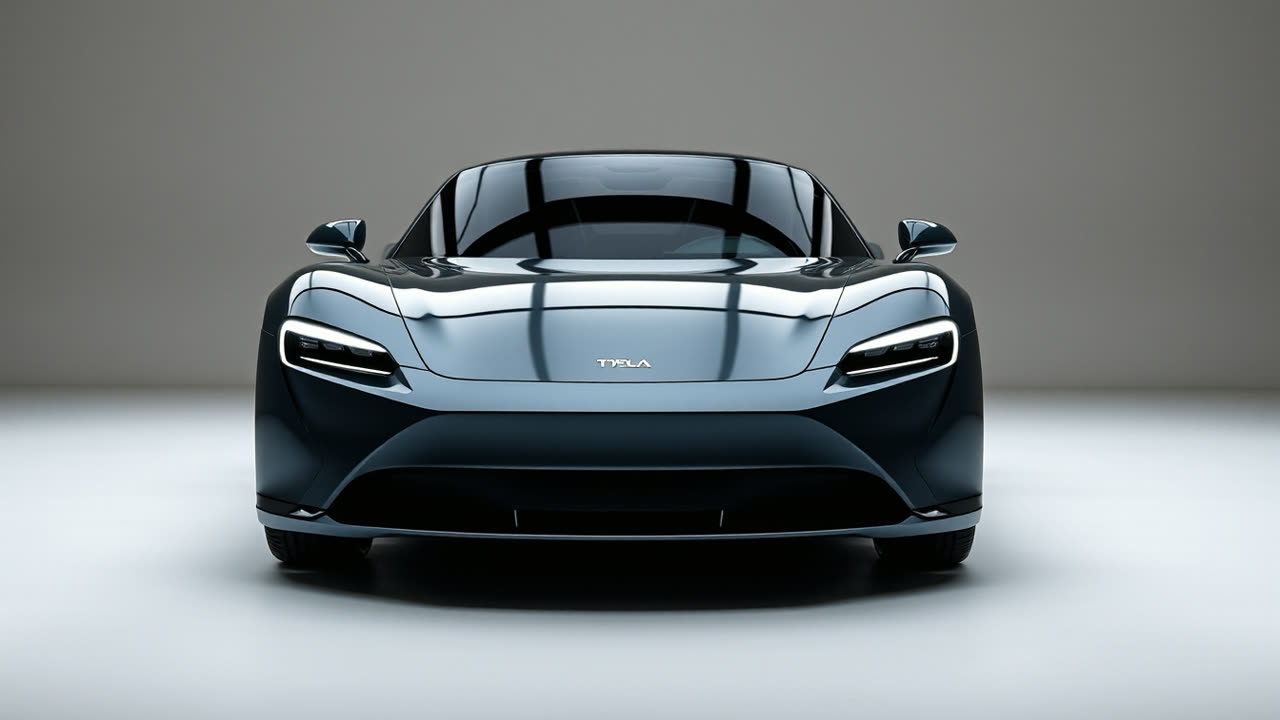
Tesla’s long-anticipated second-generation Roadster, first announced in November 2017, is finally set for an official unveiling on October 1, marking a pivotal moment for the electric vehicle (EV) giant and the broader high-performance automotive sector. This reveal comes nearly a decade after the original Roadster concluded production, and almost nine years after its successor was initially teased with a staggering set of performance metrics that, at the time, seemed almost fantastical. The original promises included a 0-60 mph acceleration in a blistering 1.9 seconds, a top speed exceeding 250 mph, and an unprecedented 620 miles of range, all powered by a 200 kWh battery pack. The base price was set at $200,000, with a Founders Series priced at $50,000 more. The delay in bringing this "halo car" to market has been a recurring point of contention and speculation, yet its imminent arrival could redefine expectations for electric hypercars.
The significance of the new Roadster extends far beyond its raw performance numbers; it represents a critical statement of intent from Tesla, particularly as the company navigates increasing competition and a maturing EV landscape. For Tesla, the Roadster is not merely a profit driver but a potent brand-builder, designed to showcase the absolute pinnacle of its engineering capabilities and technological innovation. In an era where legacy automakers and new EV startups are rapidly closing the performance gap, a vehicle that dramatically pushes the boundaries of speed, range, and advanced features can reassert Tesla’s position as a technological vanguard. It serves as a tangible demonstration of what is possible, potentially inspiring a new generation of engineers and consumers, while also providing a "trickle-down" effect of advanced battery, motor, and software technologies into its more mass-market vehicles like the Model S, X, 3, and Y.
However, the automotive landscape has evolved dramatically since the Roadster's initial announcement. In 2017, the concept of a sub-2-second 0-60 mph production car was revolutionary, particularly for an EV. Today, competitors have not only caught up but, in some cases, surpassed those initial targets. The Croatian-made Rimac Nevera, for instance, has achieved a verified 0-60 mph in 1.85 seconds and boasts a top speed of 258 mph, powered by 1,914 horsepower, with deliveries already underway. Similarly, the Pininfarina Battista offers 1,900 horsepower, a 0-60 mph time of 1.86 seconds, and a top speed of 217 mph. Even within Tesla's own stable, the Model S Plaid already delivers a 0-60 mph time of 1.99 seconds, albeit with a "rollout" subtraction, and a top speed of 200 mph with the proper hardware and software updates. This means the second-generation Roadster cannot simply meet its 2017 promises; it must significantly exceed them to genuinely impress and justify its long development cycle. Rumors of a "SpaceX package" hinted at by Elon Musk, potentially incorporating cold gas thrusters for even more extreme acceleration, suggest Tesla is aware of this imperative and aims to deliver something truly unprecedented.
The original Tesla Roadster, a modified Lotus Elise, was a groundbreaking vehicle in its own right, establishing Tesla as a serious player in the automotive industry and proving the viability of high-performance electric cars. It laid the foundation for the company's subsequent success, but its limited production and range were clear indicators of early EV technology. The second-generation aims to be a purpose-built Tesla, leveraging nearly two decades of proprietary battery, motor, and software development. The comparison to its predecessor is less about direct competition and more about showcasing the exponential growth of EV technology. The new Roadster is expected to feature advancements in battery chemistry for improved energy density and faster charging, more efficient and powerful electric motors, and sophisticated thermal management systems crucial for sustained high-performance driving. Its aerodynamic design, likely honed over years of simulation and testing, will also play a critical role in achieving its ambitious speed and range targets.
Looking ahead, the unveiling on October 1 will be scrutinized not just for the car itself, but for what it signals about Tesla's future trajectory. If the Roadster delivers on its updated promises—or even surpasses them—it could ignite a new phase of innovation in the high-performance EV segment, challenging rivals to push even harder. It may also provide insights into new battery technologies or manufacturing processes that could eventually find their way into Tesla's more affordable models, such as the rumored next-generation platform for a sub-$30,000 EV. The successful launch and subsequent deliveries of the Roadster could also bolster investor confidence, demonstrating Tesla's ability to execute on its long-term, ambitious promises. Conversely, a lukewarm reception or a failure to significantly outshine current competitors could raise questions about Tesla's ability to maintain its technological edge. Ultimately, the new Roadster is more than just a car; it is a declaration of intent, a benchmark, and a critical test of Tesla's enduring capacity for disruptive innovation.