Tesla's Optimus Robot Production Hits Major Hurdles
Tesla is reportedly producing only 'several hundred' Optimus robots weekly, far short of its 20,000 unit target, highlighting significant manufacturing challenges for its ambitious robotics future.
✨ This content was summarized and interpreted by AI; it may contain errors — please verify accuracy with the original sources. Learn more
Listen to this story
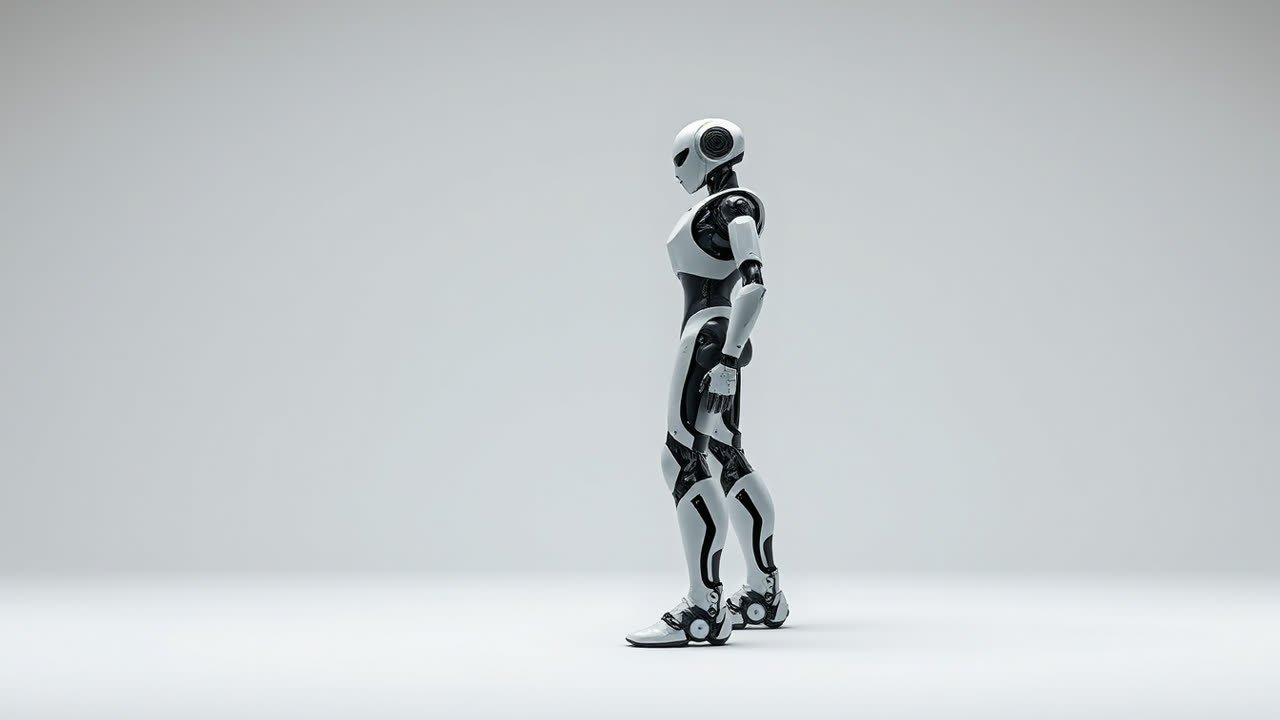
Tesla's ambitious target of producing 20,000 Optimus humanoid robots weekly faces significant hurdles, with recent reports indicating the company is currently manufacturing only "several hundred robots a week" after repurposing elements of its Model S and Model X production lines last month. This substantial gap between aspiration and reality underscores the immense engineering and manufacturing challenges inherent in scaling advanced robotics, even for a company known for its aggressive production ramp-ups. The discrepancy highlights a critical inflection point for Tesla's diversification strategy, where the promise of a multi-trillion-dollar robotics future hinges on overcoming the complex realities of mass-producing sophisticated autonomous machines.
The core news reveals not just a production bottleneck but potentially a deeper struggle in industrializing a technology still in its nascent stages. Tesla's pivot of existing automotive infrastructure, while demonstrating an agile approach to manufacturing, also suggests the initial design and assembly processes for Optimus might be more intricate and less streamlined than anticipated. Achieving "several hundred" units per week, while a notable step for a brand-new product category, pales in comparison to the company's automotive output, which routinely surpasses hundreds of thousands of vehicles annually. This slower-than-expected ramp-up directly impacts Tesla's timeline for deploying Optimus within its own factories and eventually offering it for external commercial and consumer applications, pushing back the realization of Elon Musk's vision of a world transformed by affordable, general-purpose humanoid robots.
The significance of these production growing pains extends far beyond Tesla's internal metrics; it casts a shadow over the entire nascent humanoid robotics industry. Tesla's entry into the space, backed by its manufacturing prowess and AI expertise, brought a unique blend of high-volume ambition and a focus on cost-effectiveness that many traditional robotics firms lacked. Its stated goal of a sub-$20,000 robot aimed to democratize access to advanced automation, a stark contrast to the often bespoke, high-cost solutions offered by competitors. The current difficulties suggest that even with Tesla's resources, the path to economically viable, mass-produced humanoid robots is fraught with challenges. If Tesla, with its vertical integration and aggressive engineering culture, struggles to hit volume targets, it signals a more arduous journey for the broader industry, potentially delaying the widespread adoption of humanoid robots in logistics, manufacturing, and service sectors.
Comparing Optimus to its rivals reveals a strategic divergence. Companies like Boston Dynamics, acquired by Hyundai, have historically focused on highly capable, specialized robots like Atlas and Spot, often prioritizing advanced mobility and dexterity over mass production and cost. Their robots, while technologically impressive, have remained largely in research, specialized industrial, or niche security applications due to their complexity and high price point. Similarly, Agility Robotics' Digit, designed for logistics tasks, and Figure AI's unnamed humanoid, backed by significant investment, are also progressing, but none have declared production targets on the scale of Tesla's 20,000 per week. Tesla's unique differentiator was always the promise of automotive-scale manufacturing and a price point that would unlock new markets. The current production struggles highlight the immense chasm between developing a functional prototype and reliably mass-producing a complex electromechanical system with integrated AI. The prior generation of industrial robots, largely confined to fixed positions and repetitive tasks, offers little direct comparison, as Optimus aims for general-purpose mobility and interaction in unstructured environments, demanding an entirely different level of hardware and software integration.
Looking ahead, Tesla's immediate focus will undoubtedly be on diagnosing and resolving the specific bottlenecks hindering Optimus production. This could involve refining the robot's design for manufacturability, optimizing supply chains for specialized components, or further automating the assembly process itself. Success in overcoming these early hurdles is critical for Tesla to maintain investor confidence in its long-term AI and robotics strategy, which Musk has frequently touted as potentially more valuable than its automotive business. The market will be closely watching for signs of acceleration in production rates, as consistent progress will be a stronger indicator of viability than any single demonstration of new capabilities. Should Tesla manage to significantly ramp up Optimus production in the coming year, it could still catalyze the humanoid robot market, forcing competitors to re-evaluate their own production strategies and pricing models. Conversely, sustained low production could lead to skepticism, potentially shifting investor interest towards other players who demonstrate more tangible progress in scalable robotics solutions. Ultimately, Optimus's trajectory will serve as a bellwether for the entire industry, dictating the pace at which humanoid robots transition from ambitious prototypes to a ubiquitous presence in the global economy.