Tesla's Rare-Earth-Free Motor: A Strategic Engineering Leap for Sustainable EVs
Tesla's unveiling of a rare-earth-free electric motor for its Cybercab, showcased during a low-key event this week, represents a significant engineering feat that promises to reshape the cost structures and environmental footprint of future EVs, yet its immediate industry-wide impact remains nuanced rather than revolutionary.
✨ This content was summarized and interpreted by AI; it may contain errors — please verify accuracy with the original sources. Learn more
Listen to this story
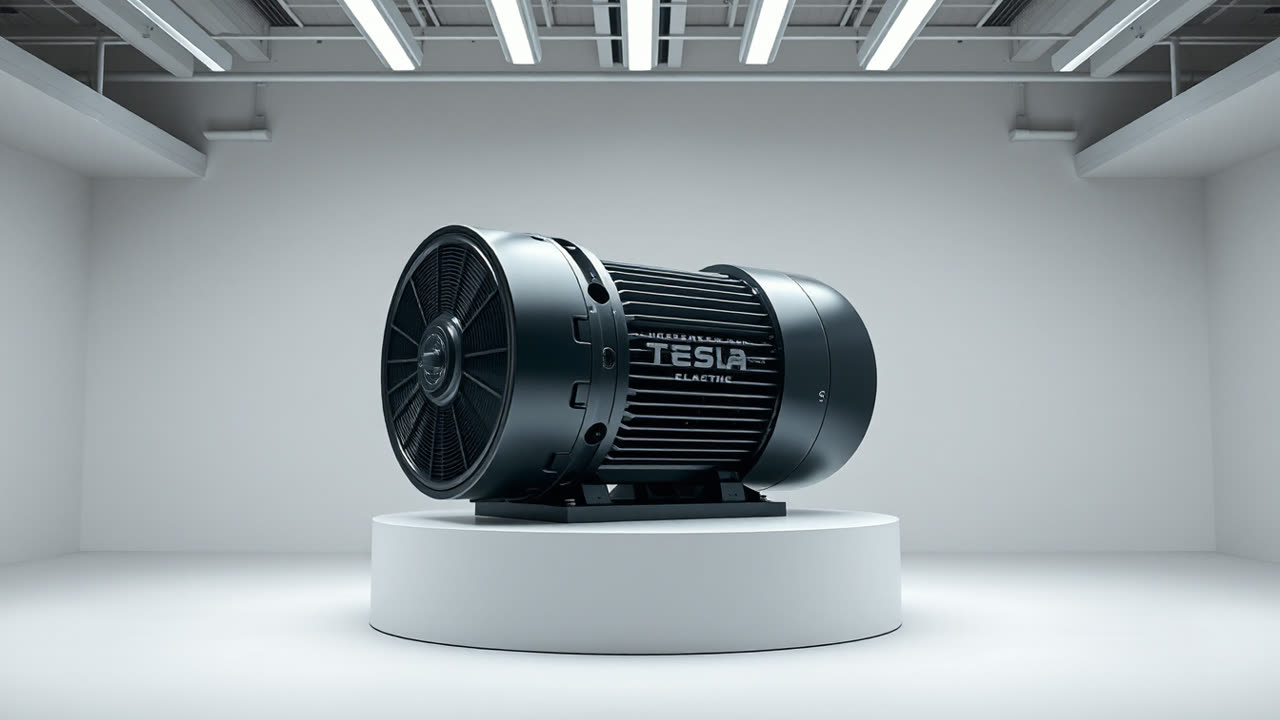
Tesla's unveiling of a rare-earth-free electric motor for its Cybercab, showcased during a low-key event this week, represents a significant engineering feat that promises to reshape the cost structures and environmental footprint of future EVs, yet its immediate industry-wide impact remains nuanced rather than revolutionary. Reportedly boosting power density and efficiency, this new motor signals Tesla's strategic pivot towards greater supply chain independence and reduced reliance on geopolitically sensitive materials. While specific performance benchmarks for the Cybercab motor are still emerging, the underlying technology addresses a critical vulnerability in the global EV ecosystem: the volatile and often ethically complex sourcing of rare earth elements, primarily neodymium and dysprosium, essential for the high-performance permanent magnets in most contemporary EV motors.
The "why it matters" extends beyond mere material substitution. For users, a rare-earth-free motor could eventually translate into more affordable EVs, as it insulates manufacturers from the wild price swings and monopolistic control often associated with rare earth markets. The environmental benefits are also substantial; rare earth mining is notoriously destructive, involving extensive land degradation, water pollution, and significant energy consumption. By eliminating these materials, Tesla is not only de-risking its own production but also setting a precedent for a more sustainable manufacturing paradigm within the automotive industry. This move could accelerate the development and adoption of similar technologies across the sector, pushing rivals to invest more heavily in alternatives like ferrite or synchronous reluctance motors.
Historically, Tesla has utilized both induction motors and permanent magnet synchronous reluctance motors (PMSM) in its vehicles, with the latter often incorporating rare earth magnets for superior efficiency and power density, especially in performance models. The Model 3, for instance, famously switched to a PMSM in its rear drive unit to enhance range and performance. This new rare-earth-free Cybercab motor, therefore, represents a technological evolution, demonstrating that high performance metrics can be achieved without these critical materials. Comparing it to rivals, many major automakers, including BMW, Audi, and General Motors, are also exploring or already implementing rare-earth-reduced or free solutions, often driven by similar concerns about supply chain resilience and sustainability. BMW's iX3, for example, utilizes a current-excited synchronous motor that avoids rare earths. However, Tesla's integration into a high-profile, novel product like the Cybercab underscores its commitment and potentially demonstrates a more advanced state of commercial readiness for such technology in a mass-market context. The challenge for all manufacturers lies in matching or exceeding the power density and efficiency of rare earth magnet motors without significantly increasing weight, size, or cost, a hurdle Tesla appears to be clearing.
Looking ahead, this development signals a broader shift in the EV industry's material science and supply chain strategies. While the immediate impact of the Cybercab's motor on the global rare earth market might be limited due to the vehicle's initial niche status, its long-term implications are profound. As Tesla scales production of the Cybercab and potentially integrates this technology into other models, it will exert considerable pressure on the rare earth supply chain, potentially driving down demand and prices for neodymium and dysprosium in the motor sector. This could also spur further innovation in magnet-free motor designs or alternative magnetic materials. The "not THAT big a deal" aspect stems from the fact that rare-earth-free motors are not entirely new; the true innovation lies in Tesla's ability to achieve significant power density and efficiency gains, making it a viable high-performance solution. The next phase will involve observing how quickly this technology can be scaled, its actual performance in real-world applications, and the extent to which it influences competitor strategies. Ultimately, this move by Tesla is less about an overnight revolution and more about a strategic, long-term play that strengthens its manufacturing autonomy, champions environmental responsibility, and sets a new benchmark for sustainable innovation in electric propulsion.