Tesla's Robotaxis Quietly Begin Unsupervised Operations in Austin
Tesla's long-anticipated Robotaxi service is reportedly now operating fully autonomously and without human supervision in Austin, Texas, marking a pivotal moment for its Full Self-Driving technology.
✨ This content was summarized and interpreted by AI; it may contain errors — please verify accuracy with the original sources. Learn more
Listen to this story
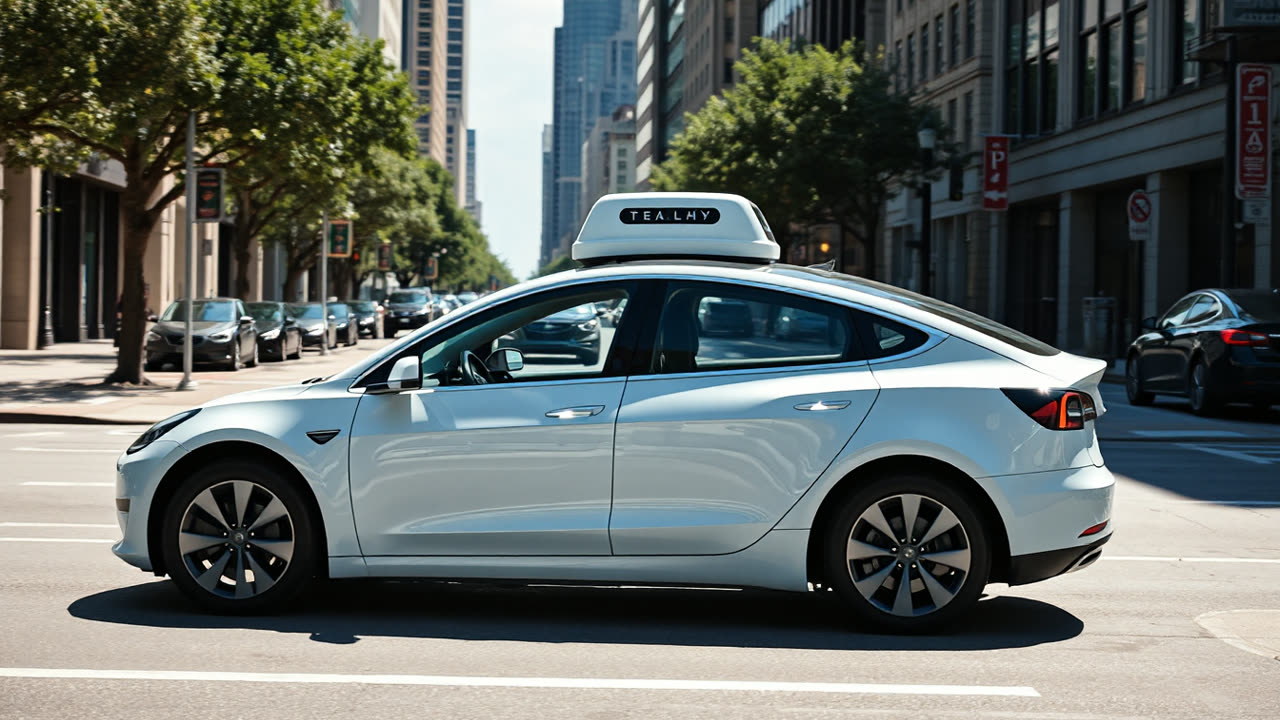
Tesla's long-hyped Robotaxi vision appears to be taking a significant, albeit quiet, leap forward, with reports indicating a fleet of vehicles is now operating fully autonomously and unsupervised in Austin, Texas. This development marks a critical inflection point for Tesla's Full Self-Driving (FSD) ambitions, transitioning from a driver-supervised beta program to what could be the initial rollout of a truly autonomous ride-hailing service. The shift, if confirmed broadly, represents a powerful validation of Tesla's camera-only approach to autonomy, a strategy long viewed with skepticism by many industry experts who favor lidar and radar.
The implications of unsupervised Robotaxi operations in Austin are profound, not just for Tesla but for the entire autonomous vehicle (AV) industry and urban mobility. For users, the promise is a potentially cheaper, more convenient, and ubiquitous transportation option, free from the complexities and costs associated with human drivers. The ability to summon a driverless Tesla via an app could fundamentally alter personal car ownership paradigms, particularly in dense urban environments. However, the initial impact will likely be limited to specific geofenced areas, gradually expanding as regulatory approvals and operational confidence grow. For Tesla, this move is paramount to its long-term valuation, with CEO Elon Musk consistently emphasizing FSD and Robotaxis as core to the company's future profitability, projecting a trillion-dollar market capitalization based on these services. The successful deployment in Austin could unlock substantial recurring revenue streams, shifting Tesla's business model beyond just vehicle sales.
This current deployment stands in stark contrast to the protracted and often controversial journey of Tesla's FSD development. For years, FSD has been available as a premium add-on, priced at $12,000 or a $199 monthly subscription, promising future autonomous capabilities that have been slow to materialize fully. Early iterations required constant driver supervision, with numerous incidents raising questions about its safety and reliability. The transition to unsupervised operation, even in a limited capacity, suggests a maturation of the underlying software, particularly the neural network vision system that underpins Tesla’s autonomy. This approach, eschewing lidar and extensive high-definition mapping favored by competitors, has been a defining and divisive characteristic of Tesla's strategy.
When compared to rivals, Tesla's path has been distinct. Waymo, Google's autonomous driving subsidiary, has been operating fully driverless services in cities like Phoenix and San Francisco for years, albeit with a more cautious, geofenced approach utilizing extensive lidar, radar, and HD maps. Cruise, General Motors' AV unit, also had fully driverless operations in San Francisco but faced significant setbacks and regulatory scrutiny, leading to a temporary suspension of its California operations in late 2023 after a major incident. Mobileye, an Intel subsidiary, is also making strides, recently expanding its robotaxi testing in Germany. What sets Tesla apart is its direct integration of FSD into consumer vehicles, aiming for a scalable solution that leverages its existing fleet and customer base. While Waymo and Cruise built bespoke robotaxi fleets, Tesla's strategy is to enable every FSD-equipped vehicle to eventually serve as a robotaxi, a much more ambitious and potentially disruptive model. The Austin deployment, if truly unsupervised, signals Tesla catching up in a critical operational metric, even if its underlying technology approach remains unique.
Looking ahead, the Austin operation serves as a crucial proving ground. Success here will undoubtedly accelerate Tesla's efforts to expand its Robotaxi service to other cities, contingent on regulatory approvals and robust safety records. The data gathered from these unsupervised operations will be invaluable for further refining the FSD software, addressing edge cases, and enhancing overall reliability. We can expect increased pressure on regulators to establish clearer frameworks for commercial autonomous vehicle deployments as more companies approach this level of readiness. The next phase for Tesla will involve scaling the service, navigating complex insurance liabilities, and building public trust, which remains a significant hurdle for widespread AV adoption. Furthermore, the operational data from Austin will likely feed into Tesla's forthcoming dedicated Robotaxi vehicle, potentially unveiled in August 2024, which is expected to be purpose-built without a steering wheel or pedals, signaling a complete commitment to a driverless future. The slow, deliberate progress has finally yielded tangible results, and the Austin streets may well be witnessing the dawn of a new era in urban transportation.