The 2027 Toyota bZ Hits Market with Aggressive Pricing, Challenging Mainstream EV Segment
Toyota's new 2027 bZ electric crossover launches in the US and Canada with a starting price of $34,980, signaling a pivotal shift in its EV strategy and intensifying competition in the affordable EV market.
✨ This content was summarized and interpreted by AI; it may contain errors — please verify accuracy with the original sources. Learn more
Listen to this story
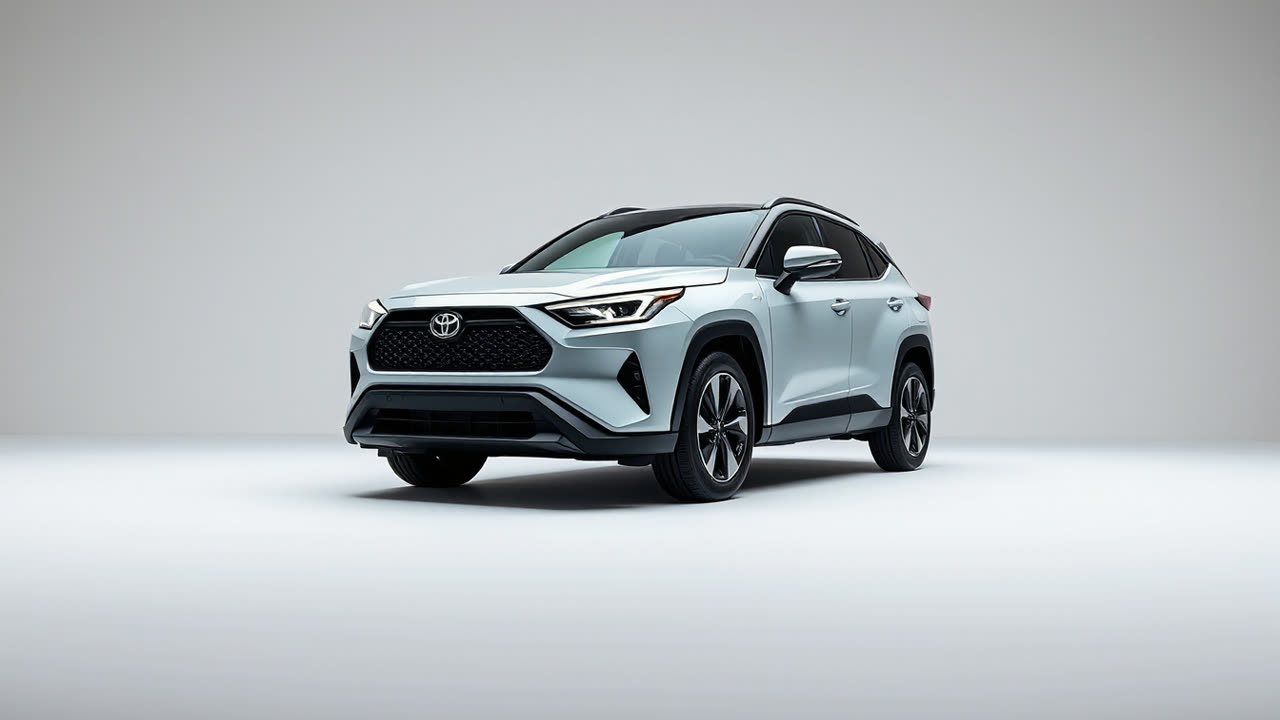
The 2027 Toyota bZ has officially hit the market, commencing sales with an aggressive starting price of $34,980 in the United States and CA$45,985 in Canada, signaling Toyota's intensified commitment to the burgeoning electric vehicle segment. This strategic pricing positions the bZ as a direct challenger in the increasingly competitive mainstream EV crossover market, aiming to capture a significant share of buyers seeking a balance of affordability, Toyota's renowned reliability, and electric propulsion. The model represents a critical evolution for Toyota's "bZ" (beyond Zero) sub-brand, which has faced headwinds since the introduction of the bZ4X.
This launch matters profoundly for several reasons, impacting both consumers and the automotive industry at large. For users, the sub-$35,000 entry point in the US makes EV ownership more accessible, potentially accelerating the transition away from internal combustion engines, especially for first-time EV buyers or those moving from hybrid vehicles. The price point directly competes with popular gasoline-powered compact SUVs, blurring the line between traditional and electric vehicle cost parity. Furthermore, a competitive range and robust charging infrastructure support, which Toyota is expected to deliver, will be crucial in alleviating consumer range anxiety and charging frustrations, historically significant barriers to broader EV adoption. The bZ’s success could validate Toyota’s cautious, multi-pathway electrification strategy, which has included a strong focus on hybrids and plug-in hybrids alongside battery electric vehicles.
From an industry perspective, the 2027 bZ's arrival injects renewed pressure on established EV players like Tesla, Hyundai, and Kia, as well as traditional automakers rapidly scaling their electric portfolios. Tesla's Model Y, a dominant force in the crossover segment, typically starts at a higher price point, making the bZ an attractive alternative for budget-conscious buyers, although specific range and performance benchmarks will dictate its true competitive edge. Compared to its predecessor, the bZ4X, which launched with a starting MSRP around $42,000 and faced initial production delays and a recall, the 2027 bZ appears to address key criticisms by offering a more compelling value proposition from the outset. While the bZ4X offered an EPA-estimated range of up to 252 miles for its front-wheel-drive variant, the 2027 bZ is anticipated to at least match, if not modestly exceed, this figure while improving charging curves to reduce overall charge times, a crucial factor in daily usability. Toyota's emphasis on a refined e-TNGA platform and potentially improved battery thermal management systems are expected to contribute to more consistent performance in varied climates, a lesson learned from early EV iterations.
Toyota's broader EV strategy has been characterized by a measured approach, balancing hybrid dominance with a gradual ramp-up of pure EVs. This new bZ model signifies a pivotal shift from exploratory to aggressive market penetration. The company has previously outlined plans for 30 EV models by 2030, targeting 3.5 million EV sales annually, with the bZ series being central to achieving these ambitious goals. The 2027 bZ, therefore, is not merely a new model but a statement of intent, indicating that Toyota is ready to leverage its vast manufacturing capabilities and supply chain prowess to compete fiercely on price and volume in the global EV race. Its manufacturing footprint, including potential localization of battery production in North America, could also enable the bZ to qualify for federal tax credits, further enhancing its affordability for US consumers.
Looking ahead, the success of the 2027 Toyota bZ will hinge on several factors beyond its initial price tag. The availability of diverse trim levels offering varying ranges and features will be critical to appeal to a broad spectrum of buyers. Toyota's ability to scale production rapidly to meet demand, avoiding the supply chain bottlenecks that have plagued other manufacturers, will also be paramount. Furthermore, the integration with Toyota's existing dealership network for sales and service provides a significant advantage over newer EV startups, offering consumers a familiar and trusted purchasing experience. The market will closely watch how the bZ performs against upcoming electric vehicles from Honda, Nissan, and a new wave of Chinese EV brands expanding into North America. An informed outlook suggests that if the 2027 bZ delivers on its promise of affordability, reliability, and practical range, it could significantly reshape the mid-range EV market, forcing competitors to re-evaluate their pricing strategies and feature sets. This model has the potential to be a genuine inflection point for Toyota, proving that its long-standing commitment to electrification, albeit initially cautious, can translate into compelling, mass-market battery electric vehicles that truly accelerate global EV adoption.