The Boox Note Air6C E Ink Tablet's 40% Faster Page Turns Revolutionize Digital Reading
The Boox Note Air6C E Ink tablet achieves a roughly 40 percent faster page-turn speed, a significant leap for color E Ink technology that promises to fundamentally reshape the user experience of digital reading and note-taking.
✨ This content was summarized and interpreted by AI; it may contain errors — please verify accuracy with the original sources. Learn more
Listen to this story
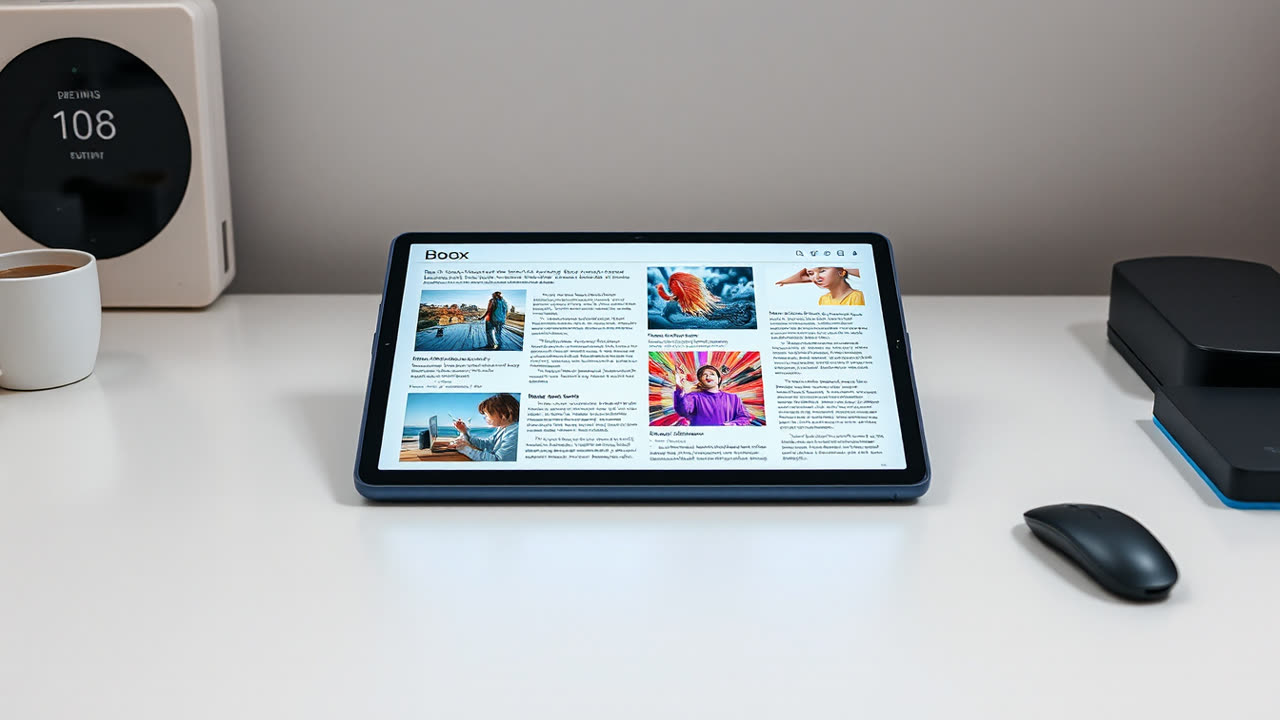
The Boox Note Air6C E Ink tablet achieves a roughly 40 percent faster page-turn speed, a significant leap for color E Ink technology that promises to fundamentally reshape the user experience of digital reading and note-taking. This 10.3-inch device, running on Android 16 and offering full access to the Google Play Store, addresses one of the most persistent criticisms of E Ink displays: sluggish responsiveness. The integration of a cutting-edge E Ink panel, likely the next iteration of Kaleido or Gallery technology, combined with optimized software and potentially a more powerful processor, allows for a more fluid interaction previously unattainable on color E Ink devices. This improvement is not merely incremental; it closes the performance gap with traditional LCD and OLED tablets, making the Boox Note Air6C a far more viable option for dynamic content consumption beyond static text.
The impact on users is profound, moving color E Ink devices from niche ereaders to genuine tablet alternatives. Faster page turns dramatically reduce the cognitive load associated with waiting for screen refreshes, enhancing immersion in graphic novels, complex PDFs, and digital textbooks that rely heavily on visual elements. For students and professionals, the ability to quickly navigate documents, switch between applications, and interact with web content without frustrating delays makes the device more suitable for productivity tasks. The full Android 16 operating system, coupled with Google Play Store access, means users are not locked into proprietary ecosystems but can leverage a vast library of applications, from productivity suites like Microsoft Office and Google Workspace to advanced drawing apps, all rendered in color. This versatility, powered by improved responsiveness, transforms the device from a specialized tool into a daily driver for a broader audience seeking a glare-free, battery-efficient, and eye-friendly digital experience.
Historically, color E Ink has struggled with both refresh rates and color vibrancy, often presenting muted palettes and noticeable ghosting. Previous generations, such as devices utilizing Kaleido 3 or even early Gallery 3 displays, while offering color, still suffered from refresh latencies that made interactions feel sluggish compared to monochrome E Ink or conventional tablets. The Boox Note Air6C's 40 percent speed increase positions it significantly ahead of its immediate predecessors, like the Boox Note Air5C, which likely relied on older E Ink color technologies and less optimized software. While specific technical details of the underlying E Ink panel are still emerging, this performance jump suggests advancements in E Ink's waveform controller technology and potentially a higher-performance front-light system, crucial for mitigating color washout. Its rivals, such as the Kobo Sage Colour or even the Kindle Scribe (which remains monochrome), offer strong reading experiences but lack either the open Android ecosystem, the color display, or the combined speed and versatility of the Air6C. The Remarkable 2, a popular monochrome note-taking tablet, excels in its focused, distraction-free writing experience but cannot compete on color display, app access, or multimedia capabilities. The Note Air6C effectively carves out a new segment, blending the best of E Ink's eye-friendliness with the functionality of a modern Android tablet.
Looking ahead, the Boox Note Air6C represents a critical inflection point for the E Ink industry. This performance benchmark will likely push competitors to accelerate their own color E Ink development, focusing on not just color fidelity but also refresh rates and overall system responsiveness. We can anticipate a new wave of color E Ink tablets in late 2026 and early 2027 that aim to match or surpass the Air6C's speed, potentially leading to a more competitive market with greater innovation in display technology, processor integration, and software optimization. The adoption of Android 16 also signals a trend towards more current and secure operating systems on E Ink devices, broadening their appeal to enterprise and educational sectors. Furthermore, as E Ink continues to improve, the distinction between "ereader" and "tablet" will blur further, with E Ink devices increasingly capable of handling tasks traditionally reserved for LCD/OLED screens, especially in environments where battery life, outdoor visibility, and eye comfort are paramount. The next generation could see even faster refresh rates, perhaps approaching the fluidity of 60Hz displays for basic interactions, alongside higher resolution and more vibrant color reproduction, making E Ink a truly compelling alternative for a wider array of computing needs.