The iPhone Duo's Crease: Apple's Long-Term Foldable Challenge
The initial minimal crease of Apple's rumored iPhone Duo presents a critical long-term durability enigma, testing user trust and Apple's reputation in the burgeoning foldable market.
✨ This content was summarized and interpreted by AI; it may contain errors — please verify accuracy with the original sources. Learn more
Listen to this story
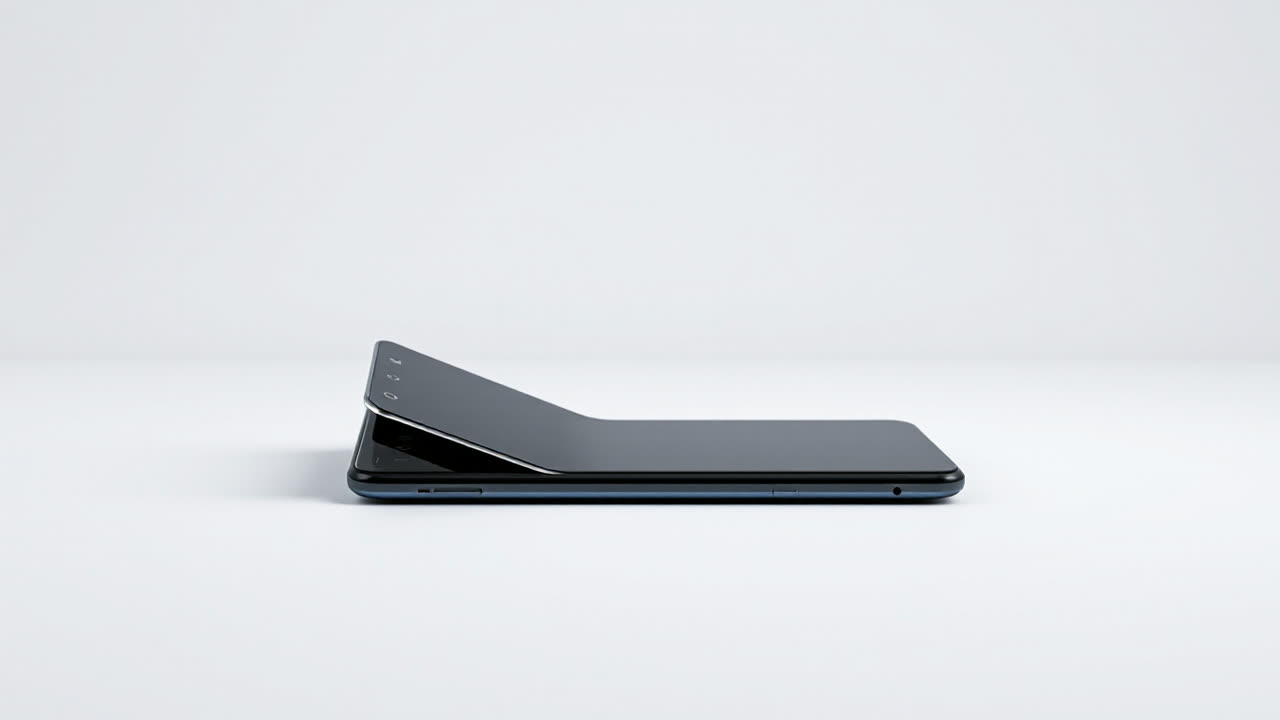
The initial, impressive minimalism of the iPhone Duo's display crease, as reported, presents a critical long-term enigma for Apple and the burgeoning foldable market. While early reviews often laud the immediate aesthetic and tactile quality of a new foldable's hinge and screen, the true test of engineering prowess and material science unfolds over months and years of real-world use, a timeline during which the subtle initial crease can evolve into a more pronounced, and potentially distracting, valley. This delayed revelation of crease visibility is not merely a cosmetic concern; it strikes at the heart of user trust, product longevity, and Apple's stringent reputation for premium, enduring hardware, setting a unique challenge for its potential entry into a segment already grappling with consumer skepticism regarding durability.
The core issue lies in the fundamental physics of flexible displays. Unlike rigid smartphone screens, foldable panels, typically made from ultra-thin glass (UTG) or advanced polymer layers, are subjected to constant stress cycles with every opening and closing of the device. Early foldable iterations, such as the first-generation Samsung Galaxy Fold, famously exhibited significant and rapidly developing creases, alongside other durability concerns that necessitated redesigns. While subsequent generations from Samsung, like the Galaxy Z Fold 5 and Z Flip 5, and new entrants like the Google Pixel Fold and OnePlus Open, have made substantial strides in hinge design and display materials, reducing crease prominence significantly, the crease remains a visible, if less intrusive, characteristic. Many current foldables employ a "waterdrop" or "teardrop" hinge mechanism, which allows the screen to fold into a gentler, wider curve when closed, thereby reducing the sharp crease point and distributing stress more effectively. This innovation has been instrumental in minimizing initial crease visibility and improving long-term resilience. However, even with these advancements, microscopic fatigue in the display layers, dust ingress, and temperature fluctuations can all contribute to the gradual degradation of the crease area, potentially leading to increased visibility or even display anomalies over time.
For users, the long-term visibility of the crease significantly impacts the device's perceived value and daily utility. An initially "minimal" crease might be acceptable, or even negligible, in a brand-new device. However, if this crease becomes more pronounced, discolored, or develops tactile unevenness after a year or two, it can detract from the immersive experience, particularly when viewing content with bright backgrounds or swiping across the fold line. This directly challenges the premium price point typically associated with foldables and, more acutely, with any potential Apple device. Consumers investing upwards of $1,500-$2,000 for a flagship foldable expect an uncompromised experience for at least the typical two-to-three-year upgrade cycle. A degrading crease could diminish resale value and user satisfaction, potentially leading to shorter retention times and negative brand perception. Given Apple's meticulous attention to industrial design and user experience, any noticeable long-term crease degradation could be particularly damaging to its brand image, which is built on a foundation of seamless aesthetics and robust build quality.
From an industry perspective, Apple's entry into the foldable market, even hypothetically as the "iPhone Duo," carries immense weight. The company's legendary ability to refine existing technologies and set new industry standards means that its approach to the crease problem would be intensely scrutinized. If Apple truly achieves an "impressively minimal crease" at launch, the expectation would be that this standard of perfection endures. Competitors, who have invested years in iterating and improving their foldable designs, would face renewed pressure to match or exceed Apple's long-term durability metrics. Apple's rumored patents for self-healing screen coatings and advanced hinge mechanisms suggest a deep commitment to addressing these challenges head-on, potentially leveraging novel materials or engineering solutions that could fundamentally alter the trajectory of foldable display technology. For example, patents have explored micro-cracking prevention layers and hinges that actively pull the screen taut when unfolded, aiming for a truly flat surface.
Looking ahead, the long-term performance of the "iPhone Duo's" crease will be a benchmark for the entire foldable industry. If Apple can maintain its initial crease minimalism over extended periods, it would validate years of research and development in display and hinge technology, potentially accelerating mainstream adoption of foldables by assuaging consumer fears about durability. This could usher in a new era of foldable design, where the crease becomes a non-issue rather than an inherent compromise. Conversely, if the crease proves susceptible to the same long-term degradation observed in earlier rival models, it would underscore the persistent, complex challenges in mass-producing truly durable flexible displays and could temper enthusiasm for the entire category, even for Apple. The ultimate success of the "iPhone Duo" will not be judged solely on its initial appearance but on its ability to defy the gravitational pull of physics and maintain its pristine form against the relentless march of time and repeated use. The waiting game for this verdict is not just for users, but for the future of foldable technology itself.