The Panasonic Q: Nintendo's Rare DVD GameCube Commands Over $1,000
This unique Japanese-exclusive GameCube variant, capable of playing standard CDs and DVDs, has become a highly sought-after collector's item, far exceeding its original price.
✨ This content was summarized and interpreted by AI; it may contain errors — please verify accuracy with the original sources. Learn more
Listen to this story
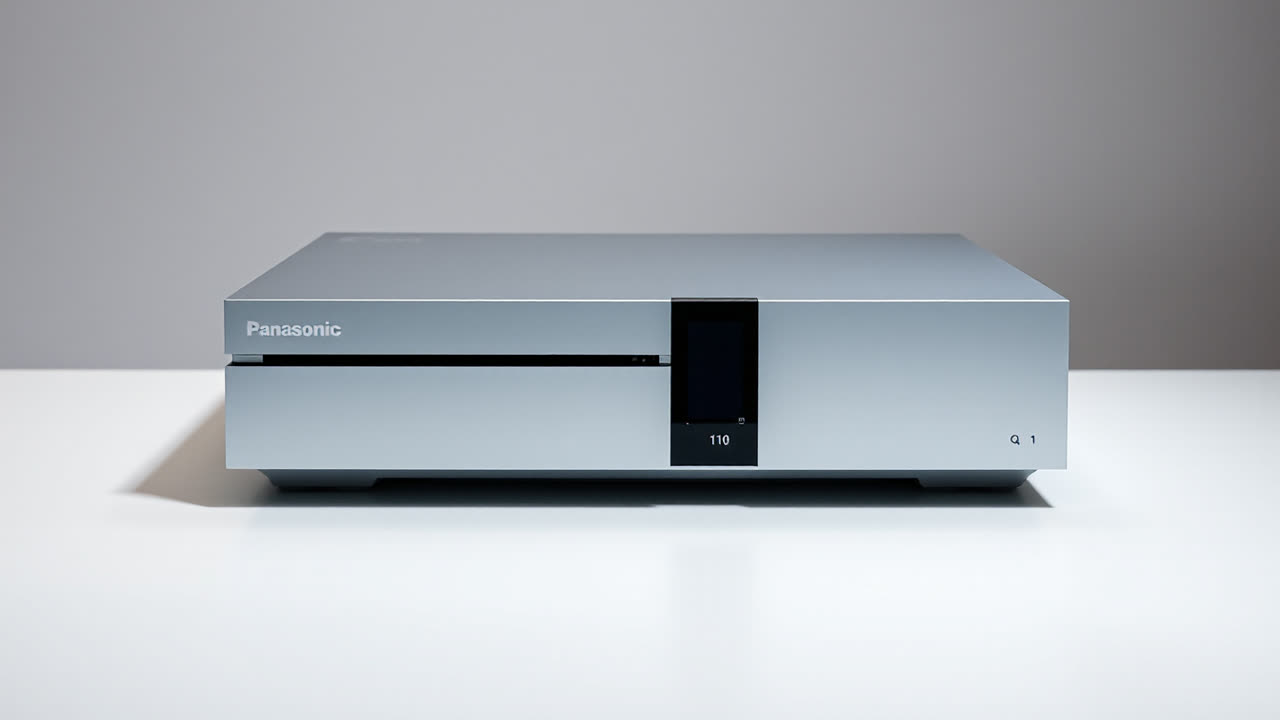
The Panasonic Q, a rare Nintendo GameCube variant capable of playing standard CDs and DVDs, routinely commands prices exceeding $1,000 on the secondary market today, far surpassing its original retail cost and dwarfing the value of a standard GameCube console. This cult item, released exclusively in Japan in December 2001, represents Nintendo's fleeting and largely unsuccessful attempt to address a significant multimedia gap in its console offerings during the sixth generation of gaming.
The core news is the Panasonic Q's enduring, skyrocketing value, driven by its extreme rarity and unique feature set. Unlike the standard GameCube, which utilized proprietary 8 cm mini-DVD discs and lacked native DVD-Video playback, the Panasonic Q integrated a full-sized DVD player, transforming the compact console into a genuine home entertainment hub. This hybrid device featured a distinctive metallic silver finish, a vertical disc tray with a clear door, and an illuminated LCD screen displaying track information, a stark contrast to the standard GameCube's purple, indigo, or black plastic shell. Additional enhancements included an optical audio output for superior sound quality, a dedicated subwoofer output, and a remote control, underscoring its multimedia ambitions. Originally priced at ¥39,800 (approximately $330 at 2001 exchange rates), the Q was significantly more expensive than the standard GameCube's ¥25,000 launch price, contributing to its limited appeal and production run.
The Panasonic Q's significance extends beyond its collector's appeal, offering a critical insight into the console wars of the early 2000s and Nintendo's strategic missteps in adapting to evolving consumer demands. While the Sony PlayStation 2, launched in 2000, famously included a DVD player as a standard feature, becoming the fastest-selling console partly due to its dual functionality, Nintendo initially dismissed multimedia playback as secondary to gaming. Microsoft's Xbox, released concurrently with the GameCube, also supported DVD playback via an optional adapter. The Q was Nintendo's belated, indirect response to this market trend, a partnership with Panasonic that acknowledged the growing importance of convergence devices without fully committing to it across its primary product line. This hesitation ultimately cost Nintendo market share against rivals whose consoles served as both gaming machines and affordable DVD players, especially during a period when standalone DVD players were still relatively expensive.
Comparing the Q to its contemporaries, it was a technological curiosity rather than a market disruptor. The standard GameCube, despite its powerful graphics processor and focus on pure gaming performance, suffered from its proprietary disc format, which limited storage capacity and precluded mainstream multimedia playback. The Panasonic Q addressed this, but its high price point, limited availability, and the existing dominance of the PS2 as a multimedia console meant it never gained significant traction. Its existence highlights a fundamental philosophical difference: Sony and Microsoft embraced the console as a living room entertainment centerpiece, while Nintendo steadfastly prioritized gaming above all else, a strategy that would later prove successful with the Wii but was a hindrance in the sixth generation.
The enduring value of the Panasonic Q today reflects several factors. Its extreme scarcity, estimated at only a few thousand units produced, makes it a prime target for collectors. Furthermore, its unique position as the only official Nintendo-licensed GameCube capable of DVD playback gives it historical importance, representing a specific, albeit brief, moment in Nintendo's hardware development. The console also boasts a distinct aesthetic that appeals to enthusiasts of industrial design. Its current market value, often ranging from $1,000 to $2,000 depending on condition and completeness, underscores a broader trend in retro gaming: the appreciation of historically significant, rare, and unique hardware, particularly units that pushed technological boundaries or represented pivotal moments in a company's strategy.
Looking ahead, the Panasonic Q's story serves as a valuable case study for the retro gaming market and the evolution of console design. Its continued appreciation suggests that niche, historically significant hardware will remain highly sought after, especially as gaming history becomes more formalized. For current console manufacturers, the Q's legacy reinforces the importance of understanding consumer expectations regarding multimedia and convergence, even in an era dominated by streaming and digital distribution. While physical media's role in gaming continues to diminish, the Q reminds us of a time when the disc drive was paramount, and a console's ability to play movies could define its market success. The future for such devices lies in their status as museum pieces, tangible artifacts of a bygone era in technological innovation, whose value is measured not just in dollars, but in their narrative contribution to the rich tapestry of gaming history.