The Persistent Wobble: Foldable Phones' Unresolved Camera Bump Issue and Apple's Challenge
The relentless pursuit of thinner profiles in foldable smartphones has inadvertently exacerbated a persistent ergonomic flaw: the pronounced camera bump, which renders devices like Samsung’s latest Galaxy Z Fold 8 inherently unstable when laid flat.
✨ This content was summarized and interpreted by AI; it may contain errors — please verify accuracy with the original sources. Learn more
Listen to this story
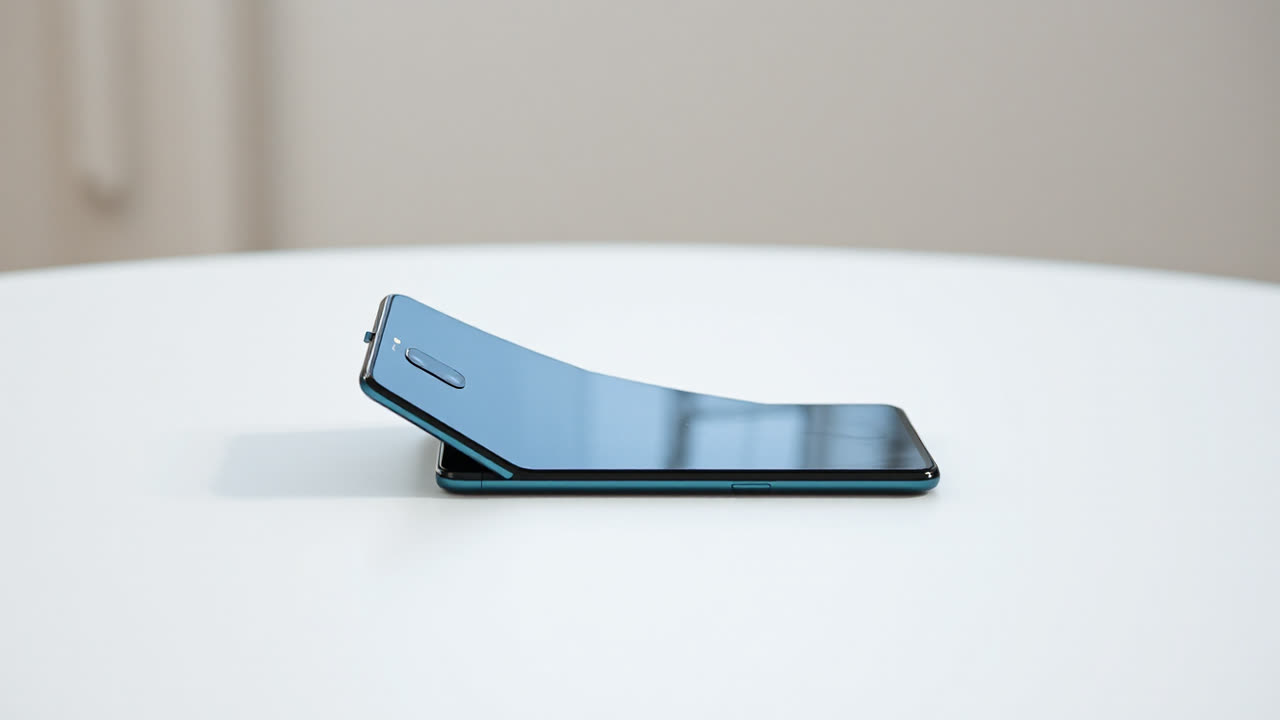
The relentless pursuit of thinner profiles in foldable smartphones has inadvertently exacerbated a persistent ergonomic flaw: the pronounced camera bump, which renders devices like Samsung’s latest Galaxy Z Fold 8 inherently unstable when laid flat. This "wobble," as it's commonly described, undermines the premium experience of a device designed for expansive, flat-screen use, a problem the highly anticipated iPhone Ultra may struggle to fully remedy despite its own ambitious design goals.
While Samsung has made significant strides in refining its Z Fold series, evolving from the original Galaxy Fold's bulky 15.7-17.1mm folded thickness to the Z Fold 7's svelte 8.9mm and 215-gram frame, the camera module remains a stubborn design constraint. The Z Fold 8 Ultra, for instance, maintains similar dimensions to its predecessor, with its camera lenses still protruding considerably. This necessary protrusion, housing advanced optics, creates an uneven surface that causes the device to rock when interacting with the unfolded main display on a flat surface. It’s a subtle yet annoying friction point that detracts from the seamless tablet-like experience foldables promise.
Beyond the wobble, the foldable form factor continues to grapple with fundamental engineering tensions that impact user adoption. The visible crease along the fold line, while significantly reduced in models like the Galaxy Z Fold 8 Ultra to "almost imperceptible" levels, can still become more noticeable over time with repeated use, a concern echoed by users comparing it to rivals like the Oppo Find N6. The flexible OLED displays, by their very nature, remain more susceptible to damage along the fold than rigid glass, leading to concerns about hairline cracks or display distortion. Hinge mechanisms, despite innovations like Samsung's Flex Hinge and sweeper technology designed to repel dust, are complex mechanical components prone to wear and tear, and sensitive to particulate ingress, potentially leading to looseness or failure over prolonged periods.
For users, these issues translate into a compromise that many are unwilling to make for devices that command premium prices, often starting around $1,899 for the Galaxy Z Fold 7 and $2,300 for the Z Fold 8 Ultra. A CNET survey in 2025 found that 64% of respondents were not interested in buying a foldable, citing high prices (36%), durability concerns (31%), and a lack of clear advantages over traditional smartphones (31%). Furthermore, the inherent thickness and weight of foldables, despite ongoing reductions, still make them feel chunkier than conventional flagships when folded, impacting pocketability and ergonomics. Battery life often lags behind traditional slab phones due to the internal space constraints and the power demands of larger, dual displays. Software optimization also remains a hurdle, with many Android apps failing to fully leverage the expanded screen real estate, leading to awkward layouts.
The industry, however, is on the cusp of a significant shift with Apple's rumored entry into the foldable market. Expected to launch in late 2026, possibly as the iPhone 18 Ultra, Apple's first foldable is projected to capture an impressive 25-28% global market share in its debut year, despite its late arrival. This entry is seen as a "key inflection point," capable of validating the category for a mainstream audience that has historically remained within the Apple ecosystem, with 16.5% of surveyed consumers explicitly stating they are waiting for an Apple foldable.
Rumors suggest the iPhone Ultra will adopt a book-style design, similar to a compact iPad mini when unfolded, featuring a 5.5-inch outer and 7.8-inch inner OLED display. Apple is reportedly targeting extreme thinness, with the device potentially measuring just 4.5mm when unfolded and around 9mm when folded, potentially making it the thinnest iPhone ever. To address the crease, Apple is said to be employing a durable liquid metal hinge, two layers of ultra-thin glass, and an optically clear adhesive designed to fill micro-gaps over time, aiming for a "minimal" or "crease-free" display. Its rumored weight of 230-241 grams, while heavier than the standard Z Fold 8, is comparable to the iPhone 17 Pro Max, suggesting Apple aims to deliver a tablet-sized experience without significantly exceeding the heft of its largest traditional phone.
Despite these innovations, the camera bump and resulting wobble remain an open question for Apple. Achieving extreme thinness while incorporating a high-performance camera system, likely powered by the new A20 Pro chip, presents the same physical challenges that Samsung faces. While Apple's design philosophy often prioritizes seamless user experience, the laws of physics governing optics and form factor are unyielding. It remains to be seen if Apple's solution will truly eliminate the wobble or merely mitigate it, much like the ongoing battle against the visible crease.
Looking ahead, the foldable market is projected for substantial growth, with shipments forecast to increase by over 30% year-on-year in both 2026 and 2027, ushering in a "wide-fold" era. The intensified competition, particularly from Apple, will likely spur further innovation in hinge durability, display technology, and overall device ergonomics. Future designs could feature "zero-gap" hinges to eliminate the folded screen gap or even entirely new form factors like rollable phones, which would bypass the hinge issue altogether. However, until these fundamental design challenges, including the persistent wobble caused by camera modules, are truly overcome, foldables will continue to occupy a premium niche, awaiting the iteration that delivers a truly uncompromised experience.