The Quiet Revolution: Minimalist Wearables Prioritize Passive Health Over Digital Distraction
The wearable technology market is undergoing a significant transformation, moving from notification-heavy smartwatches to minimalist devices that offer comprehensive health data collection without constant digital demands, addressing user burnout.
✨ This content was summarized and interpreted by AI; it may contain errors — please verify accuracy with the original sources. Learn more
Listen to this story
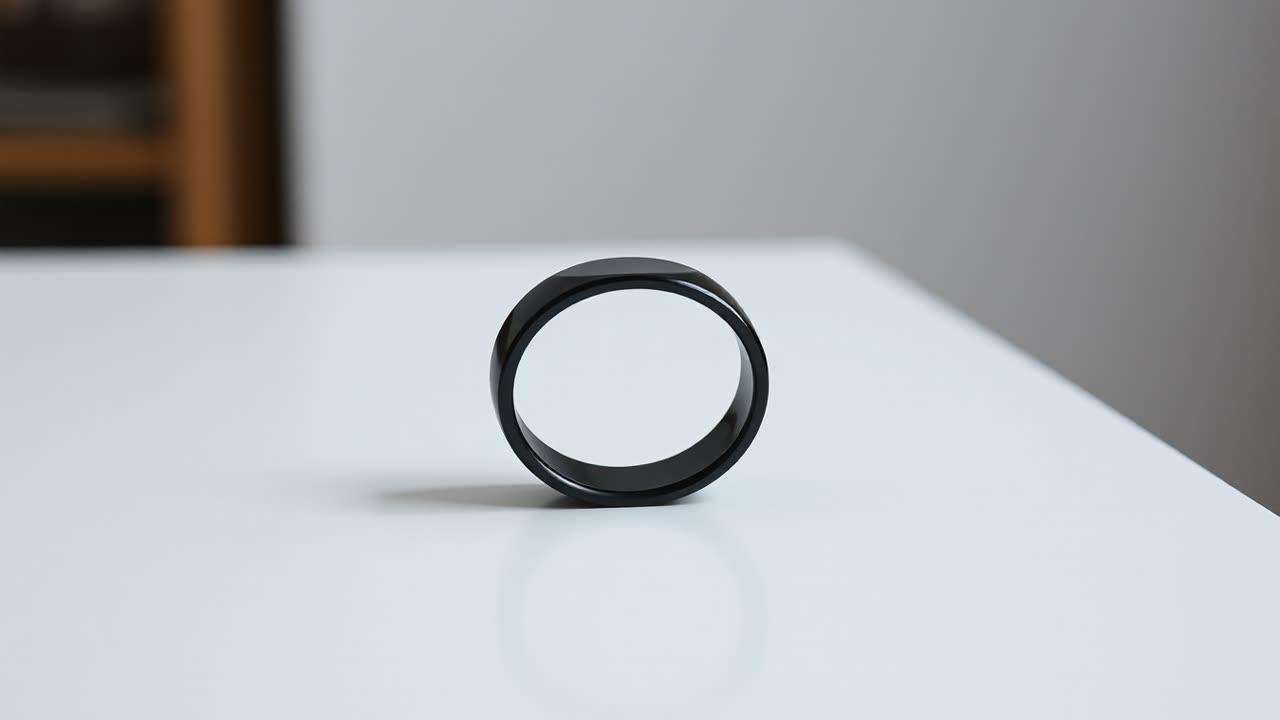
The wearable technology market is experiencing a significant shift away from notification-heavy smartwatches towards minimalist devices designed for passive health data collection, promising insights without constant digital demands. This burgeoning segment, exemplified by smart rings and screen-free bands, aims to alleviate user burnout from notification overload while still providing comprehensive health monitoring. The global smart ring market alone was valued at $416.9 million in 2025 and is projected to reach $3.77 billion by 2034, demonstrating a robust compound annual growth rate (CAGR) of 29.30%.
These minimalist wearables, such as the Oura Ring, WHOOP Strap, and the newer Samsung Galaxy Ring and Garmin CIRQA Smart Band, prioritize continuous, unobtrusive tracking of vital health metrics. For instance, the Oura Ring 4, priced from $349 to $499, tracks heart rate, sleep stages, stress levels, body temperature, and blood oxygen, offering an impressive 8-day battery life and a fully titanium build. The Samsung Galaxy Ring, released on July 10, 2024, at $399.99, similarly focuses on biometric health monitoring, including heart rate, sleep patterns, daily activity, and blood oxygen levels, with a battery lasting up to seven days. Garmin's recently announced CIRQA Smart Band, set for a possible late spring to early summer 2026 launch, aims to compete in this space with its screen-free design, 10-day battery life, and 24/7 health and fitness monitoring without a subscription. These devices leverage advanced sensors like accelerometers, photoplethysmography (PPG), and skin temperature sensors to collect data in the background.
The appeal of "passive health" monitoring is multifaceted. Users are increasingly seeking to reduce notification fatigue and cognitive load associated with smartwatches, which often mimic smartphone functionality. By eliminating screens and constant alerts, minimalist wearables enable users to collect health data without prompting compulsive checking. This shift fosters better adherence to tracking, particularly for sleep and recovery, as the devices are designed to be worn continuously, even overnight. The data, accessed through companion apps, allows for intentional review of insights rather than reactive engagement with immediate notifications. This approach aligns with a growing desire for "quiet luxury tech" where sophistication is signaled by restraint rather than overt displays.
This trend matters profoundly for both users and the industry. For users, it promises a less intrusive, more integrated approach to personal health management. The continuous, low-friction data collection provided by passive monitoring is crucial for generating meaningful, long-term health insights and can even enable early detection of health issues before symptoms become apparent. This moves healthcare from an episodic model to a more preventive and responsive one, offering objective, real-world data that is less susceptible to recall bias than self-reported information. However, it's important to acknowledge that while these devices are highly accurate for metrics like resting heart rate and step counts, their precision for sleep stages, stress, and energy expenditure can be more variable. Wearables are not yet diagnostic tools, but rather provide signals and patterns that can indicate potential health shifts.
Compared to their smartwatch predecessors, these minimalist wearables offer distinct advantages in discretion, comfort, and battery life, often lasting several days to over a week on a single charge. While smartwatches like the Apple Watch Series 10 and Samsung Galaxy Watch 7 excel in real-time workout tracking, notifications, and app integration, minimalist rings and bands are specifically designed to "disappear" on the body, making them ideal for continuous, 24/7 tracking, especially overnight. The Oura Ring, for example, is considered superior for sleep tracking and recovery monitoring, while the Apple Watch is stronger for active heart rate and blood oxygen monitoring. The market for wearable technology as a whole is booming, projected to grow from $231.45 billion in 2026 to approximately $703.32 billion by 2035, with North America leading in adoption due to heightened health consciousness.
Looking ahead, the future of these minimalist wearables is poised for deeper integration with AI and advanced analytics, transforming them from data trackers into personalized health and wellness coaches. This AI-driven analysis will establish individual baselines and identify health trends for improved longevity, offering continuous, intelligent feedback. The continued miniaturization of sensors and advancements in battery technology will further enhance their unobtrusive nature. There is also a strong push towards greater accuracy and clinical validation, with some devices already offering medical-grade features like ECG monitoring. The integration of these passive health insights into broader healthcare platforms will be critical, allowing for proactive care and potentially reducing healthcare costs. However, challenges remain, including ensuring data privacy and security, standardizing data quality across devices, and overcoming the high costs of advanced models which can limit adoption. The emphasis will increasingly be on translating these subtle physiological shifts into actionable insights, empowering users to make informed decisions about their well-being without being overwhelmed by a constant stream of digital distractions.