The Range Rover Electric Has Arrived: Redefining Luxury SUV Electrification
The Range Rover Electric has finally launched, marking a pivotal moment for JLR's "Reimagine" strategy and the ultra-luxury SUV segment, boasting 542 horsepower and a 333-mile EPA range at a starting price of $138,000, which signifies a crucial, albeit costly, entry into a competitive market while serving as a litmus test for JLR's ambitious electrification future.
✨ This content was summarized and interpreted by AI; it may contain errors — please verify accuracy with the original sources. Learn more
Listen to this story
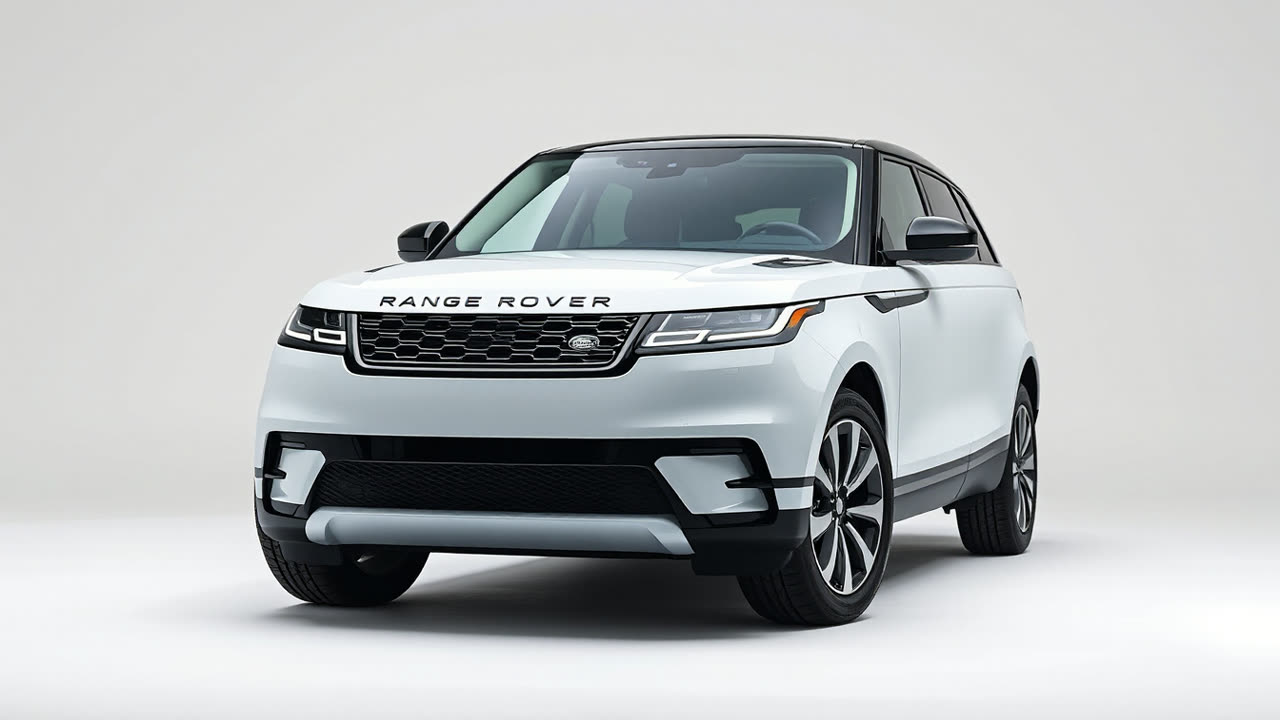
The Range Rover Electric has finally arrived, marking a pivotal moment for JLR's "Reimagine" strategy and the ultra-luxury SUV segment, boasting a dual-motor powertrain delivering 542 horsepower and an EPA-estimated range of 333 miles. This long-anticipated electric iteration of the iconic SUV, available for order now, aims to redefine silent luxury and unparalleled off-road capability with a starting price in the U.S. of $138,000, or $140,450 including destination and handling, making it a significant, albeit costly, entry into a competitive market.
Underpinning its formidable performance are two 260 kW permanent-magnet motors, one on each axle, generating a combined 627 pound-feet of torque—surpassing even the V8-powered Range Rover SV and enabling a swift 0-60 mph acceleration in just 4.3 seconds. Power is supplied by a substantial 118.5 kWh usable capacity battery, constructed from 344 prismatic cells in a double-stacked arrangement, integrated within an 800-volt electrical architecture. This advanced architecture facilitates rapid DC fast charging at up to 350 kW, allowing a 10-80% charge in approximately 22 minutes, or adding 125 miles of range in just 10 minutes. To combat range degradation in extreme climates, a ThermAssist heat management system optimizes battery performance and can add up to 25 miles of range in cold conditions.
Crucially for the brand's heritage, the Range Rover Electric maintains the legendary off-road prowess, boasting a 900mm (35.4 inches) wading depth that matches or even exceeds its combustion-engine counterparts. Its Integrated Traction Management (ITM) system offers wheel slip response 100 times faster than an internal combustion engine, reacting in as little as 50 milliseconds, which enhances control and confidence on challenging terrain. Despite its electric powertrain, the vehicle retains the familiar Range Rover silhouette, with only subtle aerodynamic enhancements like a unique grille and wheels. However, the design choice to prioritize interior space and powertrain packaging means there is no "frunk" or front luggage compartment. Towing capacity stands at a respectable 5,500 pounds, although this is less than the 7,700 pounds offered by gas models. The vehicle is available in short- and long-wheelbase configurations, across SE, Autobiography, SV, and a special First Edition trim, with the top-tier SV Ultra model pushing prices beyond $275,000 in the U.S. and over £225,000 in the UK. For the critical North American market, JLR has strategically incorporated the North American Charging Standard (NACS) plug, granting owners access to the extensive Tesla Supercharger network.
This launch is more than just a new model; it's a litmus test for JLR's ambitious "Reimagine" strategy, which committed to significant electrification across its portfolio. The Range Rover Electric's arrival, initially promised for 2024 but delayed until the 2027 model year, reflects the inherent complexities and market recalibrations in the luxury EV space, with JLR revising its aggressive EV targets in response to a "stuttering global EV market" and robust plug-in hybrid sales. The company has invested $5 billion in its Solihull plant to produce batteries and electric motors, demonstrating a deep commitment to vertical integration and future EV development.
For consumers, the Range Rover Electric promises an elevated driving experience characterized by unprecedented quietness and refinement, leveraging the inherent smoothness of electric propulsion to enhance the luxury quotient. The immediate and precise torque delivery of the electric motors transforms the off-road experience, making it even more effortless and controlled. However, the premium price point places it above many competitors, including the Cadillac Escalade IQ, and significantly above the BMW iX and Porsche Cayenne Electric, both of which offer longer WLTP ranges of 426 miles and 405 miles respectively, compared to the Range Rover Electric's 372 miles (WLTP). Only the Mercedes-Benz G-Class Electric is priced higher, albeit with a shorter range of 291 miles. This positioning underscores JLR's confidence in the Range Rover brand's unique blend of luxury, capability, and heritage to justify its cost.
Looking ahead, the Range Rover Electric's success is paramount for JLR as it navigates the transition to an electrified future. Its performance will inform the rollout of other planned EVs, including the Range Rover Sport Electric and subsequent models built on the flexible MLA-Flex and EMA platforms. The decision to maintain a shared architecture (MLA-Flex) that accommodates ICE, PHEV, and BEV powertrains allows JLR production flexibility to adapt to evolving global demand, a pragmatic approach in a volatile market. The true analytical value lies in how successfully Range Rover can convince its traditionally loyal customer base that electric power not only preserves, but enhances, the core tenets of the brand: supreme luxury, commanding performance, and legendary go-anywhere capability, without significant compromise. The seamless integration of electrification into an existing, beloved icon, rather than creating a radically different EV, is a calculated gamble, betting that familiarity, enhanced by electric refinement, will ultimately win over the discerning luxury buyer.