The re-emergence of the Pebble Time 2, priced at a striking $225, arrives in the 2026 smartwatch landscape as a defiant counterpoint to the industry's prevailing trends, prioritizing distinct functionality and user autonomy over the ubiquitous high-resolution touchscreens and feature bloat.
This latest iteration, sporting physical buttons, a color e-paper display, and an advertised battery life measured in weeks, deliberately harks back to the original Pebble's ethos, injecting a "playful hacker spirit" into a market saturated with increasingly similar devices.
✨ This content was summarized and interpreted by AI; it may contain errors — please verify accuracy with the original sources. Learn more
Listen to this story
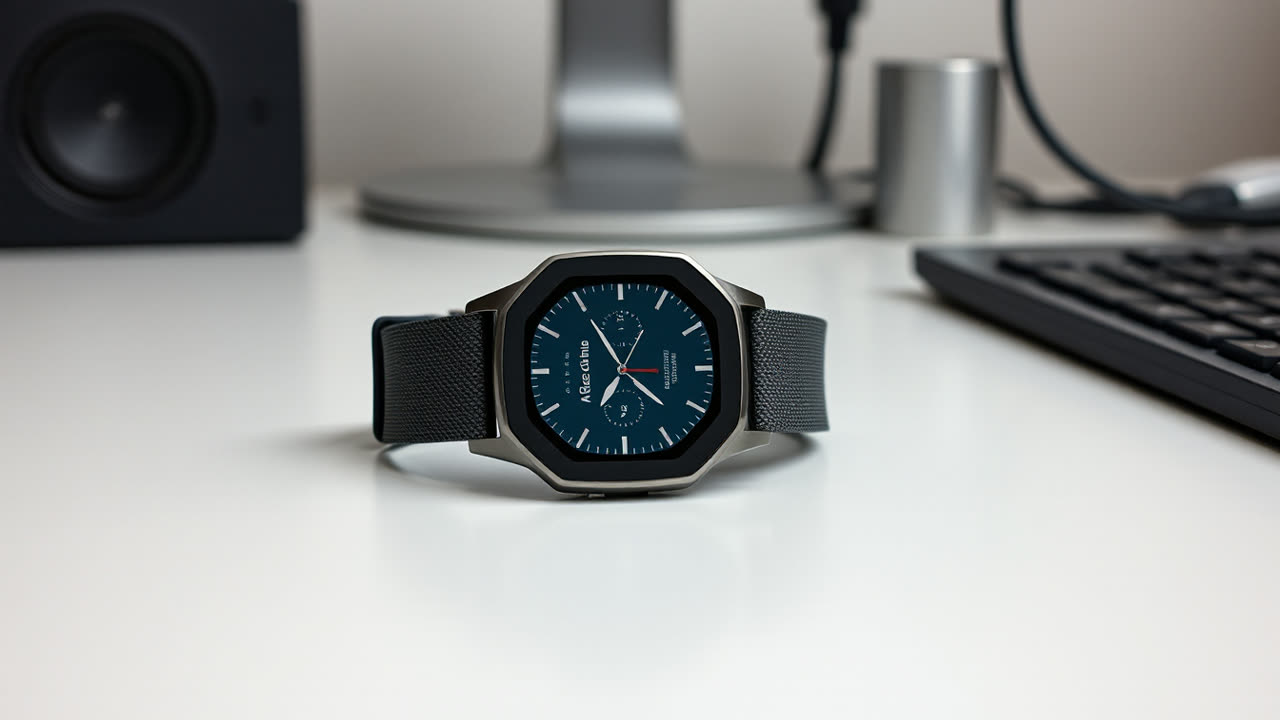
The re-emergence of the Pebble Time 2, priced at a striking $225, arrives in the 2026 smartwatch landscape as a defiant counterpoint to the industry's prevailing trends, prioritizing distinct functionality and user autonomy over the ubiquitous high-resolution touchscreens and feature bloat. This latest iteration, sporting physical buttons, a color e-paper display, and an advertised battery life measured in weeks, deliberately harks back to the original Pebble's ethos, injecting a "playful hacker spirit" into a market saturated with increasingly similar devices. Its core appeal lies in a refreshing simplicity that stands in stark contrast to the sophisticated, power-hungry mini-computers strapped to most wrists today.
The Pebble Time 2's deliberate design choices — namely its always-on e-paper display and tactile physical buttons — offer significant user advantages that mainstream smartwatches have largely abandoned. While competitors like the Apple Watch Series 12 and Samsung Galaxy Watch 9 boast vibrant OLED screens and intricate gesture controls, their daily or bi-daily charging cycles remain a persistent pain point for users. The Pebble Time 2's promise of "weeks of battery life" is not merely a convenience; it fundamentally changes the user relationship with the device, allowing for uninterrupted tracking, notifications, and time-telling without constant battery anxiety. This extended endurance is a direct benefit of the low-power e-paper technology, which, while not offering the photographic fidelity of OLED, provides excellent outdoor visibility and a unique aesthetic. The return to physical buttons, eschewing potentially finicky touch interfaces, enhances usability in adverse conditions, during workouts, or when wearing gloves, appealing to a segment of users who value practicality and immediate feedback over slick, but sometimes imprecise, touch gestures.
This revival of Pebble’s distinct philosophy matters deeply for both users and the broader industry. For consumers, it presents a genuine alternative to the dominant paradigms, proving that a smartwatch doesn't need to replicate a smartphone on the wrist to be valuable. It champions utility, longevity, and a less intrusive form of digital interaction. In an era where digital fatigue is growing, a device that offers essential information and notifications without demanding constant attention or frequent recharging could resonate strongly. For the industry, the Pebble Time 2's success could pressure larger manufacturers to reconsider their relentless pursuit of advanced, power-hungry features. It might encourage diversification in display technologies and input methods, potentially fostering innovation in areas like energy efficiency and user customization that have taken a backseat to raw processing power and graphical prowess. Furthermore, the emphasis on a "hacker spirit" suggests a more open platform, inviting developers and tinkerers to create unique watch faces and applications, a stark contrast to the more walled-garden ecosystems prevalent elsewhere. This could cultivate a vibrant, creative community, much like the original Pebble fostered.
The historical context of Pebble is crucial to understanding the significance of the Time 2. The original Pebble, a Kickstarter phenomenon, pioneered the modern smartwatch category with its focus on notifications, customizable watch faces, and impressive battery life, using similar e-paper technology. Its eventual acquisition by Fitbit in 2016 and the subsequent discontinuation of its services left a void for many loyal users who valued its unique approach. The 2026 re-introduction of the Pebble Time 2, under what appears to be new stewardship, resurrects a beloved brand identity and a product philosophy that stood apart. Compared to its 2026 rivals, which typically retail from $250 to upwards of $500 for premium models, the $225 price point of the Pebble Time 2 positions it as an accessible yet feature-rich option. While the Apple Watch Series 12 might offer advanced health sensors like continuous glucose monitoring and sophisticated cellular capabilities, and the Garmin Forerunner 1000 provides hyper-accurate multi-sport tracking with multi-day battery life, the Pebble Time 2 carves out its niche by focusing on core smartwatch functions, robust battery life, and a playful, customizable interface without the premium price tag or the complexity.
Looking ahead, the Pebble Time 2’s trajectory will depend on its ability to leverage its nostalgic appeal while delivering modern reliability and continued software support. If it can successfully cultivate a new generation of developers and maintain the "hacker spirit" that defined its predecessor, it could solidify its position as the go-to choice for users seeking simplicity, longevity, and a touch of individuality in their wearable tech. Its success might even inspire a broader trend towards "de-smartification" in certain tech categories, where users increasingly value focused functionality and extended battery life over an endless stream of features. However, the challenge will be to attract new users beyond the nostalgic fanbase and demonstrate that its unique feature set is not merely a throwback, but a genuinely superior user experience for a significant segment of the market. The Pebble Time 2 isn't just a new smartwatch; it's a statement against the status quo, and its performance will be a crucial indicator of whether the market is truly ready for a different kind of smart.