The Resurgence of DIY Retro Arcade Cabinets: Customization, Cost, and Community Empowerment
Building a custom retro arcade cabinet offers profound control over your gaming experience at a significantly lower cost than commercial alternatives, with projects ranging from $500 to $1,500.
✨ This content was summarized and interpreted by AI; it may contain errors — please verify accuracy with the original sources. Learn more
Listen to this story
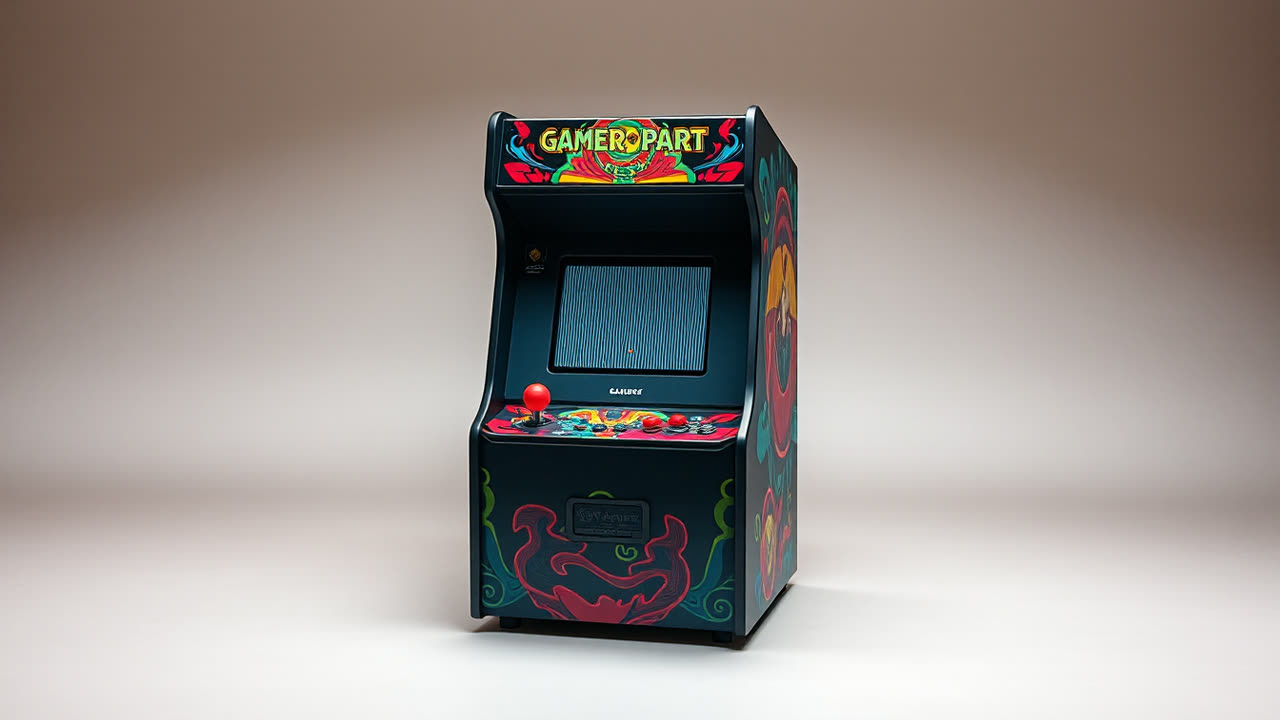
Building a custom retro arcade cabinet, a pursuit that blends digital nostalgia with tangible craftsmanship, offers enthusiasts a profound control over their gaming experience, often at a significantly lower cost than commercial alternatives, with estimates for a comprehensive DIY project ranging from $500 to $1,500 depending on component choices and cabinet materials. This hands-on approach transforms a passive consumer into an active creator, allowing for unparalleled customization in hardware, software, and aesthetics that pre-built units rarely match. The core appeal lies not just in playing classic games, but in resurrecting a piece of gaming history tailored precisely to individual preferences, from the specific feel of Sanwa or Happ joysticks to the intricate artwork adorning the cabinet.
The resurgence of interest in retro gaming is a powerful driver behind the DIY arcade cabinet phenomenon, extending beyond simple emulation on modern screens to a desire for authentic, tactile experiences. This trend matters significantly because it empowers users to reclaim a sense of agency in a market increasingly dominated by proprietary ecosystems and subscription models. For the individual, constructing a cabinet provides a deeply satisfying project, fostering skills in carpentry, electronics, and software configuration. The impact on the industry is multifaceted: while it poses a minor challenge to manufacturers of pre-built "1-Up Arcade" style cabinets, it simultaneously fuels demand for specialized components like arcade buttons, joysticks, monitors (or monitor conversion kits), and single-board computers (SBCs) or mini-PCs. Companies like Ultimarc and Adafruit, specializing in arcade controls and DIY electronics, directly benefit from this vibrant builder community. Furthermore, the open-source nature of much of the emulation software, such as RetroPie running on a Raspberry Pi or Batocera/Recalbox, underscores a collaborative ethos that contrasts sharply with closed commercial systems, fostering innovation and accessibility.
Historically, dedicated arcade machines were monolithic, single-game units, evolving into multi-game JAMMA boards in later eras. The modern DIY cabinet, however, leverages powerful emulation software to host thousands of titles across multiple platforms, from Atari to PlayStation 1, within a single physical footprint. This represents a monumental leap in versatility compared to the fixed-functionality of original cabinets. When comparing a DIY build to purchasing a pre-built retro arcade, the differences are stark. Commercial offerings, like those from Arcade1Up, often retail between $300 and $700, providing convenience and a relatively compact form factor, but frequently compromise on component quality, screen size, and game selection, often locking users into a specific set of licensed titles. DIY projects, conversely, allow for industrial-grade components, full-size cabinet designs, and the freedom to install virtually any compatible emulator and ROM library. A typical DIY build begins with a cabinet – either constructed from scratch using MDF or plywood, or assembled from a pre-cut kit which can cost anywhere from $200 to $500. Inside, a Raspberry Pi 4 B (around $50-$75) or a more powerful mini-PC (starting at $200) serves as the brains, running Linux-based operating systems tailored for emulation. Input devices, including joysticks and buttons, can range from budget sets at $30 to premium, competition-grade components exceeding $150. A monitor, often a repurposed LCD or LED TV between 19 and 32 inches, is another significant cost, typically between $100 and $300. The total investment, while potentially higher than entry-level pre-builts, yields a product superior in durability, performance, and personal resonance.
Looking ahead, the trajectory of retro arcade cabinet building points towards increasing sophistication and accessibility. Advancements in single-board computing, with more powerful and affordable options continually emerging, will further simplify the technical barriers to entry. The advent of AI-upscaling and shader technology could enhance the visual fidelity of classic games on modern displays while retaining their original aesthetic, bridging the gap between pixel art and high-definition screens. Furthermore, the growing community of makers and online resources, including detailed build guides and open-source software development, will continue to democratize the process, making it easier for novices to undertake complex projects. The future may also see a stronger integration of online multiplayer functionality for classic titles, allowing these physical installations to connect to a global community of retro gamers. As nostalgia remains a potent force in entertainment, the bespoke retro arcade cabinet will likely evolve not just as a gaming device, but as a customizable piece of interactive art and a testament to personal passion in an increasingly digital world.