The Samsung Odyssey G80HS Redefines High-End Gaming Monitors with 6K/165Hz and Dual-Mode QHD/330Hz
The Samsung Odyssey G80HS redefines the high-end gaming monitor landscape by integrating a formidable 32-inch IPS panel that boasts a native 6K resolution of 6144x3456 pixels at a buttery-smooth 165 Hz, alongside an innovative dual-mode capability offering 3072x1728 (QHD) at an astounding 330 Hz.
✨ This content was summarized and interpreted by AI; it may contain errors — please verify accuracy with the original sources. Learn more
Listen to this story
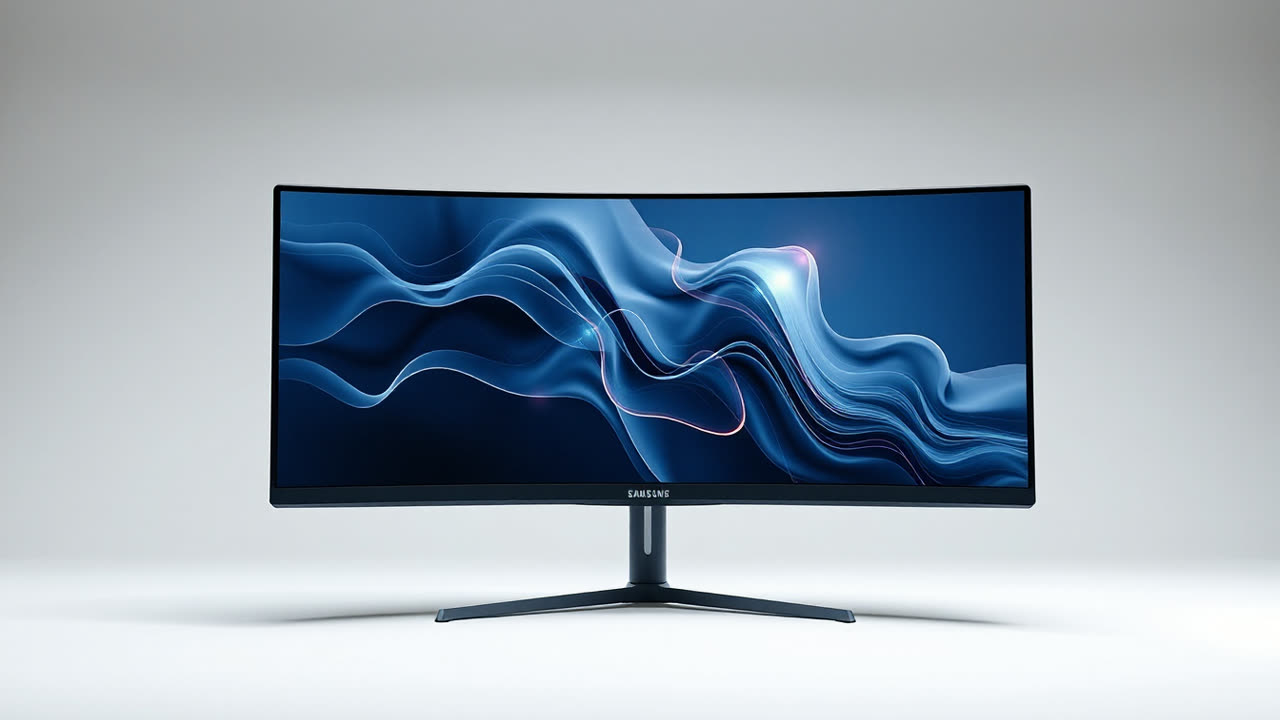
The Samsung Odyssey G80HS redefines the high-end gaming monitor landscape by integrating a formidable 32-inch IPS panel that boasts a native 6K resolution of 6144x3456 pixels at a buttery-smooth 165 Hz, alongside an innovative dual-mode capability offering 3072x1728 (QHD) at an astounding 330 Hz. This unprecedented combination of pixel density and refresh rate, coupled with HDR wide-gamut color and Adaptive-Sync within its sleek chassis, signals a significant escalation in the pursuit of visual fidelity and responsiveness for discerning gamers and professionals alike.
The G80HS's core appeal lies in its dual-personality display. At its full 6K resolution, the monitor delivers an exceptional level of detail, making individual pixels virtually indistinguishable at typical viewing distances. This translates into incredibly sharp textures, crisp text, and an immersive visual experience that blurs the line between virtual worlds and reality. For games that prioritize graphical fidelity and expansive vistas, such as open-world RPGs or simulation titles, the 6K/165Hz mode offers an unparalleled canvas. However, this level of detail comes with a substantial demand on graphics processing units; driving 6K at high frame rates requires top-tier, current-generation GPUs, potentially limiting its immediate accessibility to a niche segment of the market. The alternative QHD (3072x1728) mode at 330 Hz provides a stark contrast, catering to competitive esports players where every millisecond of response time and fluidity can make a difference. This intelligent design allows users to dynamically switch between visual grandeur and raw performance, depending on the application. The IPS panel ensures excellent viewing angles and color accuracy, further enhanced by HDR support and wide-gamut color, which are crucial for both vibrant gaming environments and professional content creation tasks.
This monitor's introduction fundamentally shifts expectations for premium display technology, pushing beyond the established 4K high-refresh rate paradigm. While 4K gaming monitors have become increasingly common, a 6K resolution on a 32-inch panel yields a pixel density of approximately 230 PPI, significantly sharper than 4K's ~138 PPI on the same screen size. This leap in resolution directly impacts user experience, providing greater screen real estate for productivity applications, allowing for more windows and finer detail in creative software, effectively merging the needs of professional content creators with high-performance gamers. For the industry, the G80HS sets a new benchmark, challenging other manufacturers to innovate beyond current offerings. It forces GPU developers to consider the next frontier of display output, accelerating the demand for even more powerful graphics cards capable of rendering complex scenes at such extreme resolutions and frame rates. The monitor's ability to offer both a visually stunning 6K experience and a hyper-responsive QHD mode in a single package represents a significant engineering feat, suggesting a future where display versatility becomes as crucial as raw specifications.
Comparing the G80HS to its predecessors and rivals highlights its unique position. Previous high-end Samsung Odyssey monitors, such as the curved G9 series or the flat G7 and G8 models, typically focused on ultra-wide aspect ratios or 4K resolution with high refresh rates. For instance, the Odyssey Neo G8 offered 4K at 240Hz, a formidable specification in its own right, but lacked the sheer pixel count of the G80HS. While professional-grade 6K monitors exist, like Apple's Pro Display XDR, they are generally optimized for color accuracy and static image work, often at lower refresh rates and without the dedicated gaming features like Adaptive-Sync that the G80HS boasts. The G80HS effectively bridges the gap, introducing a professional-grade resolution into the high-refresh-rate gaming arena. Its IPS panel choice provides a balanced approach, offering better viewing angles and color consistency compared to VA panels, and avoiding potential burn-in concerns associated with OLED technology, though perhaps not reaching the absolute black levels of the latter.
Looking ahead, the Samsung Odyssey G80HS heralds a future where pixel density in gaming monitors continues its upward trajectory. The existence of a mass-market 6K gaming display will inevitably put pressure on competitors to develop similar offerings, potentially leading to a new wave of "super-resolution" monitors. This will, in turn, drive further innovation in GPU architecture, memory bandwidth, and display connectivity standards (like DisplayPort 2.1) to handle the immense data throughput required. We can anticipate more monitors offering dual-mode functionality, allowing users to prioritize resolution or refresh rate based on their immediate needs. As manufacturing processes mature and economies of scale take hold, the prohibitive cost associated with such cutting-edge technology will gradually decrease, making 6K high-refresh gaming more accessible to a broader audience. While 8K gaming remains a distant dream for mainstream adoption due to even greater hardware demands, 6K could establish itself as the new high-end benchmark for the foreseeable future, pushing the boundaries of visual immersion and competitive performance simultaneously.