Thrustmaster Airbus Add-On Grip with AVA Joystick Base Review: A First-Class Flight Experience
The Thrustmaster Airbus Add-On Grip with the AVA Joystick Base is a 1:1 replica of an Airbus sidestick, featuring extensive customization and Hall-effect sensors across all axes.
✨ This content was summarized and interpreted by AI; it may contain errors — please verify accuracy with the original sources. Learn more
Listen to this story
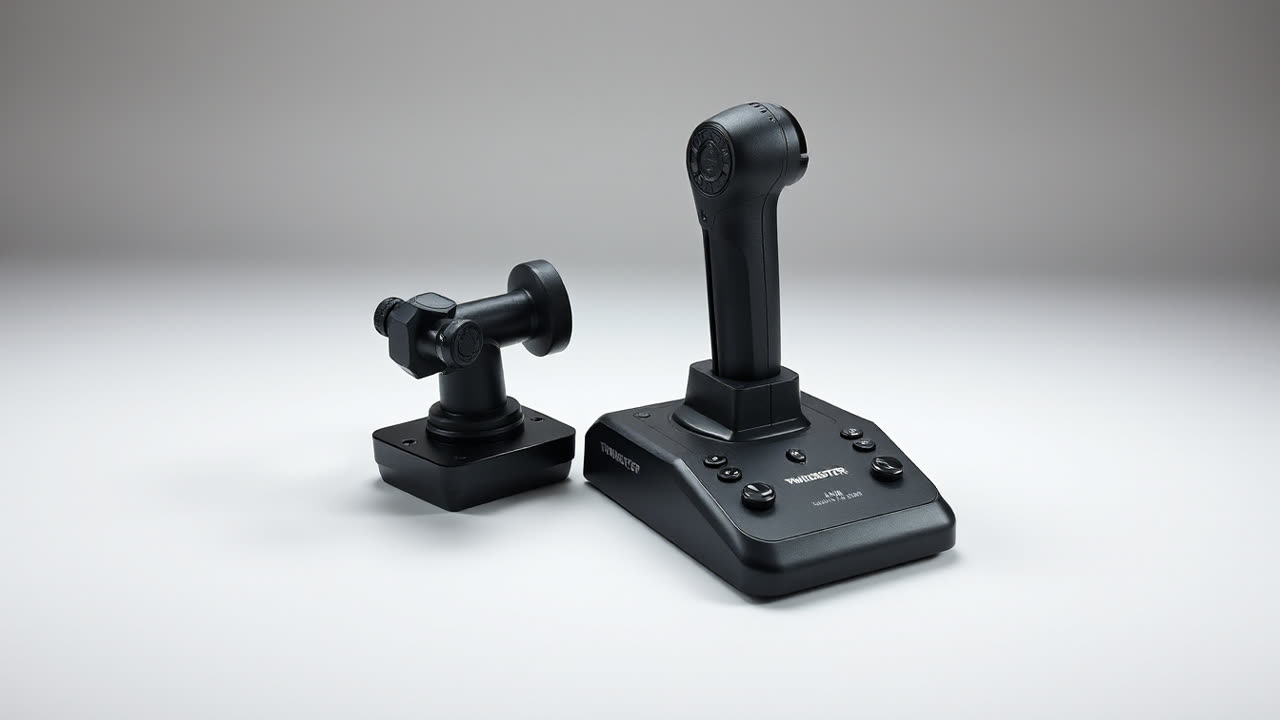
The Thrustmaster Airbus Add-On Grip, a 1:1 replica of the Airbus A3XX sidestick, released in July 2026 with an MSRP of $129.99, represents a significant evolution in civilian flight simulation peripherals when paired with the AVA Joystick Base, which launched in May 2024 for $299.99. This combination delivers an authentic Airbus piloting experience, leveraging Hall effect sensors with 16-bit precision across all axes—X, Y on the base, and Z (twist) on the grip—to eliminate mechanical wear and ensure drift-free accuracy. Unlike the prior generation Thrustmaster Warthog base, which was known for a noticeable center detent, the AVA Base offers progressively increasing resistance without a hard center, closely mirroring the feel of a real Airbus sidestick.
This pairing matters immensely for both flight simulation enthusiasts and the broader peripheral industry. For users, it provides an unparalleled level of immersion for Airbus aircraft, allowing for the precise, small control inputs characteristic of fly-by-wire systems found in the A3XX family. The AVA Base's extensive customization, including interchangeable cams, springs, and deflection masks, allows pilots to fine-tune the stick's response for various aircraft types—from airliners to combat jets or helicopters—without disassembly, enabling "on-the-fly" adjustments. This modularity also extends to the grip itself, which can be converted from an A3XX sidestick to an A400M military sidestick with an included module and button cover. Such a high degree of personalization, combined with the ergonomic fidelity of the 1:1 replica, elevates the simulation from a mere game to a nuanced, skill-building experience, particularly when tested with high-fidelity aircraft models like the Fenix A320 in Microsoft Flight Simulator 2024.
From an industry perspective, this Thrustmaster offering signals a decisive move into the premium, modular flight peripheral market, directly challenging established high-end competitors like VKB and Virpil. While Thrustmaster's earlier TCA Airbus Sidestick ($90) offered an entry-level Airbus experience with a more linear feel, the AVA Base and Add-On Grip push into a different tier, emphasizing precision, progressive resistance, and robust construction. The AVA Base's metal mechanism and ball-bearing supported components, combined with its external adjustment points, directly address criticisms leveled at older, less customizable Thrustmaster bases. However, some industry observers still contend that rivals like the VKB Gladiator NXT EVO ($135) or the VKB Gunfighter MK4 ($650-688) offer superior gimbal designs and overall build quality due to their cam and pincer-jaw systems, which provide exceptional smoothness and adjustable damping. Similarly, Virpil's full-metal cam and spring systems in bases like the WarBRD-D ($530 for a stick and base combo) are known for high quality and precision, with external damping adjustments. Thrustmaster's AVA ecosystem, with its growing range of accessories like additional dampers and extensions, aims to close this gap by offering a comprehensive, adaptable platform. The combined price point of approximately $430 for the Airbus Add-On Grip and AVA Base clearly positions it as a premium product, reflecting a growing consumer willingness to invest in higher fidelity hardware for an immersive experience, a trend fueling the flight simulation hardware market's projected 10.30% CAGR growth between 2025 and 2034.
Looking ahead, the success of the AVA ecosystem will likely hinge on Thrustmaster's continued commitment to expanding its range of compatible grips and accessories, potentially including more specific military or general aviation options beyond the current Airbus and F/A-18 offerings. This modular approach aligns with broader trends in flight simulation hardware, which increasingly favor customization, integrated touchscreen displays, advanced haptic feedback, and VR/AR compatibility to enhance realism. As flight simulators like Microsoft Flight Simulator 2024 continue to evolve with more accurate flight models, the demand for peripherals that can translate these digital nuances into tactile feedback will only intensify. Thrustmaster's move with the AVA Base and Airbus Add-On Grip solidifies its position in the increasingly competitive high-end segment, pushing the boundaries of what consumers can expect from "mass-market" premium flight controls and fostering a more authentic, adaptable, and deeply engaging virtual cockpit experience.