Tom Vek's Sleevenote Player Revives Album Art in a Streaming World
Musician and entrepreneur Tom Vek is set to ship Sleevenote, a dedicated portable music player designed to restore the immersive experience of album art and physical music ownership, directly challenging the dominance of streaming services.
✨ This content was summarized and interpreted by AI; it may contain errors — please verify accuracy with the original sources. Learn more
Listen to this story
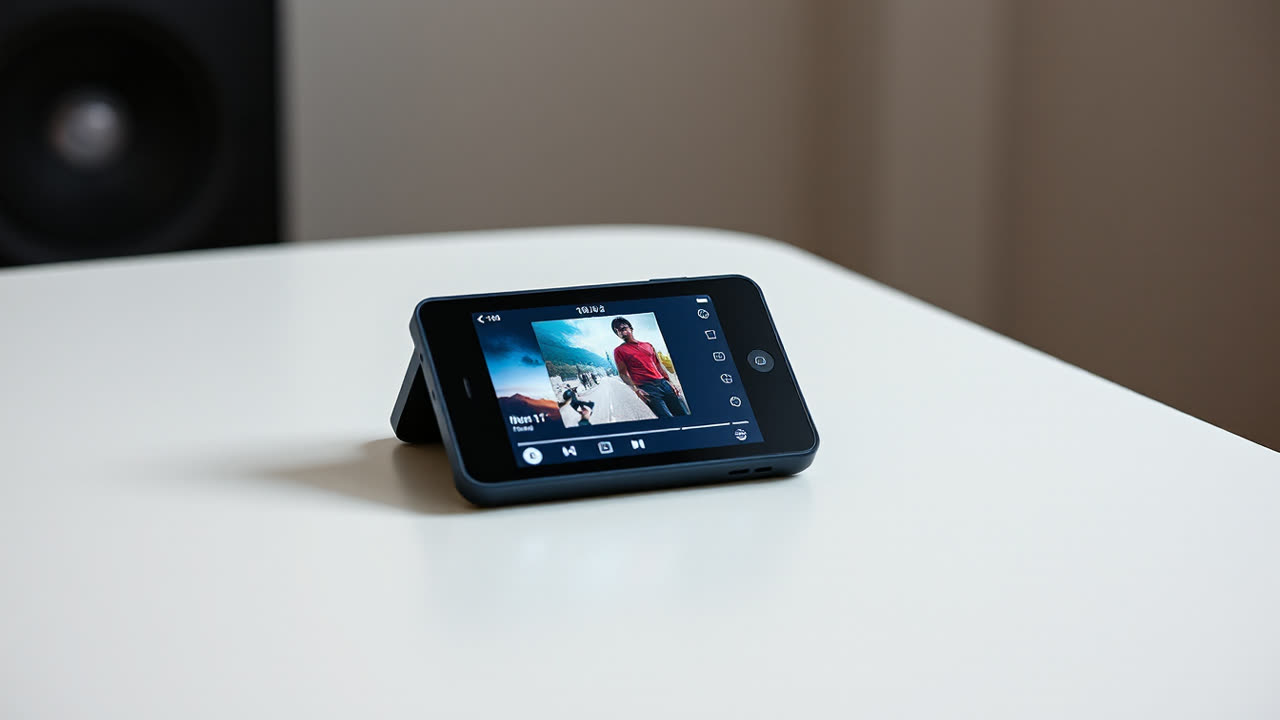
Musician and entrepreneur Tom Vek is poised to disrupt the digital music landscape with Sleevenote, a dedicated portable player designed to revive the immersive experience of album art and physical media ownership in an increasingly stream-dominated world, with its "Day One Edition" units slated to ship in June 2026 for £249 in the UK or $349 in the USA. This innovative device, initially crowdfunded in November 2020 at a price point of £533 (approximately $700 USD), directly challenges the prevailing paradigm of ephemeral, algorithm-driven music consumption by focusing on a singular, intentional listening experience.
At its core, Sleevenote is a square, almost the size of a 7-inch record, featuring a 4-inch 1:1 retina touchscreen display that prioritizes album artwork, lyrics, and liner notes, a stark contrast to the miniaturized thumbnails ubiquitous on smartphones and streaming interfaces. Vek, a graphic designer by trade, conceived Sleevenote out of frustration with how digital platforms have diminished the visual artistry integral to an album. The device includes physical buttons along its top edge, strategically placed to prevent user interface elements from obscuring the artwork, further emphasizing its commitment to an uninterrupted visual experience. Internally, Sleevenote is engineered for high-fidelity audio, boasting a Wolfson Class W headphone amplifier and a Cirrus HQ Digital Audio Converter (DAC), alongside 256GB of storage for users' owned music files, supporting formats like MP3, AAC, FLAC, AIFF, and WAV. Crucially, while earlier concepts mentioned supporting streaming services, the final iteration of Sleevenote deliberately eschews them, instead advocating for a "music vault" model where users actively purchase and download music, thereby reclaiming ownership and supporting artists more directly. This philosophical pivot transforms Sleevenote from merely a high-res player with a nice screen into a statement piece, encouraging listeners to "audition" music elsewhere and only commit to adding what they truly cherish to their Sleevenote library.
This singular focus on owned music and the visual album experience matters significantly for several reasons. For users, Sleevenote offers a tangible antidote to digital fatigue, providing a distraction-free environment for music appreciation. Smartphones, while convenient, are inherently multi-purpose devices that constantly vie for attention with notifications and other applications, turning music into background noise. Sleevenote, as a "mindful music player," carves out a dedicated space for deep listening, echoing the ritualistic engagement once associated with vinyl or CDs. It allows users to connect more intimately with an artist's complete vision, including the often-overlooked liner notes, credits, and supplementary imagery, fostering a deeper sense of connection and value for the music. For the industry, Sleevenote represents a niche but potent challenge to the unchallenged dominance of streaming. While the global hi-res audio streaming player market is projected to grow from $4.8 billion in 2025 to $10.2 billion by 2034, indicating a broader appetite for premium audio experiences, Sleevenote taps into a distinct segment valuing ownership and artistic presentation over sheer accessibility. It could inspire artists and labels to invest more in rich digital artwork and comprehensive "sleeve" content, moving beyond the minimalist approach often dictated by streaming platform UIs.
Sleevenote draws clear comparisons to both the nostalgia of physical formats and the functionality of modern DAPs. Vek himself describes it as a "cross-pollination of a vinyl record and an iPod," aiming to merge the tactile and visual appeal of vinyl with the portability of a digital player. Unlike traditional high-resolution DAPs from brands like Astell & Kern or FiiO, which primarily focus on uncompromised audio fidelity, Sleevenote's unique selling proposition is its equally strong emphasis on visual presentation. It positions itself against the iPod's early shortcomings in replicating the visual richness of CDs, a frustration Vek expressed as far back as his 2011 album, *Leisure Seizure*. The device's proprietary Sleevenote database, allowing artists, labels, and fans to upload and share high-resolution artwork, creates a communal, curated archive that no single streaming service currently offers.
Looking ahead, Sleevenote's success hinges on whether a sufficient number of consumers are willing to invest in a premium, single-purpose device that champions a more intentional, art-centric approach to music. The initial crowdfunding campaign and the subsequent "Day One Edition" pricing suggest a market exists for such a product, particularly among audiophiles, collectors, and those yearning for a richer engagement with digital music beyond the "endless scroll." Its deliberate exclusion of streaming services is a bold move, positioning it as a defiant counter-narrative to mainstream consumption. If Sleevenote gains traction, it could catalyze a broader trend of "mindful tech" in the audio space, inspiring other manufacturers to explore devices that prioritize specific aspects of the artistic experience over general-purpose utility. The challenge lies in convincing a mass market to carry a dedicated music player in an era where smartphones already handle most digital media consumption. However, for those who view album art as an integral part of the musical journey, Sleevenote offers a compelling vision of what digital music ownership *could* be.