Tornyol Micro-Drone Achieves First Air-to-Air Moth Kill, Targets Mosquito Eradication
A 40-gram autonomous quadcopter from U.S. startup Tornyol has successfully performed an air-to-air kill of a moth, leveraging ultrasonic sonar and AI to track insects, marking a major step towards its goal of eradicating disease-carrying mosquitoes.
✨ This content was summarized and interpreted by AI; it may contain errors — please verify accuracy with the original sources. Learn more
Listen to this story
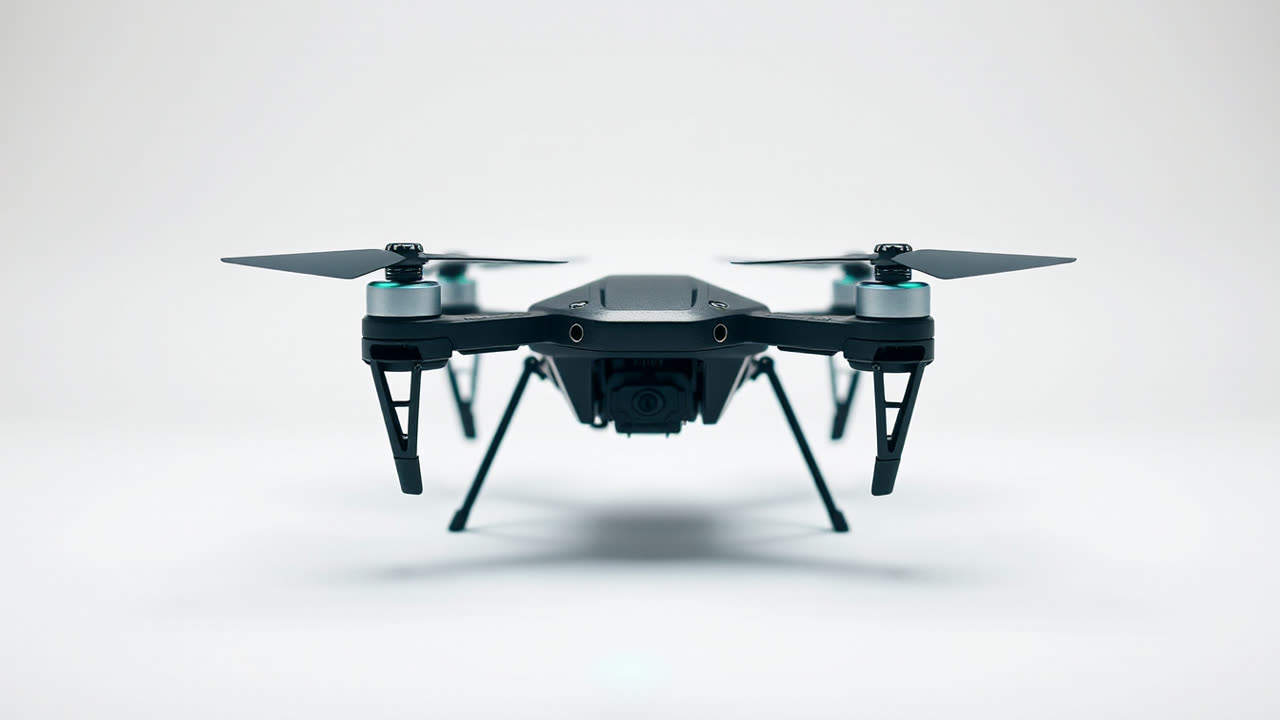
A 40-gram autonomous micro-drone, developed by the U.S. startup Tornyol, has achieved an engineering first by successfully performing an air-to-air kill of a flying moth in a controlled indoor demonstration on July 14, 2026, marking a significant stride toward its ambitious goal of completely eradicating mosquitoes. This palm-sized quadcopter, weighing roughly the same as a golf ball, leverages ultrasonic sonar technology akin to car parking sensors, paired with an array of miniature microphones and custom software, to detect and track insects up to 26 feet away by analyzing their unique wingbeat signatures. The drone’s "kill" mechanism is a direct physical interception, ramming and shredding insects with its propellers.
This breakthrough carries profound implications for global public health and pest management. Mosquitoes remain the world's deadliest disease vectors, responsible for transmitting debilitating and often fatal illnesses such as malaria, dengue, Zika, West Nile, chikungunya, and yellow fever. In 2024 alone, malaria claimed an estimated 610,000 lives, with children under five disproportionately affected. Current mosquito control methods predominantly rely on chemical insecticides, which pose significant environmental risks, contribute to ecological imbalances, and are increasingly undermined by growing insecticide resistance. Tornyol’s drone offers a chemical-free, targeted alternative, promising to reduce mosquito populations without the collateral environmental damage associated with widespread pesticide use.
Beyond the immediate health benefits, the economic impact could be substantial. Tornyol projects that its technology could slash mosquito-control costs by up to 100 times compared to existing approaches. Such a reduction would free up critical resources for public health initiatives in regions heavily burdened by mosquito-borne diseases. Furthermore, the drone's ability to identify specific insects by their wingbeat frequency suggests future capabilities to differentiate between mosquito species and sexes, enabling highly targeted interventions – a level of precision currently unattainable with broad-spectrum chemical treatments. The company estimates that a fleet of just 10 drones could effectively protect one square kilometer, envisioning networks of these autonomous units continuously patrolling designated areas, intercepting threats, and returning to compact charging stations as needed.
The technology itself represents a significant leap in autonomous micro-robotics and AI. Unlike many drones that rely on conventional cameras, Tornyol's system, named LeSonar2, incorporates 380 smartphone microphones in a phased array that processes acoustic data in real-time via an Artix-7 FPGA. This sophisticated sonar system, inspired by vehicle parking sensors, allows the drone to perceive its environment and targets through sound, detecting minute movements down to 0.1 mm. This acoustic approach is particularly advantageous for identifying tiny, fast-moving insects that might be difficult to discern using traditional vision systems alone, especially in varied lighting conditions or complex environments. The background of Tornyol’s co-founder, Alex Toussaint, a former engineer at missile manufacturer MBDA, hints at the sophisticated guidance and interception algorithms underpinning the drone's capabilities, potentially drawing parallels between insect tracking and missile targeting systems. This dual-use potential, while highlighting the technological prowess, also implicitly raises ethical considerations regarding the future applications of such precise autonomous interception technology.
While the "air-to-air kill" of a moth is a compelling proof-of-concept, significant hurdles remain before widespread deployment. The recent demonstration was conducted indoors using a "hardware-in-the-loop setup," where external motion capture cameras and an offboard computer handled much of the data processing and command transmission. Tornyol aims to integrate all sensing and computing capabilities onto the drone's onboard hardware in the coming weeks, a crucial step towards true autonomy. The transition from controlled indoor environments to unpredictable outdoor conditions presents the most substantial technical challenge, as mosquitoes are considerably smaller, lighter, and faster than moths, making their detection and interception in real-world scenarios far more complex. Current prototypes also have limited flight times, typically around three minutes, necessitating frequent returns to base stations for recharging.
Looking ahead, the next phase will involve rigorous field testing to validate Tornyol's projections regarding effectiveness, scalability, and cost reduction, which are currently company estimates. The ability to accurately distinguish target mosquitoes from beneficial insects remains paramount for ecological responsibility. The data collected by future drone fleets could also contribute to high-definition mapping of mosquito breeding grounds, integrating with broader vector surveillance strategies. Other drone applications in mosquito control already exist, such as Stanford's use of AI-equipped drones for identifying breeding sites or the World Mosquito Program's deployment of drones to release Wolbachia-carrying mosquitoes. Tornyol's aerial interception method could complement these strategies, offering a direct, pre-emptive strike against adult mosquitoes. As the technology matures, regulatory frameworks will be essential to govern the operation of autonomous drone fleets in public spaces, addressing concerns about safety, privacy, and unintended consequences. Despite these challenges, Tornyol's micro-drone represents a tangible step towards a future where intelligent, non-chemical solutions play a dominant role in mitigating the persistent global threat of mosquito-borne diseases.