Toyota Electrifies Best-Selling Corolla, Signaling Major EV Strategy Shift
Toyota is set to electrify its iconic Corolla, a move poised to democratize electric mobility and reshape the global EV market by directly challenging established leaders.
✨ This content was summarized and interpreted by AI; it may contain errors — please verify accuracy with the original sources. Learn more
Listen to this story
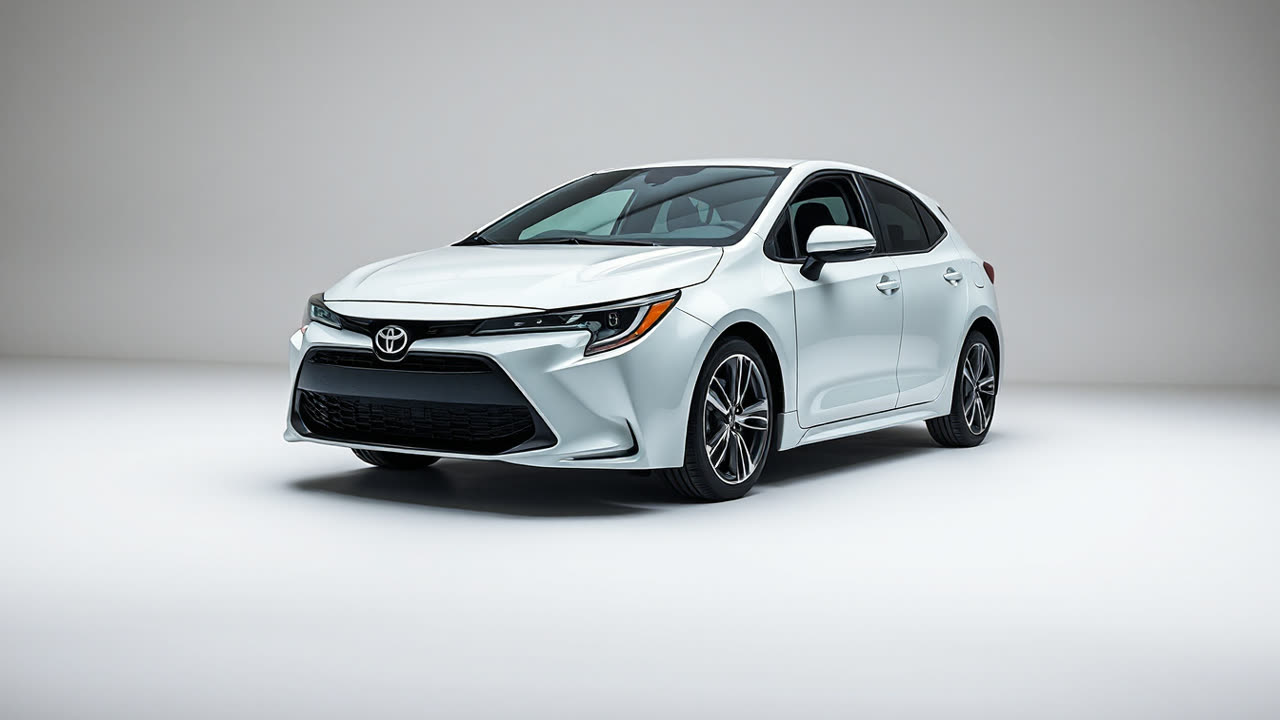
Toyota is poised to electrify its perennial best-seller, the Corolla, a move signaling a profound shift in the automotive giant's long-term electric vehicle (EV) strategy and potentially reshaping the global EV landscape. The introduction of an all-electric Corolla, expected to leverage Toyota's next-generation battery technology and manufacturing advancements, represents a direct challenge to established EV leaders and a significant push towards mainstream EV adoption.
This strategic pivot with the Corolla, a nameplate that has sold over 50 million units worldwide since its 1966 debut, is not merely about adding another EV to Toyota’s lineup; it’s about democratizing electric mobility on a scale few automakers can match. The current internal combustion engine (ICE) Corolla, renowned for its reliability and affordability, typically starts around $22,000 in the U.S.. An electric variant positioned similarly could dramatically lower the entry barrier for EVs, currently dominated by pricier models. Toyota's prior EV offerings, like the bZ4X, have faced criticism for their range and charging speeds compared to rivals, and have not achieved the sales volume necessary to significantly move the needle in the broader market. The bZ4X, for instance, offers an EPA-estimated range of up to 252 miles for the front-wheel-drive model. The electric Corolla is anticipated to feature more competitive specifications, potentially utilizing the prismatic cells Toyota announced in 2023, promising over 497 miles (800 km) of range and a 10-80% charge time of just 20 minutes with a standard lithium-ion battery. Furthermore, Toyota has been aggressively developing solid-state batteries, with prototypes demonstrating charge times of under 10 minutes for a 10-80% charge and a projected range of over 621 miles (1,000 km). While mass production of solid-state batteries is still several years away, with a potential market introduction around 2027-2028, the electric Corolla could be an early beneficiary of incremental advancements, or be designed with future solid-state upgrades in mind.
The impact on users will be substantial. For decades, the Corolla has been the default choice for millions seeking dependable, economical transportation. An electric Corolla, if it maintains this core value proposition while offering competitive range and charging, could become the first EV for a vast segment of the population previously hesitant to switch. It could accelerate the transition away from fossil fuels in markets where charging infrastructure is still developing, as Toyota’s extensive global dealership and service network offers a level of support unmatched by many EV-centric startups. The familiarity of the Corolla brand reduces the perceived risk associated with new technology, making the leap to electric less daunting for mainstream consumers.
Industrially, the electric Corolla’s arrival could force a recalibration among competitors. Tesla, with its Model 3, has long dominated the electric sedan segment, offering performance and technology at a premium. Chinese manufacturers like BYD, with models such as the Seal, have also made significant inroads with compelling designs and aggressive pricing. The electric Corolla will likely target the heart of this market, directly challenging the Model 3 and various offerings from Hyundai (Ioniq 6) and Volkswagen (ID.7) by leveraging Toyota's reputation for quality and mass-production efficiency. This intensified competition could drive down EV prices across the board and accelerate technological innovation, particularly in battery cost and charging infrastructure development. Toyota's commitment to new production techniques, including gigacasting and modular architectures, aims to reduce manufacturing costs and increase efficiency, allowing for more competitive pricing.
Looking ahead, the electric Corolla represents more than just a single model launch; it signifies a strategic inflection point for Toyota. Having long been a proponent of hybrid technology and a cautious adopter of pure EVs, this move indicates a full embrace of the electric future. It suggests that Toyota’s leadership believes its next-generation EV platforms and battery technologies are finally mature enough to scale production and compete effectively against the best in the industry. The success of the electric Corolla will be crucial for Toyota's ambitious target of selling 3.5 million EVs annually by 2030. Furthermore, it will set the stage for other iconic Toyota models, such as the Camry and RAV4, to follow suit, eventually electrifying the core of its global lineup. The coming years will likely see Toyota aggressively expand its EV offerings, leveraging its immense manufacturing capabilities and supply chain prowess to become a dominant force in the global EV market, moving beyond its initial cautious approach to fully capitalize on the electric revolution it once seemed hesitant to lead.