Toyota's 2027 bZ EV Launches at Under $35,000, Reshaping Affordable Electric Market
Starting at $34,980, the 2027 Toyota bZ is poised to aggressively redefine value in the burgeoning electric vehicle market, with initial units slated to arrive at dealerships this September.
✨ This content was summarized and interpreted by AI; it may contain errors — please verify accuracy with the original sources. Learn more
Listen to this story
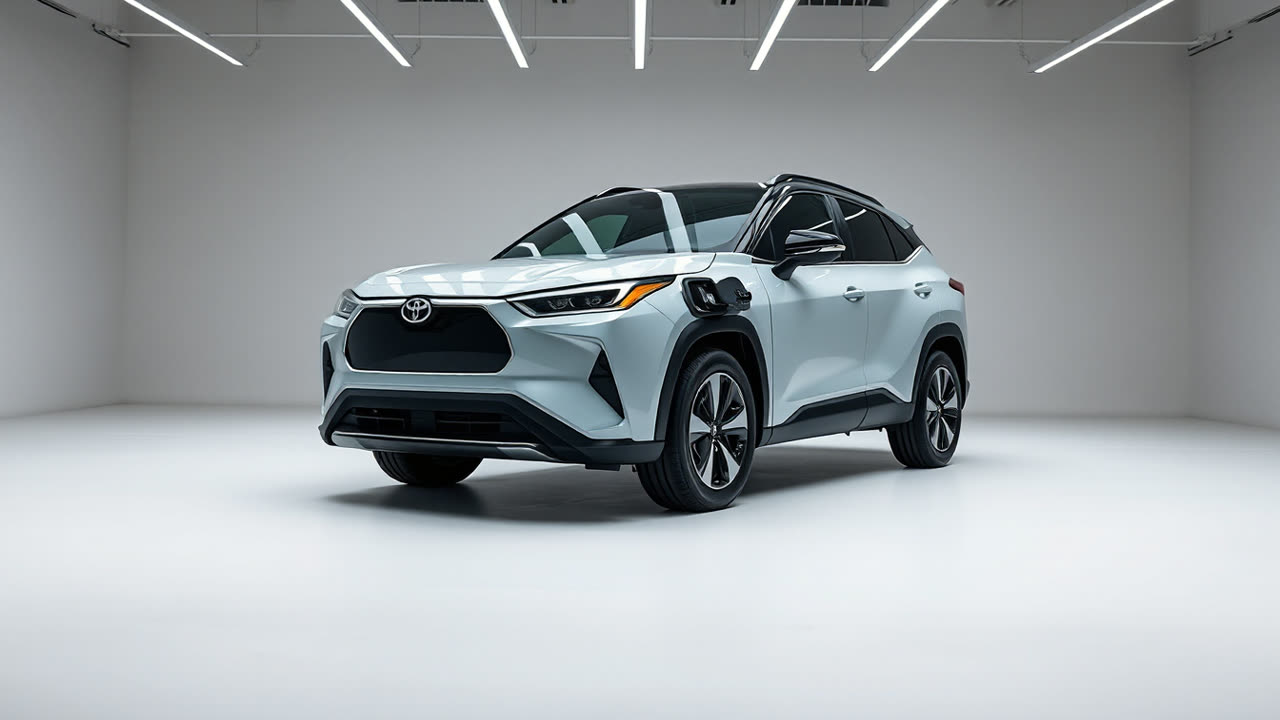
Starting at $34,980, the 2027 Toyota bZ is poised to aggressively redefine value in the burgeoning electric vehicle market, with initial units slated to arrive at dealerships this September. This compelling price point, before a $1,595 delivery fee, positions the entry-level XLE FWD variant at $36,575, directly challenging the perception that long-range, feature-rich EVs must command premium pricing. The base model features a 57.7-kWh battery, delivering an EPA-estimated range of 236 miles and 165 total system horsepower. For those seeking greater capability, higher trims offer a 74.7-kWh battery, extending the range up to 314 miles and boosting power to 221 horsepower for FWD variants or a robust 338 horsepower for all-wheel-drive configurations. Crucially, all 2027 bZ models are equipped with the North American Charging System (NACS) for widespread high-speed charging compatibility, alongside standard battery preconditioning and an adapter kit for SAE J1772 and Combined Charging System (CCS) stations. Standard amenities on the XLE trim are impressive, including a 14-inch Toyota Audio Multimedia display, heated front seats and steering wheel, and dual-zone climate control.
This aggressive pricing strategy marks a pivotal moment for Toyota and the broader EV industry, signaling a decisive shift from the automaker's historically cautious approach to battery electric vehicles. The 2027 bZ builds on the significant overhaul introduced with the 2026 model, which saw the original bZ4X, criticized for its underwhelming specs and higher starting price of $43,315, transformed into a top-selling EV in the US. The prior iteration, the 2026 bZ, introduced improvements in range, power, and interior refinement, along with the NACS port, and was available with a $5,000 incentive that brought the XLE Plus trim to $34,350. The 2027 model maintains this competitive pricing, keeping it "about the same" as its immediate predecessor. In an automotive landscape where the average price of a new EV in 2026 hovers near $55,000, Toyota's sub-$35,000 entry-level offering for a capable electric SUV makes advanced EV technology accessible to a much wider demographic. This directly addresses a significant barrier to mainstream EV adoption: affordability. For consumers, it means a genuinely viable electric alternative to traditional compact sedans and crossovers, with competitive range and essential features no longer confined to luxury segments.
For the industry, Toyota's move is a powerful declaration in the intensifying battle for market share in the affordable EV segment. It underscores Toyota's accelerated pivot towards electrification, a strategy that aims to launch approximately 15 dedicated EV models by 2027 and expand to 30 battery-electric vehicles globally by 2030. This ambitious plan includes scaling EV production to roughly 1 million vehicles by 2027, a seven-fold increase from 2024 levels, supported by a substantial investment exceeding $70 billion in electrified vehicles by 2030, and the establishment of a US battery plant by 2025. This strategic intensification, coming even as some rivals scale back their electrification efforts, suggests Toyota is now fully committed to challenging established EV leaders.
The 2027 Toyota bZ enters a highly competitive segment, but its pricing positions it favorably against key rivals. The 2027 Chevrolet Equinox EV, for instance, starts at $36,795, offering an estimated range of 307 to 319 miles. The 2027 Kia EV6, with provisional pricing for its Light trim at $37,900, provides a range of up to 319 miles. Hyundai's 2027 Ioniq 5, while its US pricing is not yet confirmed, has seen its Korean base model start at approximately $31,000, indicating a strong push for affordability in that lineup as well, with current models offering 221 to 318 miles of range. Even Tesla's 2027 Model 3 is estimated to start slightly under $40,000, with current models beginning at $38,630. Notably, the 2027 Chevrolet Bolt EV remains a budget-friendly option, starting at $28,995, though it typically offers less range and features than the bZ. Toyota's bZ, with its blend of competitive pricing, improved range, and standard features, appears to carve out a compelling middle ground, leveraging its reputation for reliability and quality.
Looking ahead, the arrival of the 2027 Toyota bZ at this price point is set to exert considerable pressure on the entire automotive industry. Its immediate availability in September could disrupt competitor sales cycles and force other manufacturers to re-evaluate their own pricing strategies and feature offerings, particularly in the critical sub-$40,000 EV segment. This competitive push will likely benefit consumers, accelerating the trend towards more affordable and capable electric vehicles. As Toyota continues to roll out its planned 15 EV models by 2027, the bZ serves as a clear indicator of the brand's intent to capture a significant share of the mass-market EV segment, transforming its image from a hybrid pioneer to a formidable force in the all-electric future. The market can anticipate further innovation and price competition as automakers vie for dominance in this rapidly evolving landscape.