Toyota's bZ5 EV Launches at Half the Price of Tesla Model Y, Shaking Up Market
Toyota has officially launched its updated bZ5 electric SUV, positioning it at an astonishingly disruptive price point—reportedly half the cost of a Tesla Model Y, marking a seismic shift in the global electric vehicle market.
✨ This content was summarized and interpreted by AI; it may contain errors — please verify accuracy with the original sources. Learn more
Listen to this story
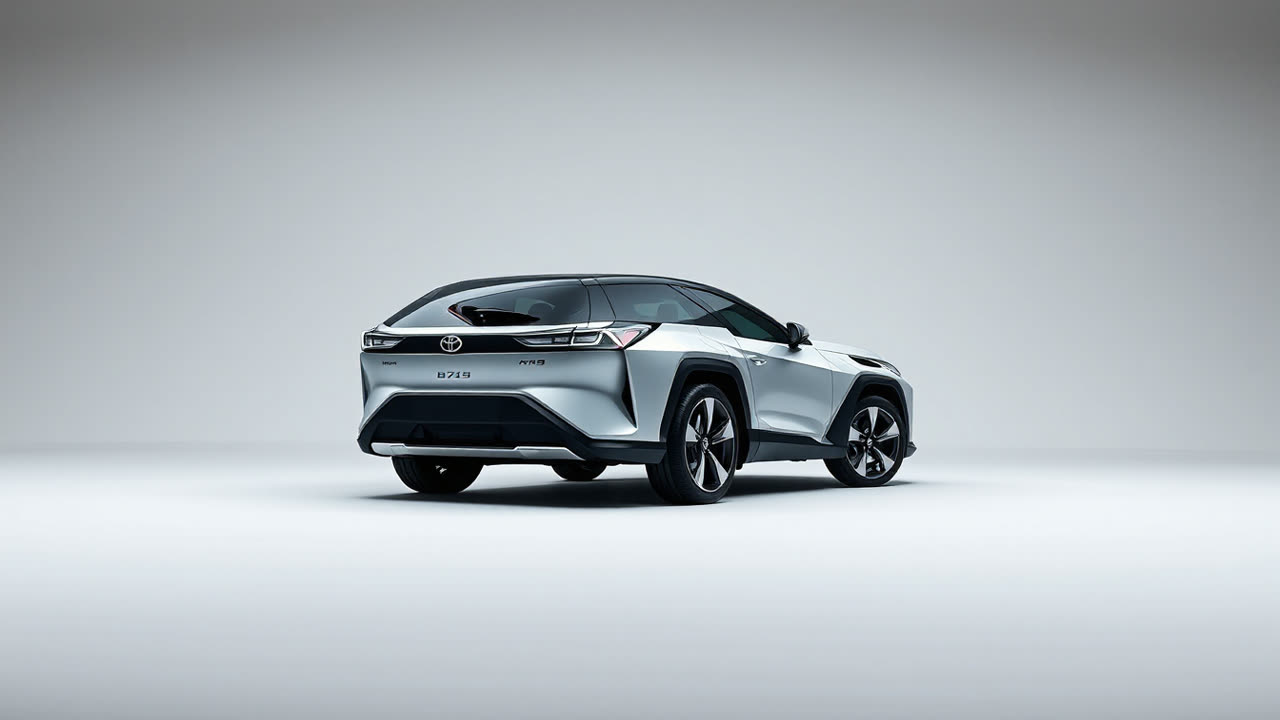
Toyota has officially launched its updated bZ5 electric SUV, positioning it at an astonishingly disruptive price point—reportedly half the cost of a Tesla Model Y, marking a seismic shift in the global electric vehicle market. This aggressive pricing, coupled with its dimensions comparable to the popular Model Y and a suite of advanced technological features far exceeding previous Toyota EV offerings, signals a formidable new contender poised to redefine value in the burgeoning EV segment. The bZ5, which measures approximately 4.7 meters in length, 1.85 meters in width, and 1.62 meters in height, directly challenges the Model Y's footprint, while its reported starting price, anticipated to be around $22,500 in key markets, dramatically undercuts the Model Y's current average price of $45,000 to $55,000 for its base variants.
This strategic move by Toyota carries profound implications for both consumers and the automotive industry. For users, the bZ5 represents an unprecedented opportunity for mass EV adoption, democratizing access to modern electric mobility that was previously unattainable for many due to cost barriers. The notion of a technologically sophisticated, Model Y-sized SUV at such an accessible price point could accelerate the transition away from internal combustion engine vehicles at a pace few anticipated, particularly from a legacy automaker often criticized for its cautious EV strategy. Consumers can expect a vehicle equipped with next-generation battery technology, likely featuring improved energy density and faster charging capabilities, alongside a significantly upgraded infotainment system and advanced driver-assistance features that push Toyota beyond its conventional reputation for reliability into a realm of cutting-edge innovation. The bZ5's emphasis on high-tech integration, including potentially new software-defined vehicle architecture and over-the-air update capabilities, suggests a direct response to the digital experience offered by Tesla and other EV-native brands, aiming to capture a younger, tech-savvy demographic.
Industrially, Toyota's bZ5 launch is nothing short of a gauntlet thrown at the feet of every major automaker. For Tesla, it introduces a direct, cost-effective rival in its most popular segment, potentially forcing price adjustments or accelerating the rollout of its own more affordable models. Traditional automakers, many of whom are still struggling to make their EV offerings profitable, now face immense pressure to match Toyota's price-to-tech ratio, risking market share erosion if they fail to adapt swiftly. The bZ5’s arrival could trigger a fierce price war, particularly in the compact and mid-size SUV segments, compressing margins across the board but ultimately benefiting consumers. This aggressive entry also validates the growing market for affordable, yet capable, electric vehicles, shifting the industry narrative from luxury and performance to practicality and accessibility. Toyota, long a pioneer in hybrid technology with models like the Prius, has historically approached full EVs with a more measured pace, focusing on solid-state battery research and a diversified powertrain strategy. However, the bZ5 signifies a decisive pivot, leveraging its immense manufacturing scale and supply chain prowess to achieve an economy of scale previously thought exclusive to pure-play EV manufacturers.
Compared to its direct rivals, the bZ5's value proposition is immediately striking. While the Tesla Model Y offers superior acceleration and a robust charging network, the bZ5 aims to counter with a compelling blend of affordability, advanced features, and Toyota’s renowned build quality and reliability, which remain strong selling points for many buyers. Earlier Toyota EV efforts, such as the bZ4X, while competent, were often criticized for conservative range, charging speeds, and interior tech compared to segment leaders. The bZ5 appears to address these shortcomings directly, with rumored improvements in range exceeding 500 kilometers on a single charge and faster DC fast charging rates that could challenge current benchmarks. This signifies a maturation of Toyota's dedicated EV platform (e-TNGA or a successor), demonstrating a rapid learning curve and a commitment to competitive performance metrics beyond just price. Furthermore, the bZ5's "much more high-tech" nature likely refers to advancements in battery chemistry, thermal management, efficient electric motors, and a more intuitive, connected user experience within the cabin, moving beyond the somewhat conventional interfaces of prior Toyota EVs.
Looking ahead, the bZ5's trajectory will be critical in shaping the next phase of EV adoption. If Toyota can successfully scale production to meet anticipated demand and maintain its aggressive pricing strategy without compromising quality, it could fundamentally alter the competitive landscape. We can expect other legacy automakers like Volkswagen, Hyundai, and General Motors to accelerate their own affordable EV programs, potentially bringing forward models like the ID.2 or a Chevrolet Equinox EV equivalent at even more competitive price points. The focus will inevitably shift from simply launching EVs to launching *profitable, high-value* EVs. Furthermore, the bZ5's success will be a litmus test for Toyota's ability to shed its conservative EV image and truly embrace the digital and performance expectations of the modern EV consumer. Its long-term impact could lead to a significant expansion of the global EV market, pushing electric vehicles into mainstream budgets and potentially hastening the global phase-out of internal combustion engines faster than even the most optimistic forecasts currently predict. The bZ5 is not merely another electric SUV; it is a declaration of intent from an automotive giant, signaling an era of genuine affordability and advanced technology in electric mobility.