Toyota's Next-Gen Corolla EV: A 'Crisis' Driven Reinvention
The world's best-selling car, Toyota Corolla, is going fully electric on a dedicated new platform by 2026, marking a radical strategic shift for the Japanese giant.
✨ This content was summarized and interpreted by AI; it may contain errors — please verify accuracy with the original sources. Learn more
Listen to this story
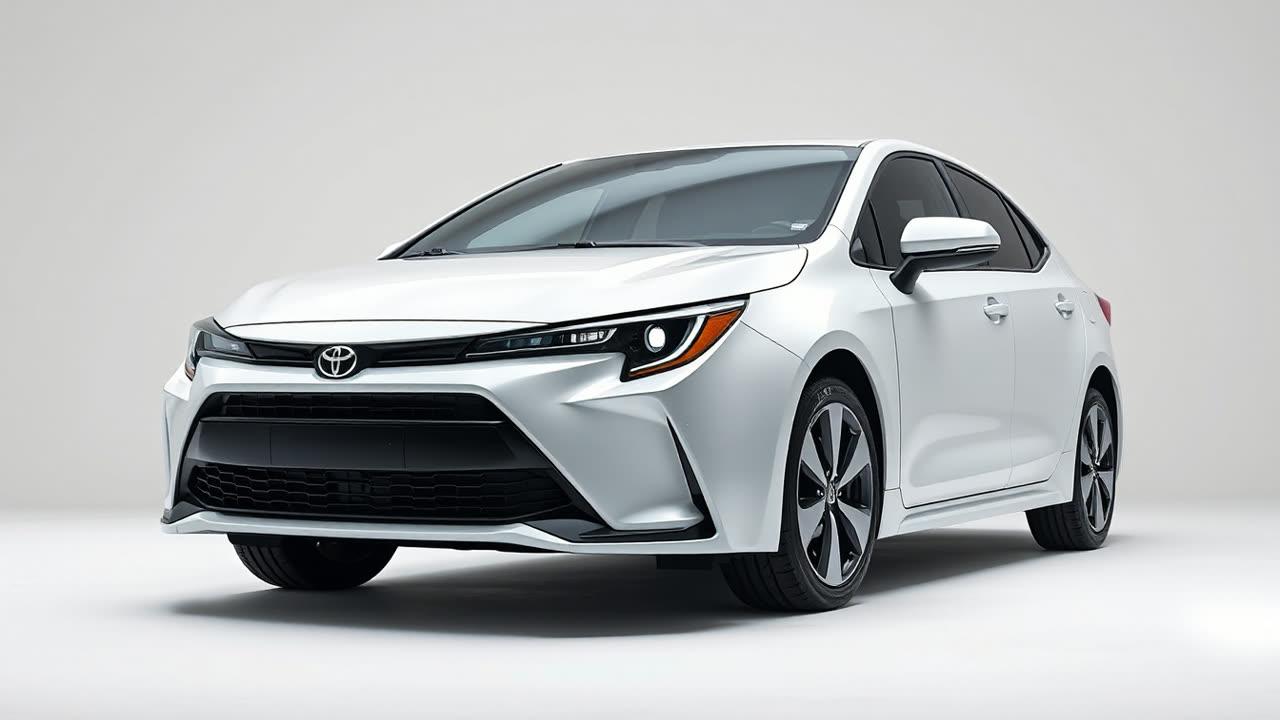
Toyota’s next-generation Corolla EV, the electrified successor to the world’s best-selling car with over 57 million units sold across 60 years, is poised to launch globally in 2026, riding on an entirely new, dedicated electric platform. This pivotal move signals a profound strategic shift for the Japanese automotive giant, driven by what chairman Akio Toyoda described as a "considerable sense of crisis" permeating the company. The urgency stems from the relentless advance of EV-focused rivals like Tesla and aggressive Chinese automakers such as BYD, compelling Toyota to reinvent its approach to electrification.
This isn't merely an incremental update; the upcoming Corolla EV represents a radical departure. Unlike Toyota's current battery electric vehicles (BEVs) like the bZ (formerly bZ4X) and C-HR BEV, which utilize the adaptable e-TNGA platform shared with gasoline-powered vehicles, the new Corolla EV will be built on a purpose-built, electric-only architecture. This dedicated design promises significant advancements, including potentially double the range of existing models due to more efficient battery technology, and enhanced passenger and cargo space through optimized packaging. Crucially, this platform will leverage "gigacasting" production techniques, a manufacturing innovation pioneered by Tesla, aimed at boosting structural rigidity while drastically cutting production times and costs. This adoption of a competitor's groundbreaking manufacturing method underscores the depth of Toyota's internal "crisis" and its newfound willingness to shed decades of conservative strategy in pursuit of competitive advantage. Outgoing CEO Koji Sato has explicitly stated that "unless things change, we will not survive," urging a focus on improved productivity and even a re-evaluation of Toyota's historically stringent quality control standards to reduce waste and cost. An engineer candidly admitted, "I think we are losing to China," highlighting the intense pressure from fast-moving, cost-efficient players.
The implications for consumers are substantial. The Corolla's enduring legacy is built on reliability, affordability, and widespread accessibility, with its internal combustion engine (ICE) models currently starting around $23,125. By electrifying this iconic nameplate on a dedicated platform and incorporating cost-saving innovations like gigacasting, Toyota has the potential to introduce a truly mass-market, affordable EV. A doubling of range from current Toyota EV offerings, such as the bZ's approximately 314 miles, would place the Corolla EV squarely in contention with segment leaders like the Tesla Model 3 (309-363 miles range) and the 2025 Hyundai Ioniq 6 (up to 361 miles range). This could democratize EV ownership, making zero-emission vehicles a practical reality for a much broader demographic than current, often pricier, EV options. The shift to an EV-native platform also means a fundamentally different driving experience, offering the instant torque, smoother acceleration, and potentially superior handling dynamics inherent to electric powertrains and lower centers of gravity.
For the automotive industry, Toyota's aggressive pivot with its crown jewel model signals a definitive turning point. For years, Toyota pursued a "multi-pathway" electrification strategy, heavily investing in hybrids and hydrogen while being criticized for a slower embrace of pure BEVs. This cautious approach, which saw it sell only 22,500 BEVs in 2022, is now being rapidly overhauled. In the first half of 2026, Toyota's U.S. EV sales surged by an impressive 136%, with European sales doubling by 113% year-on-year, propelled by models like the bZ and the new C-HR BEV, which offers up to 308 miles of range and starts around $37,000. This sudden acceleration, even as the broader U.S. EV market faced a downturn in the first half of 2026, has propelled Toyota into the top five EV sellers in the country.
The Corolla EV's debut on a new platform, however, marks a deeper commitment. It signifies that Toyota is no longer merely adapting existing architectures but is designing from the ground up for electric performance and efficiency. This will undoubtedly intensify competition in the compact EV segment, challenging established players and forcing others to accelerate their own dedicated EV platform strategies. The widespread adoption of gigacasting, as Toyota integrates it into its mass production for the Corolla, could become an industry standard, further driving down costs and speeding up manufacturing across the board.
Looking ahead, the Corolla EV is set to be a significant volume driver in Toyota's ambitious plan to sell 3.5 million BEVs annually by 2030, a substantial leap from its revised target of 800,000 units by 2026. This aggressive target, coupled with the "sense of crisis" driving its innovation, suggests a renewed, formidable Toyota in the global EV race. The company still faces considerable challenges, including restructuring vast supply chains, upskilling its workforce for EV-specific manufacturing, and competing in the rapidly evolving software-defined vehicle space. However, by electrifying its most iconic and beloved nameplate on a cutting-edge, cost-efficient platform, Toyota is not just participating in the EV transition; it's staking its very survival on leading it. This profound strategic shift will likely redefine the landscape of affordable electric mobility and set a new benchmark for how legacy automakers compete in the EV era.