Trump Administration Authorized Private Firms for International Cyberattacks
The Trump administration fundamentally reshaped state-sponsored digital conflict by authorizing private firms to conduct international cyberattacks under government oversight, blurring lines between public and private sectors.
✨ This content was summarized and interpreted by AI; it may contain errors — please verify accuracy with the original sources. Learn more
Listen to this story
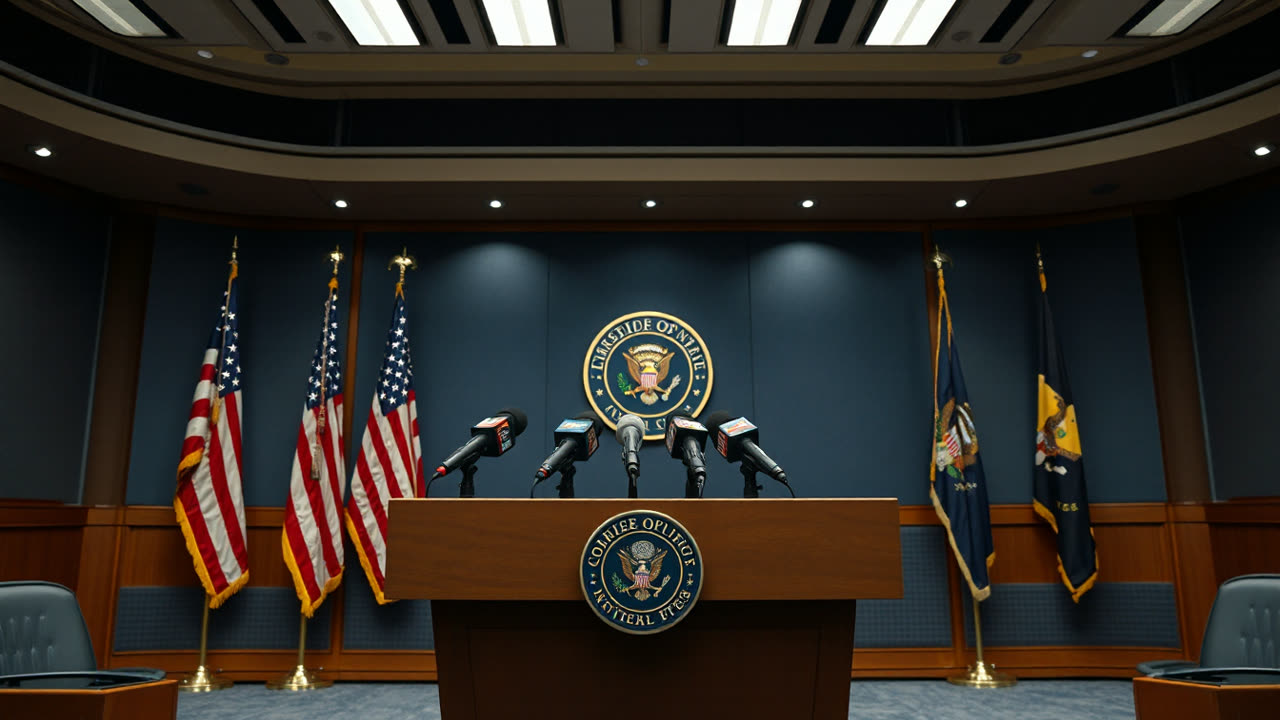
The Trump administration's controversial move to authorize private firms to conduct international cyberattacks, initially reported by Bloomberg during its tenure, fundamentally reshaped the landscape of state-sponsored digital conflict, blurring lines between government operations and private enterprise. This policy, a significant departure from previous administrations' more direct control over offensive cyber capabilities, signaled a strategic pivot towards leveraging commercial expertise and agility in an increasingly complex threat environment.
At its core, the policy sought to deputize private cybersecurity entities, enabling them to engage in offensive operations against foreign criminals under the explicit "control and oversight" of the U.S. government. While specific public details regarding operational parameters remained scarce, the initiative was largely understood to be an extension of the Trump administration's more aggressive cyber posture, epitomized by National Security Presidential Memorandum 13 (NSPM-13) issued in August 2018. NSPM-13 significantly relaxed restrictions on offensive cyber operations, empowering military and intelligence agencies to conduct cyberattacks without presidential approval, thereby streamlining response capabilities. The subsequent move to involve private firms was seen as a logical, albeit audacious, progression, aiming to expand reach and capacity, particularly against cybercriminals operating beyond traditional state-actor boundaries.
The immediate impact on the industry was multifaceted. It catalyzed the growth of a specialized, albeit clandestine, market for offensive cyber services, drawing highly skilled professionals from both government and defensive roles. Firms with existing contracts in intelligence and defense sectors found new avenues for engagement, while smaller, agile companies saw opportunities to contribute to national security missions. However, this also raised profound ethical and legal dilemmas. The potential for private entities to cause collateral damage, misattribute attacks, or operate in legal gray zones created significant concerns among international law experts and human rights organizations. The "control and oversight" clause, while intended to mitigate risks, proved challenging to implement effectively in the fast-evolving domain of cyber warfare, where operations can unfold rapidly across global networks.
Comparing this approach to prior generations highlights a stark contrast. Historically, offensive cyber operations were almost exclusively the domain of state intelligence agencies and military units, governed by strict protocols and often covert mandates. The Obama administration, for instance, maintained a more conservative stance, prioritizing deterrence and international norms, even while developing robust offensive capabilities. By integrating private firms, the Trump administration essentially outsourced a critical component of national security, a strategy more akin to the use of private military contractors in kinetic warfare, which has historically led to accountability issues and complicated international relations. Globally, while states like Russia and China have long been suspected of using proxies and state-backed groups for cyber operations, the U.S. policy explicitly sanctioned private firms under government direction, setting a new precedent for transparency (or lack thereof) and potential state responsibility.
The "why it matters" extends deeply into the fabric of digital trust and international stability. For users, the proliferation of state-sanctioned private cyber operations increases the risk of misidentification in attacks, potential for data breaches from firms themselves, and a general erosion of online privacy as more actors gain offensive capabilities. It also blurrs the lines of attribution, making it harder for victims to discern whether an attack originated from a state, a criminal enterprise, or a state-backed private entity, thereby complicating diplomatic responses and legal recourse. For the industry, it presents a moral quandary: whether to participate in offensive operations that could potentially destabilize global networks or contribute to an arms race, or to focus solely on defensive measures. The policy also risked drawing private firms into retaliatory attacks, making them targets for sophisticated state-sponsored groups.
Looking ahead to 2026, the legacy of this Trump-era policy continues to reverberate. While the Biden administration, upon taking office, emphasized a renewed focus on international cooperation and defending critical infrastructure, the precedent set by NSPM-13 and the concept of private sector involvement has not entirely dissipated. Subsequent administrations have faced the reality that the agility and specialized skills of the private sector are often unmatched by government agencies struggling with bureaucracy and talent retention. Consequently, while direct, public authorization for private firms to launch international cyberattacks might have been refined or made more discreet, the underlying principle of leveraging commercial capabilities for national security interests persists. Future developments are likely to see increased regulatory frameworks attempting to govern these partnerships, potentially through classified contracts and stricter oversight mechanisms, to address the legal and ethical complexities that arose from the initial, more permissive stance. The balance between national security imperatives and the risks of privatized cyber warfare remains a critical, ongoing challenge for global policymakers.