Turtle Beach's KP7 Modular Keypad Launches Globally, Redefining Gaming and Workflow Control
Turtle Beach has launched its KP7 modular keypad worldwide, designed to offer unparalleled versatility as both a standalone macropad and an integrated component of its flagship KB7 keyboard, promising advanced control for gamers and creators.
✨ This content was summarized and interpreted by AI; it may contain errors — please verify accuracy with the original sources. Learn more
Listen to this story
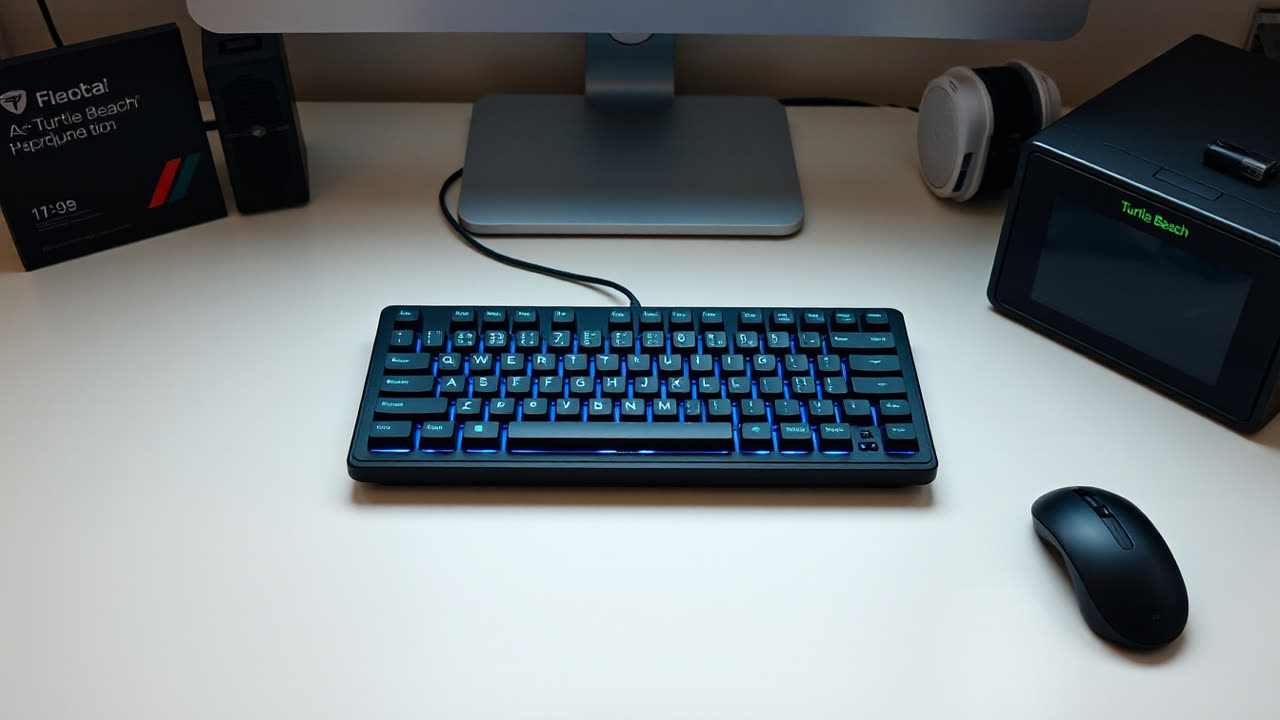
Turtle Beach's ambitious Command Series is making waves with its KP7 modular keypad, a peripheral designed to offer unparalleled versatility as both a standalone macropad and an integrated component of the flagship KB7 keyboard, launched globally on May 21, 2026. Priced at $99.99, the KP7 aims to redefine workflow and gaming control with its high-end features, though its premium cost and software quirks present a nuanced value proposition.
The KP7 boasts Titan low-profile Hall Effect switches, offering lightning-fast analog precision with adjustable actuation points from 0.1mm to 3.2mm and Rapid Trigger functionality. This, combined with an 8,000Hz polling rate, positions the keypad squarely at competitive gamers and creators demanding ultra-low 0.125ms latency. Its modular design allows seamless docking to either side of the KB7 via a rail system, or it can function independently as a dedicated gaming keypad, macro pad, or numpad. Features like double-shot PBT keycaps, per-key RGB lighting, an extendable thumb bar, and a programmable scroll wheel underscore its premium build and customizable nature.
While the hardware impresses with its build quality and responsive switches, the accompanying Swarm II software has been noted as an area needing refinement, with some users experiencing layout recognition issues and inconsistent firmware updates. Despite these software challenges, the KP7's robust performance and flexibility make it a compelling, albeit expensive, addition to a serious setup. It represents Turtle Beach's commitment to an expansive, customizable ecosystem, suggesting a future where peripherals are less about singular function and more about adaptable command centers, provided the software can catch up to the hardware's innovation.