Turtle Beach Unveils KB5 Keyboard with Integrated Touchscreen Numpad
Turtle Beach's new Command Series KB5 keyboard integrates a programmable 2.2-inch touchscreen directly into its low-profile chassis, merging a number pad with customizable macros and system monitoring.
✨ This content was summarized and interpreted by AI; it may contain errors — please verify accuracy with the original sources. Learn more
Listen to this story
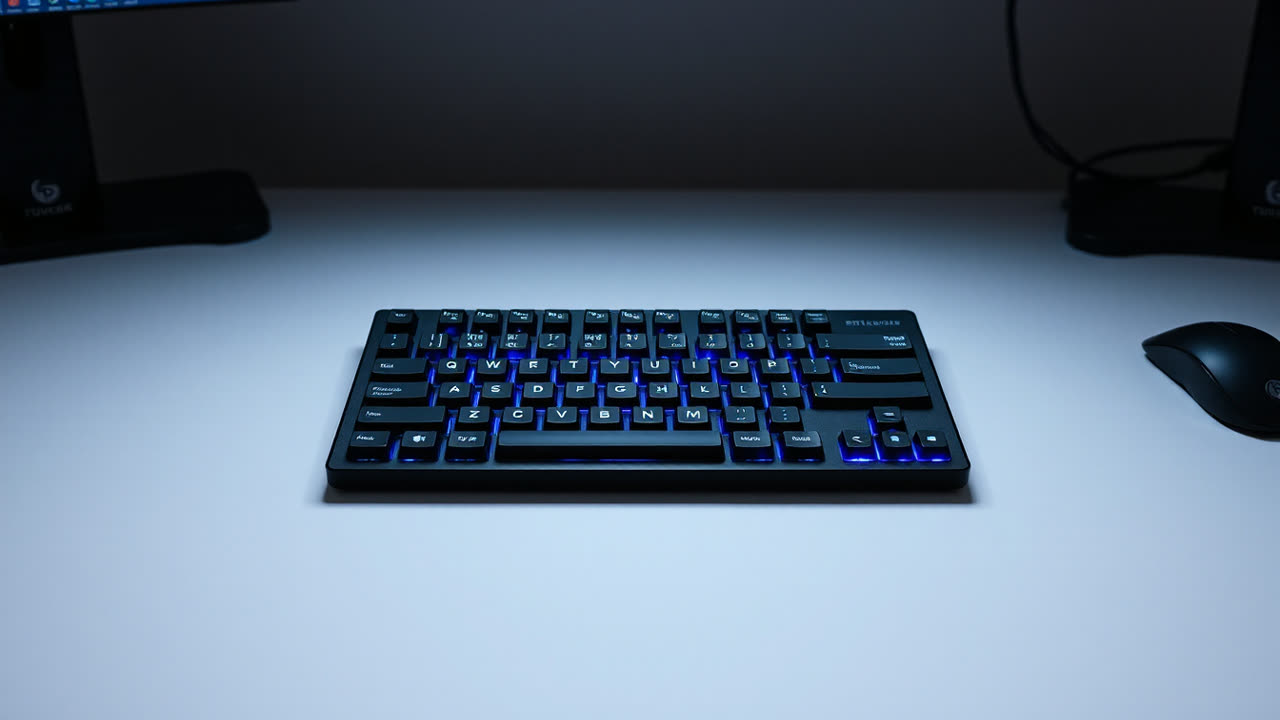
The Turtle Beach Command Series KB5 keyboard introduces a striking innovation by integrating a small, programmable touchscreen directly into its full-size, low-profile chassis, effectively merging a number pad with a customizable macro display. This wired peripheral, unveiled with an MSRP of $129.99, aims to redefine desktop utility by offering a dynamic input solution that transcends traditional static key layouts. Far from a mere gimmick, the KB5’s central 2.2-inch touchscreen is designed for versatility, allowing users to switch between a fully functional numeric keypad and a customizable array of up to 100 programmable macros, media controls, and system monitoring widgets across multiple profiles. This dual-purpose design not only conserves valuable desk space, eliminating the need for a separate macro pad or Stream Deck, but also streamlines complex commands into intuitive, touch-based actions.
The KB5's significance for users lies in its potential to dramatically enhance both gaming and productivity workflows. For gamers, the ability to instantly swap between a number pad for in-game commands or chat and a custom layout of spell rotations, hotkeys, or voice chat toggles offers a tangible competitive edge and a more immersive experience. Productivity-focused individuals, such as video editors, graphic designers, or programmers, can leverage the touchscreen for quick access to software-specific shortcuts, tool palettes, or even system performance metrics without ever needing to minimize their primary applications. The low-profile design, featuring linear mechanical switches with a short 3.2mm travel distance and a 1.2mm actuation point, caters to users seeking a responsive, tactile typing and gaming experience without the high-profile bulk of many traditional mechanical keyboards. The inclusion of double-shot ABS keycaps further enhances durability and legend visibility.
From an industry perspective, the Command Series KB5 represents a bold step in keyboard innovation, challenging the conventional wisdom that secondary displays are either niche additions or expensive, standalone accessories. While other peripherals like the Corsair iCUE Nexus or Elgato Stream Deck offer similar macro and system monitoring capabilities, they typically require a separate footprint on the desk and come with their own price tags. The KB5's integrated approach provides a more elegant, all-in-one solution, potentially inspiring other manufacturers to explore embedded, multi-functional displays in their own keyboard designs. Razer has also ventured into integrated displays with its Stream Controller, and Logitech's older G-series keyboards featured monochrome LCDs, but the KB5's full-color, programmable touchscreen that doubles as a number pad offers a more dynamic and space-efficient proposition. Its direct competitor might be the Asus ROG Claymore II, which features a detachable numpad, but the Claymore II's numpad lacks the programmable touchscreen functionality of the KB5.
The KB5's innovation is underpinned by its robust software suite, the Swarm II application, which facilitates the deep customization of the touchscreen's 100 available slots across multiple profiles. This software is crucial for unlocking the keyboard's full potential, allowing users to assign macros, launch applications, control media, and display system information with ease. The success of such a feature-rich keyboard hinges not just on its hardware capabilities but equally on the intuitive design and reliability of its accompanying software.
Looking ahead, the Turtle Beach Command Series KB5 could serve as a blueprint for the next generation of input devices, particularly if its integrated touchscreen proves popular with a broad user base. We might see larger, higher-resolution touchscreens becoming standard on premium keyboards, offering even more interactive possibilities beyond simple macros—perhaps even contextual menus that adapt to the active application. Further iterations could explore haptic feedback on the touchscreen to provide tactile confirmation for touch inputs, or wireless versions that maintain low latency. The integration of AI-powered contextual suggestions for macros or system controls could also be a future development. While the KB5’s $129.99 price point makes it accessible, the longevity of this design trend will depend on widespread adoption and continued innovation to justify the added complexity and cost. Turtle Beach has positioned itself at the forefront of this particular evolution, and the market's response to the KB5 will undoubtedly influence whether integrated touchscreen numpads become a mainstream feature or remain a specialized, premium offering.