Twitch's Controversial Opt-Out for AI Training Ignites Creator Rights Debate
Twitch has controversially introduced an opt-out mechanism, rather than an opt-in, for streamers who wish to prevent Amazon from training its generative AI models on their content.
✨ This content was summarized and interpreted by AI; it may contain errors — please verify accuracy with the original sources. Learn more
Listen to this story
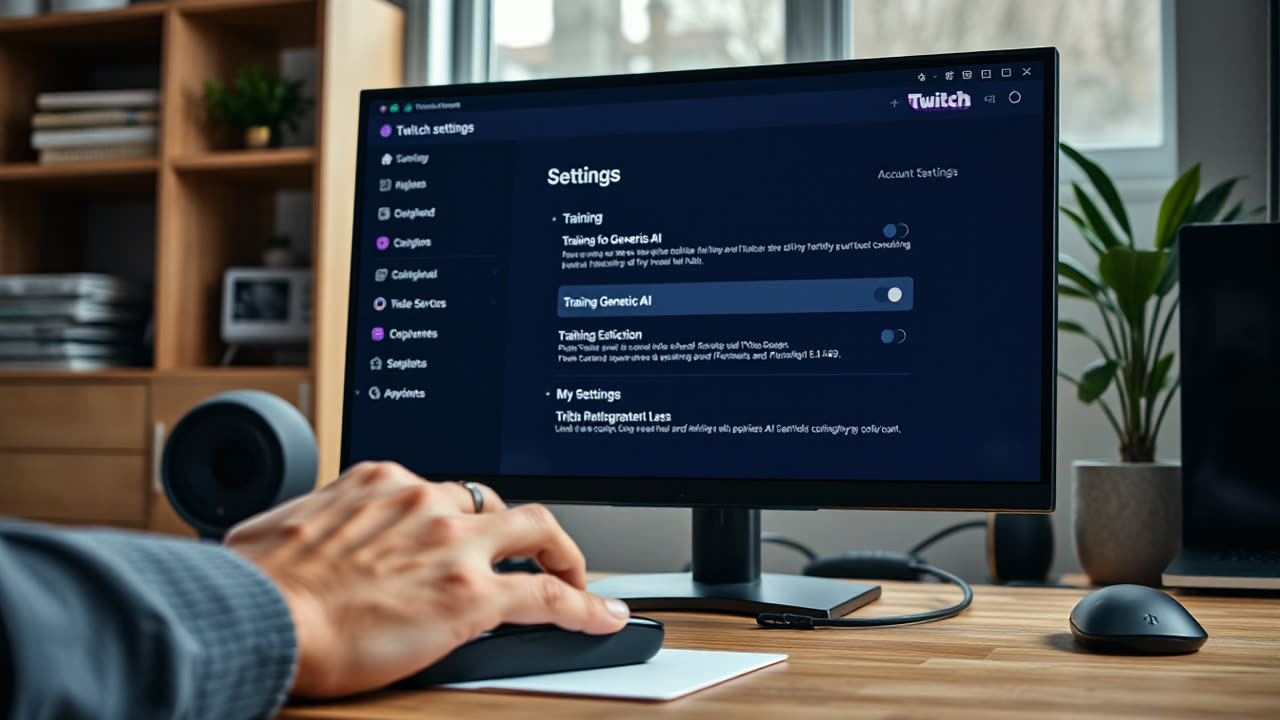
Twitch has controversially introduced an opt-out mechanism, rather than an opt-in, for streamers who wish to prevent Amazon from training its generative AI models on their content. This default "opt-in" approach means that, unless actively disabled, streamers' live broadcasts, past video-on-demand (VODs), clips, stream chats, and any text or images on their channels are fair game for Amazon’s AI development. This move has ignited a fresh wave of debate around creator rights, data ownership, and the ethical responsibilities of platforms in the burgeoning age of artificial intelligence.
The core news is a quiet but significant update to Twitch's account settings, allowing streamers to find a "Training for Generative AI" toggle and disable it. This toggle, however, does not prevent all AI or machine learning uses; Twitch explicitly states that content may still be utilized for other AI-powered features, such as automated captions and its AutoMod tool, which are deemed essential for community safety and platform functionality. The distinction drawn by Twitch is that these non-generative AI uses do not retain user data to produce *new* content, setting them apart from the generative AI training that aims to synthesize text, audio, images, or video. A particularly thorny detail is that if a streamer participates in another channel's chat, the host channel's AI settings determine whether those chat messages are used for generative AI training, regardless of the individual user's own opt-out status.
This policy matters immensely because it underscores a fundamental tension in the creator economy: who truly owns the value generated from user content? By making AI training an opt-out default, Twitch, and by extension Amazon, signals an assumption of ownership over creators' intellectual labor. This approach stands in stark contrast to platforms like YouTube, which, as of December 2024, made third-party AI training an opt-in feature, explicitly protecting creators by default. YouTube's system even offers granular control, allowing creators to select specific third-party companies or permit all of them to use their content for training. This difference highlights a philosophical divide: is user content primarily a resource for platform development, or is it a creator's intellectual property requiring explicit consent for novel uses?
The impact on users and the industry is multifaceted. For streamers, the opt-out mechanism places the burden of protection squarely on their shoulders, requiring them to actively seek out and disable a setting they may not even know exists. This could lead to a significant portion of Twitch's vast content library being unknowingly absorbed into Amazon's AI models, potentially devaluing human creativity by enabling AI to generate competing content or even "synthetic streamers" that require no revenue share or exclusivity deals. The ethical implications are substantial, touching upon data privacy, the potential for bias in AI models trained on diverse, unfiltered content, and the fundamental question of fair compensation for data that fuels lucrative AI advancements. Amazon's broader generative AI initiatives, including its Kindle Direct Publishing (KDP) platform, already require authors to disclose AI-generated content, though not AI-assisted content, indicating an awareness of the distinction and the need for transparency in other content domains. The move by Twitch suggests a more aggressive stance on leveraging user-generated content for AI training compared to its publishing arm.
Historically, the terms of service for many platforms, including Twitch, have been broad, granting companies "unrestricted, worldwide, irrevocable, fully sub-licenseable, nonexclusive, and royalty-free right" to use and create derivative works from user content in "media channels now known or later developed or discovered". This language, often unnoticed by creators, effectively covered AI training long before the term "generative AI" became commonplace. However, the rising prominence of generative AI and its capacity to directly mimic or replace human output has brought these clauses into sharp focus, prompting a re-evaluation of what "derivative works" truly encompasses. Rival platforms like Kick, while generally more permissive, have also updated their community guidelines to address AI, primarily focusing on transparency for AI-generated content that mimics reality and prohibiting deepfakes or misleading synthetic media without consent. This suggests an industry-wide scramble to define boundaries and responsibilities in the face of rapidly evolving AI capabilities.
Looking ahead, this decision by Twitch is likely to intensify calls for greater transparency and more robust creator protections across the digital content landscape. It could spur regulatory bodies to intervene, pushing for default opt-in models for AI training, especially as the creator economy, projected to approach $500 billion, increasingly integrates AI into workflows. While AI offers creators tools for efficiency, global reach, and new forms of content, the ethical line between AI assistance and AI replacement remains blurry. The tension between platforms seeking to maximize the value of their vast data archives and creators striving to protect their intellectual property and livelihoods will only grow. Twitch's move, while offering a belated opt-out, ultimately sets a precedent that platforms can leverage user-generated content for AI training by default, challenging creators to remain vigilant or risk their unique contributions becoming mere fuel for the next generation of automated content.