U.S. Government Lifts TikTok Ban on Federal Devices After Ownership Restructuring
The U.S. Department of Justice has officially rescinded the long-standing prohibition on TikTok for federal devices, following a major ownership restructuring that saw American and global investors acquire a majority stake in a new U.S.-based joint venture.
✨ This content was summarized and interpreted by AI; it may contain errors — please verify accuracy with the original sources. Learn more
Listen to this story
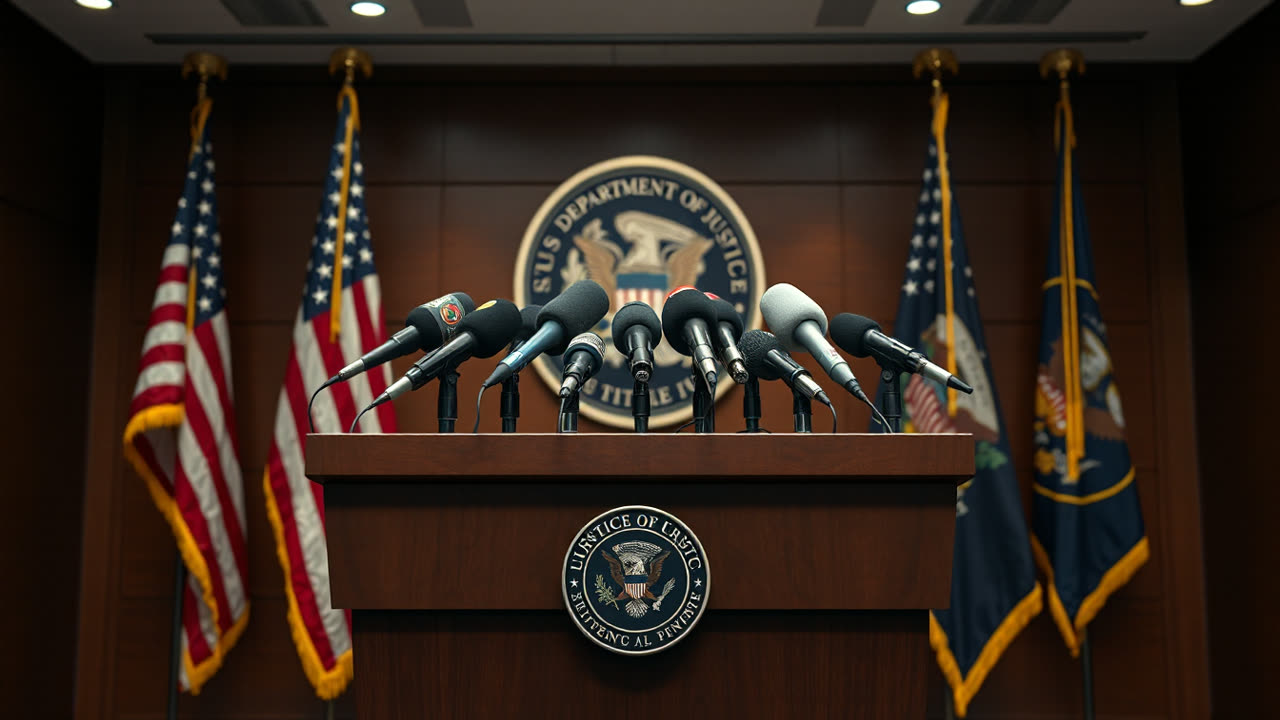
The U.S. Department of Justice officially rescinded the ban on TikTok for federal devices on July 18, 2026, marking a pivotal shift in the government's approach to the widely popular social media platform. This reversal comes after the comprehensive restructuring of TikTok's U.S. operations, culminating in the formation of the TikTok USDS Joint Venture. This new entity is now majority-owned by American and global investors, holding an 80.1% stake, while ByteDance, TikTok's original Chinese parent company, retains a minority interest of 19.9%. The Justice Department clarified that this reconfigured version of TikTok no longer falls under the 2022 federal prohibition, as it functions independently of ByteDance and has revised its content recommendation algorithm and cybersecurity program to insulate federal government information from concerning security features that initially prompted the ban. Oracle, a key American technology company, plays a crucial role as an investor and is responsible for securing U.S. user data within its cloud environment.
This policy pivot carries profound implications for both federal employees and the broader tech industry. For the approximately two million federal employees, the immediate impact is a restoration of access to a platform that has become a dominant force in global communication and cultural exchange, with over 150 million U.S. users. This could prove strategically valuable for government agencies engaged in public outreach, recruitment, or information dissemination, allowing them to connect with diverse demographics, particularly younger audiences, through a highly effective medium. However, the Department of Justice explicitly stated that individual agencies retain the discretion to prohibit TikTok on government devices for reasons such as workforce management or productivity, underscoring a continued emphasis on cautious implementation. Agencies are now tasked with establishing their own stringent security protocols and educating personnel on responsible and secure usage, transforming a blanket ban into a framework of granular risk assessment.
For the technology sector, this decision signals a potential softening of the U.S. government's previously hardline stance against Chinese-owned applications, suggesting a viable pathway for foreign-owned tech companies to operate within sensitive U.S. environments, provided they meet rigorous security and ownership benchmarks. This move validates years of lobbying and significant investment by TikTok, notably through its "Project Texas" initiative. Though initially dismissed by U.S. lawmakers as inadequate in early 2024, the core tenets of Project Texas—such as isolating U.S. user data within Oracle's U.S. cloud infrastructure and implementing third-party auditing of the algorithm—are now largely integrated into the new TikTok USDS Joint Venture structure. The lifting of the ban also averts significant economic repercussions that a full nationwide prohibition, which was de jure in effect from January 19, 2025, to January 22, 2026, though unenforced, would have entailed. Studies indicated such a ban would have reduced advertiser options, increased market concentration in digital advertising, and raised short-term ad prices on competing platforms like Meta, disproportionately harming smaller businesses and potentially leading to job losses.
The original federal ban, implemented in late 2022 by Congress, stemmed from bipartisan national security concerns that TikTok's then-Chinese parent company, ByteDance, could be compelled by Beijing's National Intelligence Law to share U.S. user data or manipulate content, thereby posing risks of espionage or influence operations. This contrasted sharply with the regulatory landscape for U.S.-based social media giants like Meta and X (formerly Twitter), which, despite their own data privacy issues, fall under U.S. legal jurisdiction. While other platforms also collect vast amounts of user data, TikTok faced heightened scrutiny primarily due to its foreign ownership. The current administration, including President Donald Trump, who previously sought an outright ban, has now certified that the new ownership structure "appropriately protect Americans' data and our national security."
Moving forward, the policy reversal establishes a precedent for navigating the complex intersection of global technology, national security, and economic interests. This will likely necessitate a new era of proactive cybersecurity governance, requiring continuous oversight, independent audits of source code and data flows, and transparent reporting from all applications operating within government ecosystems. While the immediate threat of a federal ban has receded, TikTok will undoubtedly remain under intense scrutiny, with experts like Timothy Edgar of Harvard Law School noting that the underlying risks of data collection and potential espionage persist, regardless of ownership structure, in the absence of comprehensive U.S. privacy regulations. This outcome may also spur Congress to develop more holistic legislation that standardizes data privacy and national security requirements for all digital platforms, rather than pursuing app-specific bans, thereby fostering a more predictable and secure digital environment for both government and civilian users.