U.S. Justice Department Reverses TikTok Ban for Federal Devices
The Department of Justice has officially reversed its long-standing prohibition, now permitting federal employees to download and utilize TikTok on their government-issued devices, marking a significant pivot in the U.S. government's approach to the widely popular, China-linked social media platform.
✨ This content was summarized and interpreted by AI; it may contain errors — please verify accuracy with the original sources. Learn more
Listen to this story
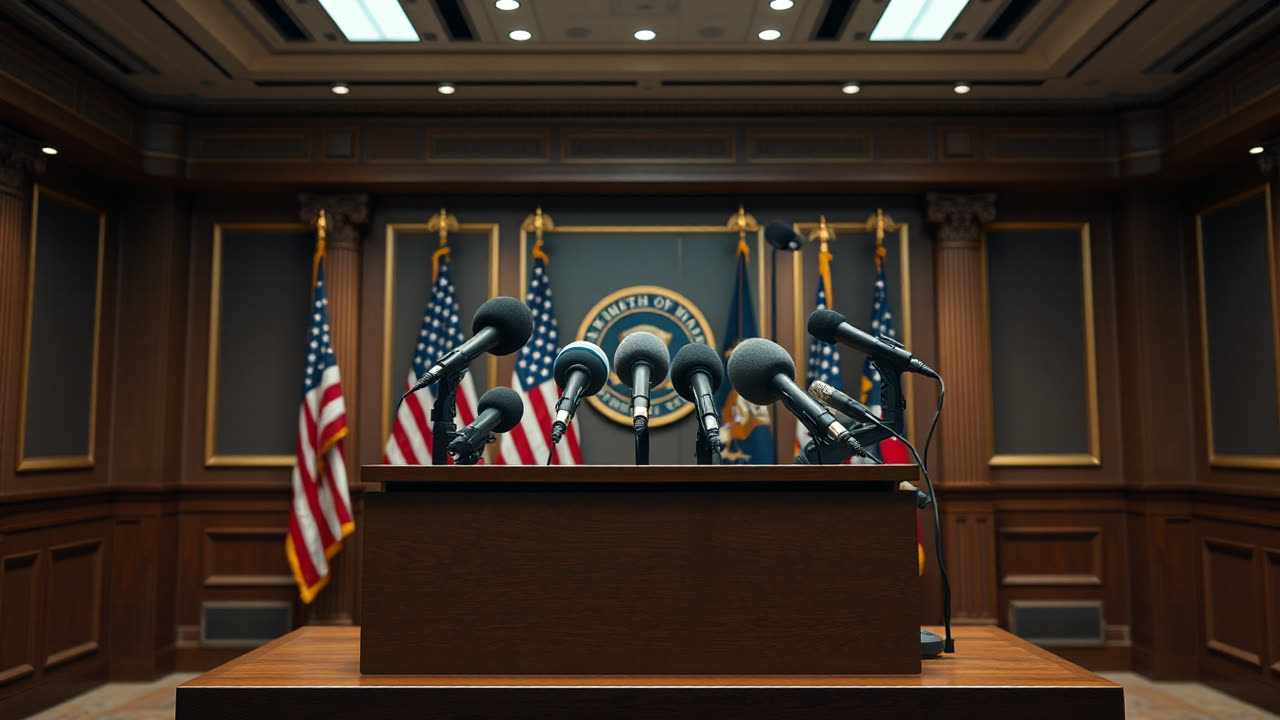
The Department of Justice has officially reversed its long-standing prohibition, now permitting federal employees to download and utilize TikTok on their government-issued devices, marking a significant pivot in the U.S. government's approach to the widely popular, China-linked social media platform. This decision, announced today, comes after years of escalating security concerns that led to a near-total ban across federal agencies, and fundamentally reshapes the landscape of digital communication within the public sector. The reversal is not without stringent conditions, however, requiring agencies to implement updated security protocols and mandate employee training on data privacy best practices, ostensibly to mitigate the national security risks previously cited.
This policy shift carries profound implications for both federal employees and the broader tech industry. For the millions of federal workers, it represents a restoration of access to a platform that has become a dominant force in digital culture and information dissemination, potentially facilitating new avenues for public engagement and internal communication, particularly for agencies seeking to reach younger demographics or leverage viral trends for public service announcements. However, the primary impact on federal employees will be the enhanced flexibility in their digital toolkit, allowing them to engage with constituents and disseminate information on a platform where much of the public discourse now occurs, provided their specific agency approves and adheres to the new DoJ guidelines. For TikTok, the decision is a monumental victory, signaling a partial thawing of its strained relationship with the U.S. government and potentially paving the way for further integration into American digital infrastructure, bolstering its market position against rivals like Meta's Instagram Reels and Google's YouTube Shorts. The endorsement, however conditional, from a key U.S. government department could also serve as a powerful legitimizing factor for TikTok in the eyes of other cautious organizations and international governments.
The original federal ban, largely implemented through a series of directives from the Office of Management and Budget (OMB) and various agency-specific policies starting in late 2020, was predicated on fears that the app's parent company, ByteDance, could be compelled by the Chinese government to share user data or influence content, posing a direct national security risk. This concern was amplified by China's National Intelligence Law of 2017, which mandates that organizations and citizens "support, assist, and cooperate with national intelligence efforts." The ban effectively mirrored similar actions taken by many state governments and even some allied nations, which restricted or prohibited TikTok on government devices due to similar geopolitical anxieties. The DoJ's current reversal is reportedly influenced by significant, albeit undisclosed, advancements in TikTok's data security architecture, particularly its "Project Texas" initiative. This ambitious undertaking, which began in 2022, aimed to isolate U.S. user data on servers managed by Oracle within the United States, subject to U.S. law, and overseen by an independent third party to ensure data integrity and prevent foreign access. While the full details of Project Texas's implementation and its acceptance by the DoJ remain opaque, the reversal strongly suggests that these measures, or a refined version thereof, have finally met a sufficient threshold of governmental approval. This contrasts sharply with the prior generation of security measures, which were largely perceived as insufficient to assuage Washington's deep-seated concerns.
Looking ahead, this decision sets a compelling precedent but also introduces new complexities. Other federal agencies are now expected to review and potentially revise their own internal TikTok policies, leading to a patchwork implementation across the government. While the DoJ’s green light is significant, agencies dealing with highly classified information or critical infrastructure may still opt for stricter prohibitions, balancing the DoJ’s guidance with their specific risk profiles. The move could also pressure states and other countries that maintain similar bans to re-evaluate their positions, potentially sparking a broader international re-assessment of TikTok's security posture. Furthermore, the reversal will undoubtedly reignite debates in Congress, with some lawmakers likely to express renewed concerns about national security and data privacy, potentially leading to legislative attempts to either codify new restrictions or demand greater transparency regarding TikTok's compliance mechanisms. The true test will lie in TikTok's consistent adherence to the new security mandates and the government's ongoing ability to monitor and verify these safeguards in an ever-evolving digital threat landscape. The DoJ's move is a pragmatic acknowledgment of TikTok's omnipresence, attempting to manage its risks rather than outright ban it, but the long-term success of this strategy hinges on robust oversight and continuous adaptation to emerging cybersecurity challenges.