Uber and Zipline Target One Million Daily Drone Deliveries, Transforming Last-Mile Logistics
Uber aims for an unprecedented one million daily drone deliveries through its Zipline partnership, with initial Uber Eats drone deliveries commencing in late 2024, signaling a profound shift in last-mile logistics.
✨ This content was summarized and interpreted by AI; it may contain errors — please verify accuracy with the original sources. Learn more
Listen to this story
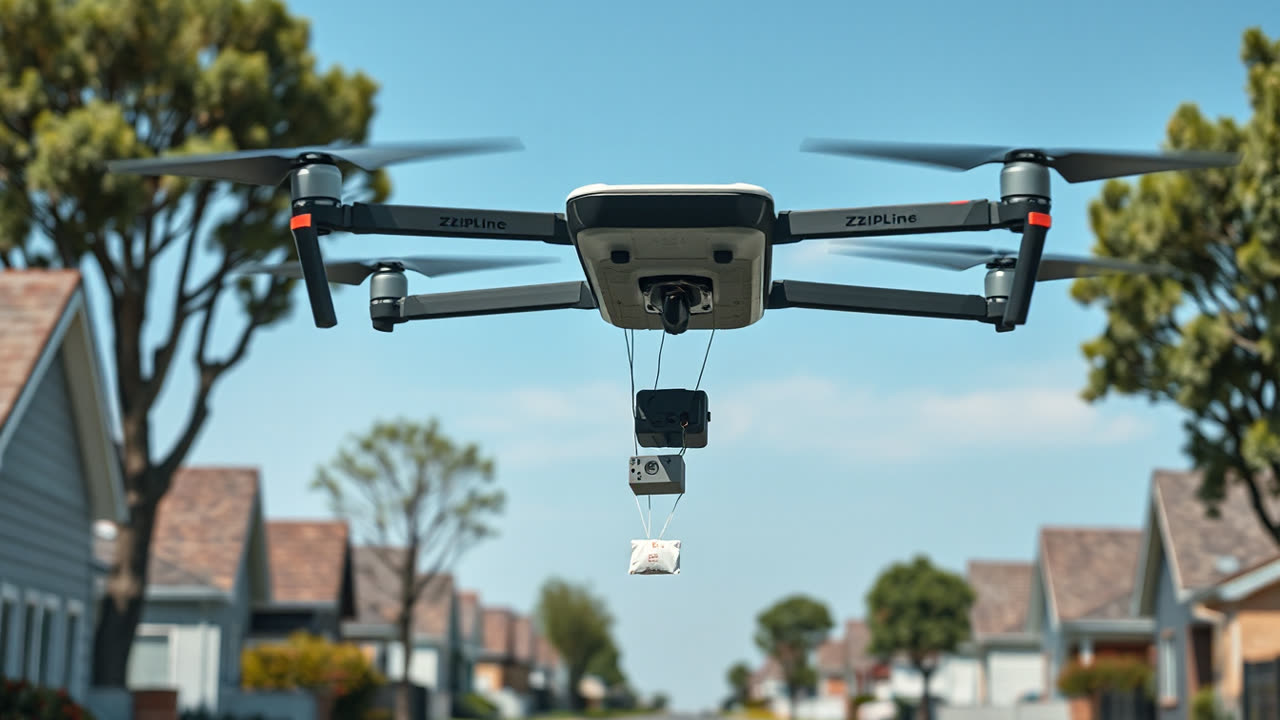
Uber is aggressively targeting an unprecedented one million daily drone deliveries through its Zipline partnership, with initial Uber Eats drone deliveries having commenced in the latter half of 2024, marking a significant escalation in the race for autonomous last-mile logistics. This ambitious target, initially announced with an eye towards 2028, underscores a profound shift in Uber's long-term strategy, moving beyond its traditional human-powered gig economy model to embrace a highly automated, high-volume delivery paradigm. The core news here isn't merely the initiation of drone deliveries, but the sheer scale of ambition and the strategic implications for urban logistics, labor markets, and consumer expectations.
The "why it matters" extends far beyond convenience. For users, it promises dramatically faster delivery times, particularly for smaller, time-sensitive orders like food and pharmaceuticals. Zipline’s autonomous aircraft, capable of cruising at speeds up to 100 km/h and operating in a 10-mile radius, can bypass traffic congestion entirely, potentially reducing delivery times from an average of 30-60 minutes to under 15 minutes in many urban and suburban environments. This speed premium could fundamentally alter consumer habits, making on-demand delivery a more spontaneous and integrated part of daily life. For the industry, this partnership represents a direct challenge to the economics of traditional delivery. Human-driven deliveries are increasingly constrained by labor costs, fuel prices, and urban traffic, eroding profit margins. By leveraging Zipline's fully autonomous system, which requires minimal human intervention beyond loading and maintenance, Uber aims to drastically reduce per-delivery costs at scale, potentially creating a new, more profitable backbone for its Eats division. Zipline's operational model, which involves dropping packages via parachute to designated safe landing zones, also minimizes the infrastructure required at the customer end, simplifying deployment compared to systems requiring dedicated landing pads or ground robots.
Historically, drone delivery has been plagued by regulatory hurdles, technological immaturity, and scalability issues. Previous generations of drone delivery attempts, including earlier pilots by Amazon Prime Air and Wing (Alphabet's drone subsidiary), often focused on direct-to-door delivery, which presented significant safety and privacy concerns in densely populated areas. Zipline, however, has refined its approach through extensive operations in Rwanda and Ghana, where it has already completed millions of commercial deliveries of medical supplies, demonstrating robust reliability and safety protocols in challenging environments. This operational track record provides a crucial differentiator, offering a proven system rather than a nascent technology. The comparison to rivals reveals a strategic divergence: while Amazon and Wing continue to pursue more localized, often suburban-focused drone networks with direct home delivery, Uber and Zipline are betting on a hub-and-spoke model that prioritizes speed and volume over doorstep precision for every single item. Zipline's latest Platform 2 (P2) system boasts a 10-mile service radius and can deliver packages up to 6 pounds, covering the vast majority of Uber Eats orders, which typically weigh less. This scale-first approach, combined with Zipline's proprietary battery swapping and automated launch/recovery systems, positions them uniquely to tackle the logistical complexities of urban environments.
Looking ahead, the path to one million daily deliveries is steep but not insurmountable. Regulatory approvals, particularly in complex airspace like that over major U.S. cities, remain a critical bottleneck, though Zipline's established safety record and ongoing collaboration with aviation authorities are mitigating factors. The expansion will likely follow a phased approach, starting in suburban and less congested urban areas where current regulations are more permissive, before gradually pushing into denser zones as regulatory frameworks evolve and public acceptance grows. The partnership could also catalyze further consolidation or collaboration within the drone delivery sector, as smaller players struggle to match the capital expenditure and operational scale of the Uber-Zipline alliance. Furthermore, the success of this model will inevitably reshape the gig economy. While it won't entirely eliminate human delivery drivers, it will likely reallocate labor towards more complex, larger-item, or longer-distance deliveries, pushing the gig workforce up the value chain or into new roles supporting drone operations. The long-term outlook suggests a hybrid delivery ecosystem where autonomous drones handle the majority of small, urgent orders, freeing up human couriers for specialized tasks, ultimately driving down costs and increasing efficiency across the entire logistics landscape. The current trajectory indicates that the dream of widespread drone delivery is rapidly transitioning from futuristic concept to operational reality, with Uber and Zipline at the forefront of this transformative shift.