Uber Eats Partners with Zipline for Autonomous Drone Delivery
Uber Eats has dramatically accelerated its last-mile delivery ambitions by announcing a strategic partnership with and investment in Zipline to integrate autonomous drones into its food delivery network, aiming for initial U.S. launches by early 2027.
✨ This content was summarized and interpreted by AI; it may contain errors — please verify accuracy with the original sources. Learn more
Listen to this story
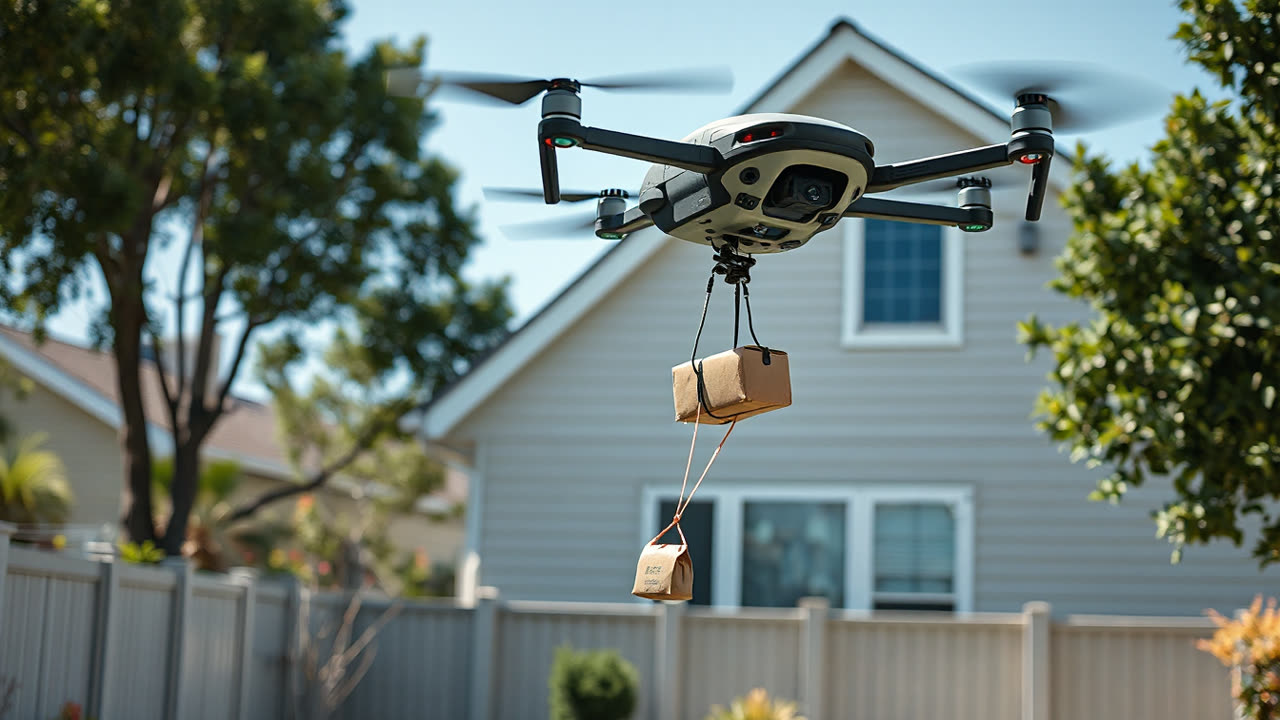
Uber Eats has dramatically accelerated its ambitions in autonomous last-mile delivery, announcing a strategic partnership with and investment in Zipline, the leading drone logistics company, to integrate Zipline’s autonomous aircraft into its food delivery network. This move, confirmed on August 17, 2026, marks a significant escalation in the race for ultra-efficient, on-demand logistics, promising to reshape consumer expectations and industry operating models. While specific financial details of Uber’s investment remain undisclosed, the tie-up is poised to launch initial drone delivery services in select U.S. markets by early 2027, starting with limited menus and geographic zones before broader expansion.
The strategic significance of this alliance extends far beyond mere novelty; it represents a calculated maneuver by Uber to unlock new levels of efficiency and reach in its Eats division, directly addressing the persistent challenges of urban congestion, labor costs, and delivery speed that plague traditional road-based services. Zipline’s drones, known for their fixed-wing design and ability to cover significant distances at speeds up to 100 km/h (approximately 62 mph), are designed to operate independently of road infrastructure, circumventing traffic bottlenecks that often delay conventional deliveries. Their "point-and-drop" delivery system, which gently lowers packages via parachute to a small landing zone, also mitigates the need for complex landing pads, making deployment more flexible for restaurants and consumers alike. This capability is particularly impactful for suburban and exurban areas, where traditional delivery can be slow and expensive, and potentially even for dense urban environments where specific pickup and drop-off points can be established. For consumers, this translates to faster delivery times, potentially lower delivery fees over time due to reduced operational costs, and access to a wider range of restaurants that might have been out of economical reach previously.
From an industry perspective, Uber’s deep integration with Zipline sets a formidable benchmark against rivals like DoorDash and Grubhub, who have also explored drone and robotic delivery but have yet to announce a partnership of this scale and strategic depth. While DoorDash has experimented with Wing (Alphabet’s drone subsidiary) in limited pilots, and Grubhub has partnered with Starship Technologies for campus robot deliveries, Uber’s investment and network integration with Zipline suggest a more aggressive, long-term commitment to autonomous aerial logistics. This move also differentiates Uber from its prior generation of delivery, which relied almost exclusively on human drivers and cyclists, by introducing a scalable, automated layer that can handle a significant portion of orders, particularly those less sensitive to human interaction or requiring rapid transport over moderate distances. The shift could allow Uber to reallocate human drivers to more complex, high-value deliveries or areas where drone operations are not yet feasible, optimizing its overall logistics network.
The underlying technology of Zipline, which has successfully executed millions of commercial deliveries of medical supplies in Rwanda and Ghana and recently expanded into retail logistics in the U.S. with Walmart, provides a proven operational backbone. This operational track record, coupled with a robust safety record, is critical for navigating the complex regulatory landscape governing drone operations in the U.S. The Federal Aviation Administration (FAA) has been progressively liberalizing regulations for commercial drone deliveries, granting waivers and type certifications for specific operations, but nationwide, widespread deployment still faces hurdles related to beyond visual line of sight (BVLOS) operations and public acceptance. Uber’s financial backing and lobbying power could significantly accelerate regulatory approvals and infrastructure development necessary for Zipline’s expansion.
Looking ahead, the Uber-Zipline partnership signals a future where last-mile logistics are increasingly multimodal and automated. The immediate next steps will likely involve meticulously planned pilot programs, focusing on specific cities or regions where regulatory frameworks are most permissive and consumer demand for rapid delivery is high. Challenges will include scaling operations efficiently, managing airspace integration with existing air traffic, and ensuring public trust and acceptance, particularly regarding noise pollution and privacy concerns. The long-term implications are profound: a potential reshaping of the gig economy as certain delivery roles become automated, a significant reduction in delivery times and costs for consumers, and a new competitive frontier for logistics companies. This collaboration positions Uber not just as a ride-hailing and food delivery giant, but as a serious contender in the broader autonomous logistics space, potentially setting the standard for how goods move from businesses to doorsteps in the next decade.