Ugreen's $20,000 AI Hub Leverages Nvidia Jetson Thor to Pioneer Local Smart Home Intelligence
Ugreen's new ecosystem of local AI hubs, spearheaded by a $20,000 flagship model powered by Nvidia's Jetson Thor, marks a significant shift away from cloud-dependent smart home systems, prioritizing privacy and on-device processing.
✨ This content was summarized and interpreted by AI; it may contain errors — please verify accuracy with the original sources. Learn more
Listen to this story
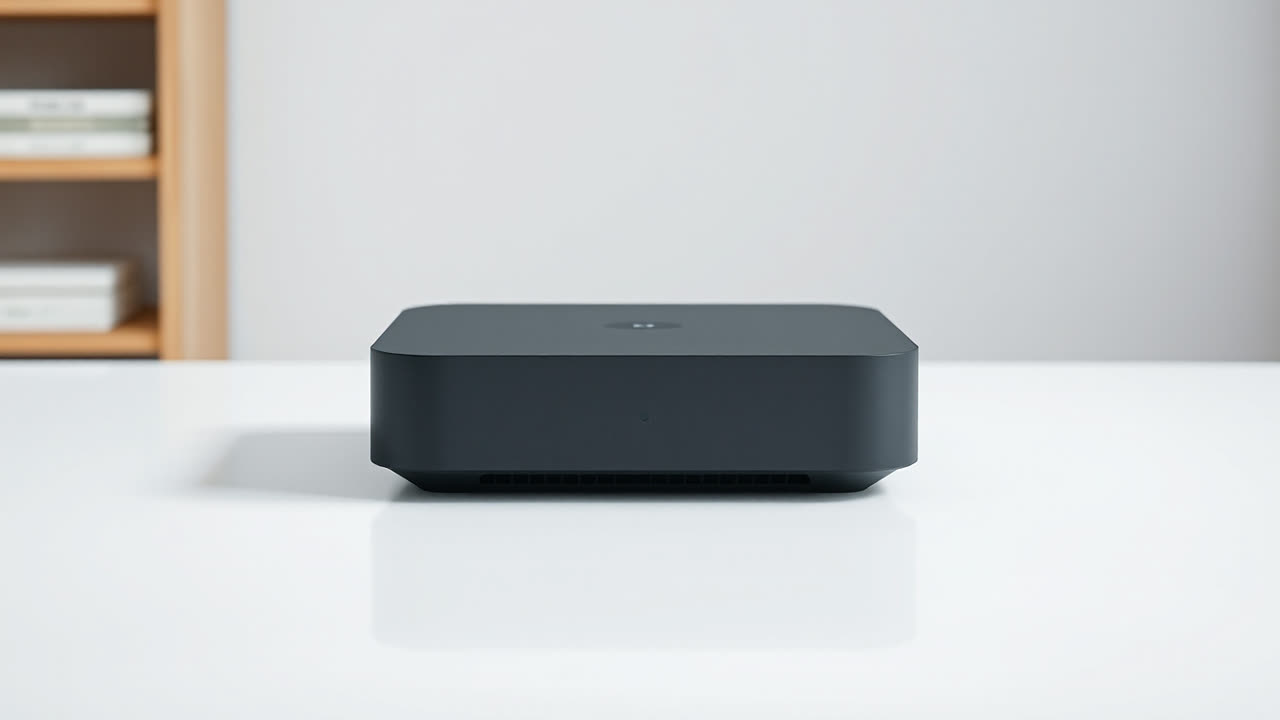
Ugreen's ambitious foray into the smart home sector, anchored by its new ecosystem of local AI hubs, represents a significant pivot from the prevailing cloud-centric model, with its top-tier offering, the Ugreen Smart Home AI Hub, reportedly leveraging Nvidia's high-performance Jetson Thor platform and commanding a staggering $20,000 price tag. This strategic move, initially unveiled in late 2023, positions Ugreen not merely as another gadget manufacturer but as a potential architect of a new paradigm for intelligent living spaces, emphasizing privacy, speed, and robust offline functionality. The core proposition revolves around processing sensitive user data and executing complex AI routines directly on-device, thereby mitigating the inherent privacy and latency concerns associated with continuous data transmission to remote servers.
The "why it matters" for both users and the industry is profound. For end-users, especially those with heightened privacy concerns or in regions with unreliable internet infrastructure, Ugreen's local AI hubs offer an appealing alternative. Data, from voice commands to motion detection and facial recognition, remains within the confines of the home, drastically reducing the attack surface for cyber threats and eliminating the potential for third-party data exploitation that has plagued cloud-based smart home systems. Furthermore, local processing dramatically slashes latency, making interactions with smart devices feel more instantaneous and reliable, particularly critical for time-sensitive automations like security responses or environmental controls. Imagine a security camera that can identify an intruder and trigger an alarm in milliseconds, without waiting for round-trip communication to a distant server. This responsiveness could redefine user expectations for smart home performance. The initial $20,000 price point for the flagship model, however, firmly places it in the luxury or specialized enterprise segment, far beyond the reach of the average consumer, suggesting Ugreen's immediate target might be high-net-worth individuals, tech enthusiasts, or even commercial applications requiring stringent data control and performance.
From an industry perspective, Ugreen's approach challenges the established revenue models of many smart home providers who rely on recurring subscriptions for cloud services and the monetization of user data. By shifting intelligence to the edge, Ugreen pushes the value proposition back to hardware and sophisticated on-device software, potentially forcing rivals to re-evaluate their own strategies. The adoption of Nvidia's Jetson Thor platform is particularly telling. Jetson Thor, designed for advanced robotics, autonomous machines, and edge AI, boasts immense computational power, capable of handling complex neural networks and simultaneous AI workloads. This choice signifies Ugreen's commitment to delivering unparalleled local processing capabilities, far exceeding the modest chipsets typically found in consumer-grade smart hubs. This level of computational horsepower opens doors for far more sophisticated, personalized, and proactive AI behaviors within the home, evolving beyond simple rule-based automations to truly intelligent, adaptive environments that learn and anticipate user needs without external intervention. The high cost of the Jetson Thor, however, is undoubtedly a major contributor to the hub's premium price, indicating a current trade-off between ultimate performance and mass-market accessibility.
Comparing Ugreen's local AI hubs to prior generations and current rivals highlights its distinctive position. Traditional smart home systems, exemplified by platforms from Amazon, Google, and Apple, have historically relied heavily on cloud connectivity for voice assistants, complex automations, and data analysis. While convenient and scalable, this reliance introduces privacy vulnerabilities, potential service outages, and perceptible lag. Even Apple's HomeKit, which offers some level of on-device processing for certain functions, still fundamentally operates within a cloud-dependent framework for broader functionality and remote access. Newer entrants and open-source solutions like Home Assistant have championed local control for years, but often require significant technical expertise or lack the polished, integrated ecosystem Ugreen aims to deliver. Ugreen's differentiated offering is its blend of enterprise-grade local AI hardware, a proprietary ecosystem, and a user experience designed to be seamless while maintaining data sovereignty. The three-tiered hub strategy, with less powerful but presumably more affordable models alongside the Jetson Thor-powered behemoth, suggests a future roadmap for broader market penetration, addressing different segments with varying computational needs and budget constraints.
Looking ahead, Ugreen's bold move could catalyze a significant shift in the smart home landscape. The success of its local AI hubs, particularly the high-end model, will likely depend on demonstrating tangible, undeniable benefits in terms of privacy, speed, and advanced AI functionality that justify the premium. If Ugreen can effectively articulate and deliver on this value proposition, it could inspire other manufacturers to invest more heavily in edge AI solutions, potentially driving down hardware costs and accelerating the development of more powerful, energy-efficient AI chipsets tailored for residential applications. We could see a bifurcation of the smart home market: a mass-market segment continuing with cloud-hybrid solutions for convenience and lower cost, and a premium segment increasingly opting for sophisticated local AI for enhanced privacy, security, and performance. Furthermore, Ugreen's commitment to local processing could accelerate the development of more robust, standardized, and interoperable local communication protocols, reducing reliance on proprietary cloud APIs and fostering a more open, user-controlled smart home future. The long-term outlook suggests that while the $20,000 hub may remain a niche product, the underlying philosophy of powerful, private, local AI is poised to become a defining characteristic of next-generation smart home technology.