UK Unveils Groundbreaking Battery-Electric Train Fleet for Northern England
A strategic investment in British-designed and built battery-electric trains promises to transform rail travel across northern England, creating thousands of jobs and significantly cutting carbon emissions.
✨ This content was summarized and interpreted by AI; it may contain errors — please verify accuracy with the original sources. Learn more
Listen to this story
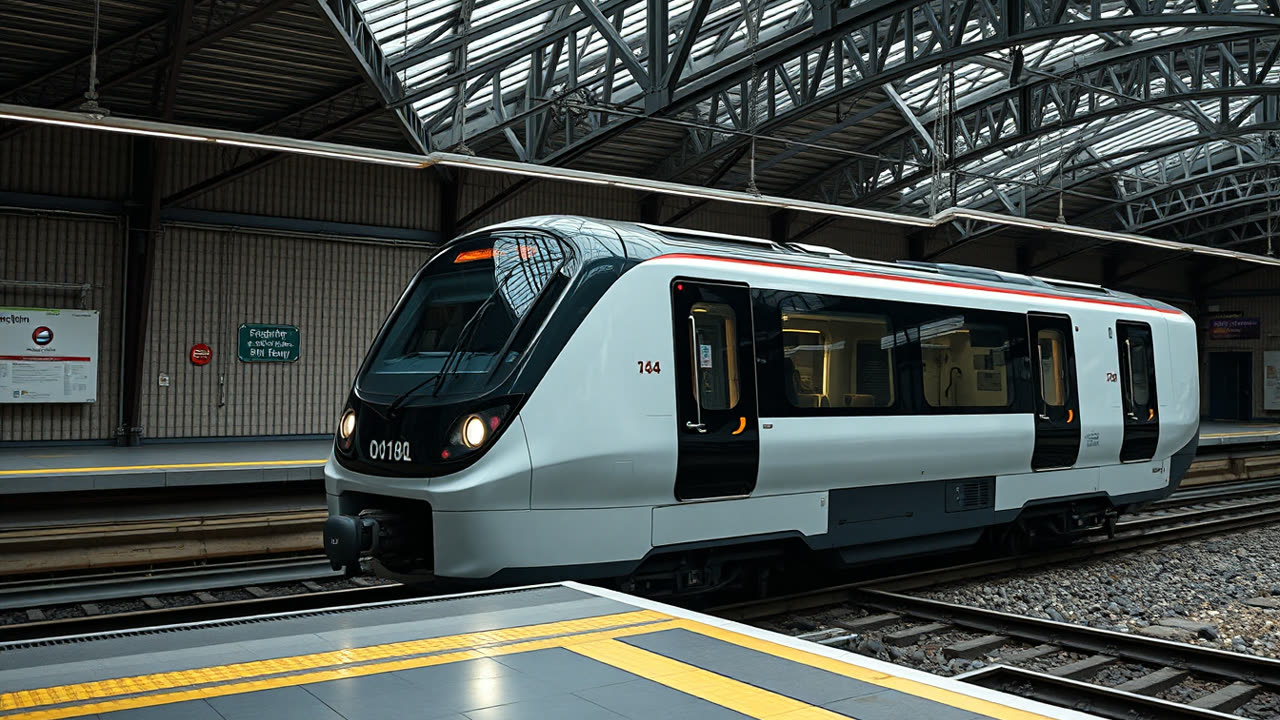
A groundbreaking order for a new fleet of British-designed and built battery-electric trains is set to revolutionize rail travel across northern England, promising thousands of new jobs, significantly faster and more reliable services, and a substantial reduction in carbon emissions. This strategic investment marks a pivotal moment in the UK's journey towards a decarbonized transport network, moving beyond incremental upgrades to embrace a truly transformative technology that addresses both environmental imperatives and long-standing operational challenges. The initiative is expected to create an estimated 2,500 direct and indirect jobs across the manufacturing supply chain, predominantly in engineering and skilled trades, bolstering the UK’s industrial base.
The immediate impact for passengers will be tangible improvements in journey times and service punctuality. Battery-electric multiple units (BEMUs) offer quicker acceleration and deceleration compared to their diesel counterparts, allowing for more efficient scheduling and reduced dwell times at stations. This enhanced performance is particularly crucial for regional routes in northern England, which have often suffered from infrastructure limitations and reliance on older, less agile rolling stock. Furthermore, the inherent simplicity of electric powertrains, with fewer moving parts than diesel engines, translates directly into increased reliability and reduced maintenance requirements, minimizing service disruptions and improving the overall passenger experience. The environmental benefits are equally profound, with projections indicating a reduction of over 300,000 tonnes of CO2 emissions annually once the fleet is fully operational, contributing significantly to the UK's net-zero targets. This transition will also eliminate localized air pollution from diesel particulates, improving air quality in urban areas served by these lines.
Historically, UK rail electrification has primarily relied on overhead lines or third rails, a capital-intensive and disruptive process. The advent of viable battery-electric trains offers a compelling alternative, particularly for lines where full electrification is not economically or practically feasible. While existing bi-mode trains can switch between electric overhead lines and diesel power, BEMUs represent a zero-emission solution even on non-electrified routes, utilizing batteries to bridge gaps in the electrified network or operate entirely on battery power for shorter, regional lines. This contrasts with the prior generation of diesel trains, which, despite advancements, remain significant contributors to greenhouse gas emissions and noise pollution. Compared to international rivals, the UK's adoption of BEMUs places it among the leaders in utilizing this specific technology for mainline passenger services. Countries like Germany and Austria have also explored battery and hydrogen fuel cell trains, but the scale and integrated manufacturing approach of this UK initiative signal a strong commitment to domestic innovation in green rail technology. The new trains are expected to achieve speeds comparable to conventional electric trains on electrified sections, typically up to 100 mph, and offer a substantial operational range on battery power, estimated to be around 60-80 miles depending on the route and load.
Looking ahead, this initial fleet serves as a critical proof-of-concept and a catalyst for broader rail decarbonization. The successful deployment and performance data from these trains will undoubtedly inform future procurement decisions across other regions of the UK. We can anticipate a phased rollout, with more routes, particularly those with existing partial electrification or amenable to strategic charging points, being targeted for conversion. The development of advanced charging infrastructure, including rapid charging at termini or intermediate stations, will be key to maximizing the operational flexibility and range of these battery fleets. Furthermore, the domestic manufacturing capabilities established for this project could position the UK as an exporter of battery-electric rail technology, fostering further economic growth and job creation. The long-term vision includes a rail network where the vast majority of services operate without direct carbon emissions, leveraging a combination of full electrification for high-traffic corridors and battery or hydrogen solutions for regional and less-intensively used lines. This strategic blend offers a pragmatic and economically viable pathway to a truly green railway, moving beyond aspirations to concrete, tangible progress.