Ukraine's Operation Vivaldi: Autonomous Robots Achieve Battlefield Dominance, Reversing Russian Gains
Ukraine's Operation Vivaldi leveraged autonomous robotic systems to not only halt but reverse significant Russian territorial gains, marking a pivotal moment in military robotics.
✨ This content was summarized and interpreted by AI; it may contain errors — please verify accuracy with the original sources. Learn more
Listen to this story
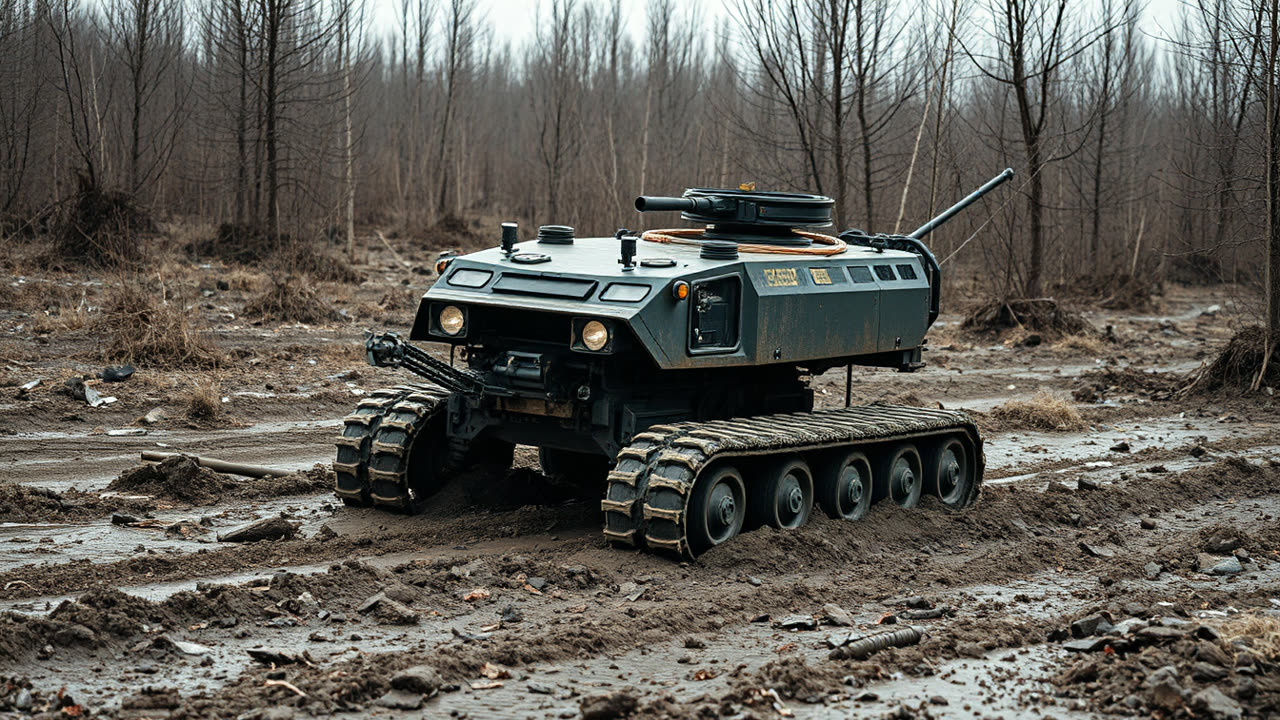
The strategic landscape of modern warfare has been irrevocably reshaped by Ukraine's Operation Vivaldi, a recent offensive that leveraged autonomous robotic systems to not only halt but reverse significant Russian territorial gains, particularly through innovative combat airdrops and highly effective mine-clearing operations. This decisive action, which has seen Ukrainian forces reclaim critical ground, marks a pivotal moment in military robotics, moving beyond theoretical applications to demonstrated battlefield dominance. Unlike previous conflicts where robots primarily served in reconnaissance or explosive ordnance disposal (EOD) roles, Operation Vivaldi showcased fully integrated, multi-functional autonomous units performing high-stakes logistical and engineering tasks under direct combat conditions.
The impact on personnel is profound, drastically reducing the risk exposure for combat engineers and logistics teams. Previously, minefield breaches or resupplying frontline units under fire were among the most perilous tasks, leading to high casualty rates. Now, purpose-built unmanned ground vehicles (UGVs), some weighing several tons and equipped with flails or electromagnetic systems, systematically clear paths through dense minefields, often ahead of manned advances, as observed during the push to secure key supply routes in the Zaporizhzhia region. These autonomous systems navigate complex terrain, map cleared areas with precision, and even transmit real-time data on remaining threats, effectively creating safer corridors for follow-on forces. For combat airdrops, advanced heavy-lift drones, capable of carrying hundreds of kilograms of supplies—from ammunition and medical kits to critical repair components—have performed precision deliveries to isolated units, circumventing compromised ground routes and negating the need for dangerous manned helicopter sorties. This capability has sustained forward elements for extended periods, directly contributing to their ability to hold ground and launch counter-attacks.
From an industry perspective, Operation Vivaldi validates years of investment in military robotics, particularly in areas of autonomy, payload capacity, and ruggedization. The success of these systems will undoubtedly accelerate research and development into more sophisticated AI-driven command and control, enhanced sensor fusion for navigation in contested environments, and robust anti-jamming capabilities. Companies specializing in heavy-lift drone technology, like Kvertus and A.D.A.M. in Ukraine, or even Western defense contractors, are poised for significant expansion, with global military spending on unmanned systems projected to reach new highs. The conflict has served as an unparalleled proving ground, demonstrating the cost-effectiveness and tactical advantages of autonomous systems over traditional manned platforms in specific combat scenarios, prompting a re-evaluation of procurement strategies worldwide.
Compared to prior generations, which saw rudimentary remote-controlled platforms like the PackBot or TALON primarily used for EOD, the robots of Operation Vivaldi represent a leap in autonomy and mission complexity. While older systems required constant human teleoperation, often limited by line-of-sight or vulnerable radio links, the current generation operates with significantly higher levels of independence, capable of navigating, identifying targets, and executing tasks based on pre-programmed parameters or high-level human directives. This reduces cognitive load on operators and increases operational tempo. Furthermore, the sheer scale and variety of robotic deployment in Ukraine far exceed earlier conflicts, which typically saw only a handful of specialized units. Russia, while possessing its own robotic programs such as the Uran-6 demining UGV, has struggled with mass production and integrating these systems effectively into combined arms operations at the same scale or with the same level of sophistication demonstrated by Ukraine's diverse robotic arsenal. Ukrainian forces have shown a remarkable agility in adopting and adapting commercial off-the-shelf (COTS) components, rapidly iterating designs, and deploying a distributed network of smaller, specialized systems that are harder to neutralize than a few large, high-value assets.
Looking ahead, the success of Operation Vivaldi is a harbinger of increasingly robot-centric battlefields. We can anticipate a rapid evolution towards true human-robot teaming, where AI-powered systems not only execute tasks but also contribute to tactical decision-making, offering real-time intelligence and suggesting optimal courses of action to human commanders. The next frontier will likely involve swarming drone technologies for both offensive and defensive roles, capable of overwhelming enemy defenses or forming protective screens. Further advancements in energy storage and propulsion will extend operational ranges and endurance, making robots even more pervasive. Ethical considerations surrounding autonomous lethal weapon systems will intensify, driving international discourse and potentially new regulatory frameworks. However, the undeniable tactical advantages demonstrated in Ukraine ensure that the integration of advanced robotics into every facet of military operations—from logistics and engineering to direct combat—is not merely an option, but an imperative for any force seeking to maintain a competitive edge. The era of robotic warfare has definitively arrived, and its implications will continue to unfold for decades to come.