Ukrainian Naval Drone Destroys Russian Kamikaze Drone Boat in Unprecedented Autonomous Combat
A Ukrainian naval drone's destruction of a Russian kamikaze drone boat marks the first confirmed instance of autonomous drone-on-drone naval combat, heralding a new era of automated warfare.
✨ This content was summarized and interpreted by AI; it may contain errors — please verify accuracy with the original sources. Learn more
Listen to this story
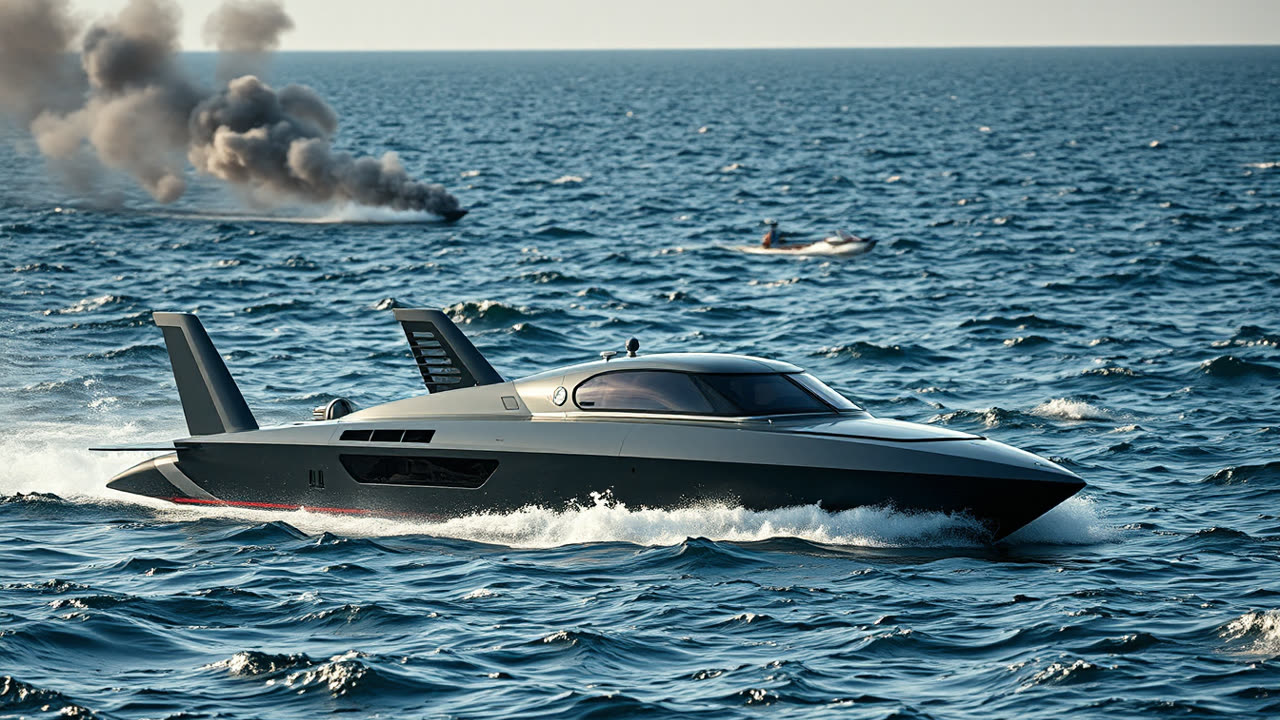
The destruction of a Russian kamikaze drone boat by a Ukrainian naval drone marks a pivotal moment in modern warfare, signaling a new era of autonomous combat where uncrewed systems directly engage and neutralize each other. This unprecedented drone-on-drone naval engagement, reportedly occurring in the contested waters of the Black Sea, underscores the rapid evolution of maritime warfare and the increasing sophistication of AI-driven platforms. While specific details of the incident, including the exact models of the drones involved and their operational parameters, remain under tight security wraps, the strategic implications are immediately evident: the battlefield is becoming increasingly automated, pushing the boundaries of remote and autonomous decision-making in combat.
This milestone dramatically shifts the tactical landscape of naval operations, particularly in the Black Sea, where both Ukraine and Russia have heavily relied on unmanned surface vessels (USVs) to target enemy ships and port infrastructure. For Ukraine, whose traditional naval fleet was largely decimated early in the conflict, the development and deployment of indigenous naval drones have been a crucial asymmetric advantage, allowing them to project power and disrupt Russian naval dominance. The ability of a Ukrainian USV to successfully intercept and neutralize an incoming Russian kamikaze drone demonstrates a significant leap in defensive capabilities, moving beyond passive evasion or traditional anti-ship missile defenses. It suggests advanced sensor fusion, real-time threat assessment, and potentially AI-driven targeting systems that can differentiate between targets and engage with precision, all within a complex maritime environment. This could force Russia to rethink its drone swarm tactics, which have previously posed significant challenges to Ukrainian and NATO defenses, potentially requiring more advanced counter-drone USVs or a shift in their operational doctrine.
The incident's impact on the broader defense industry and military strategists is profound. It validates the immense investment in autonomous systems, particularly in the naval domain, and will undoubtedly accelerate research and development into more capable, intelligent, and resilient unmanned platforms. The "user" in this context extends beyond the immediate combatants to include military planners worldwide who are now confronting the reality of a fully autonomous naval battlespace. This engagement showcases the necessity for robust command and control, secure communication links, and highly sophisticated onboard intelligence to enable drones to operate effectively and make critical decisions without constant human intervention. The event also highlights the burgeoning market for specialized counter-drone USVs and related technologies, including advanced electronic warfare systems, kinetic interceptors, and sophisticated sonar and radar arrays designed to detect and neutralize enemy drones before they reach their targets. Companies specializing in AI, robotics, and maritime defense are poised for significant growth as nations scramble to acquire or develop similar capabilities.
Historically, naval warfare has been dominated by large, crewed vessels, with drones primarily serving reconnaissance or limited strike roles. While aerial drone-on-drone combat has seen some theoretical discussion and early testing, a confirmed naval engagement of this nature is unprecedented. Previous generations of naval drones, such as the early iterations of the Ukrainian "Sea Baby" or the Russian "Hunter" USVs, were primarily designed for one-way attack missions or surveillance. This engagement, however, indicates a move towards multi-role USVs capable of both offensive and defensive operations, equipped with advanced defensive weaponry or electronic countermeasures. It elevates the discussion around the "kill chain" in autonomous systems, questioning the level of human-in-the-loop oversight required when one drone autonomously decides to engage another. Compared to traditional anti-ship missiles, which are often expensive and limited in quantity, a drone-on-drone engagement suggests a more cost-effective and potentially more scalable solution for maritime defense, especially against a persistent threat of kamikaze drone swarms.
Looking ahead, this event foreshadows a future where autonomous naval combat becomes the norm rather than the exception. We can expect an arms race in naval drone technology, with an emphasis on swarm intelligence, advanced stealth capabilities, and sophisticated counter-drone measures. The development of "hunter-killer" USVs, designed specifically to track, identify, and neutralize enemy unmanned systems, will likely become a priority for major naval powers. Furthermore, the ethical and legal frameworks surrounding autonomous weapon systems will face renewed scrutiny, particularly regarding the increasing autonomy granted to these machines in making life-or-death decisions – even if those "lives" are other machines. The Black Sea, already a crucible for naval drone innovation, will likely witness increasingly complex engagements, evolving from simple attack missions to intricate drone-on-drone skirmishes, potentially involving coordinated swarms and advanced electronic warfare. This milestone is not merely a single incident; it is a harbinger of a fundamental transformation in how naval power is projected, defended, and contested across the globe.