Unlocking the Full Potential: How USB-C Transforms Modern Smartphones
The modern smartphone's USB-C port transcends its primary charging function, now serving as a high-bandwidth conduit capable of delivering up to 240W of power and enabling data transfer speeds reaching 40 Gigabits per second (Gbps) on devices supporting USB4 or Thunderbolt 4.
✨ This content was summarized and interpreted by AI; it may contain errors — please verify accuracy with the original sources. Learn more
Listen to this story
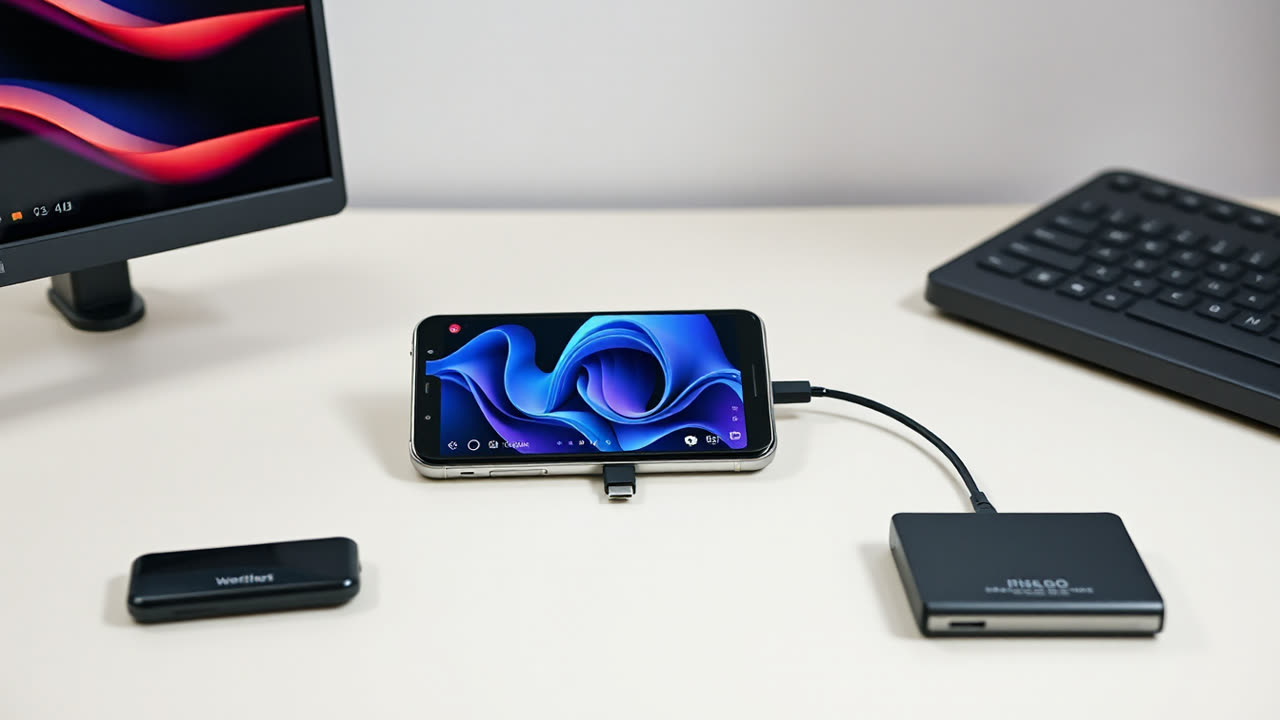
The modern smartphone's USB-C port transcends its primary charging function, now serving as a high-bandwidth conduit capable of delivering up to 240W of power and enabling data transfer speeds reaching 40 Gigabits per second (Gbps) on devices supporting USB4 or Thunderbolt 4. This ubiquitous connector has evolved into a versatile hub, fundamentally reshaping how users interact with their mobile devices and profoundly impacting the broader tech ecosystem.
This expanded utility matters immensely for both consumers and the industry. For users, the USB-C port unlocks a new realm of productivity and entertainment, blurring the lines between mobile and desktop computing. High-end smartphones, for instance, can output 4K video at 60Hz or even 8K video via DisplayPort Alternate Mode, transforming a pocket-sized device into a capable workstation when connected to an external monitor, keyboard, and mouse. Samsung's DeX and Motorola's Ready For platforms exemplify this, offering a desktop-like interface directly from the phone, facilitating tasks ranging from document editing to multi-window multitasking on a larger display. Beyond visual output, the port supports high-fidelity digital audio, allowing for direct connection to DACs and professional audio equipment, bypassing the internal phone audio processing for superior sound quality. Data transfer capabilities, ranging from 5 Gbps (USB 3.2 Gen 1) to 20 Gbps (USB 3.2 Gen 2x2) on many current flagships, dramatically reduce the time required to move large files like 4K video footage or extensive photo libraries, a critical advantage for content creators and power users. Furthermore, the power delivery capabilities mean a single USB-C cable can not only fast-charge the phone but also power compatible peripherals, streamlining cable management and reducing clutter.
Historically, mobile connectivity was fragmented and often proprietary. The micro-USB standard, prevalent for years, offered limited data speeds (typically 480 Mbps for USB 2.0) and lacked the reversible design or robust power delivery of USB-C. Apple's Lightning connector, while reversible, remained a proprietary solution with data transfer speeds largely capped at USB 2.0 levels on most iPhones until the iPhone 15 series, which adopted USB-C following regulatory pressures. The European Union's mandate, requiring USB-C as the common charging port for a wide range of electronic devices by late 2024, accelerated this standardization, forcing even Apple to conform. This regulatory push, combined with USB-C’s inherent technical superiority, has solidified its position as the industry-standard port for mobile devices, unlike the prior generation's disparate connectors. This standardization fosters an ecosystem of universal accessories – from external SSDs and multi-port hubs to Ethernet adapters and gaming controllers – that work seamlessly across different brands of smartphones, tablets, and even laptops, significantly reducing electronic waste and consumer frustration.
Looking ahead, the evolution of USB-C on smartphones is poised for even greater integration and performance. While Thunderbolt 3/4 capabilities remain largely confined to high-end laptops, the underlying USB4 standard, which incorporates Thunderbolt 3 protocols, is gradually making its way into more premium mobile devices, promising even higher bandwidths of up to 40 Gbps and improved resource allocation. This could unlock possibilities for extremely fast external storage, direct connection to eGPUs for mobile gaming, or even more sophisticated multi-display setups directly from a smartphone. Further advancements in USB Power Delivery (USB PD) specifications, already capable of up to 240W with USB PD 3.1, suggest that future phones could not only charge faster but also potentially power more demanding peripherals or even act as power banks for other devices with greater efficiency. The increasing adoption of USB-C by augmented reality (AR) and virtual reality (VR) headsets also points to a future where phones, through their USB-C ports, become central processing units for immersive experiences, delivering high-resolution video and data to head-mounted displays with minimal latency. The trajectory is clear: the USB-C port will continue to be a pivotal nexus for mobile computing, driving innovation in accessory ecosystems and further empowering the smartphone as the central device in our increasingly connected digital lives.