US FCC Bans Foreign Robots, Forcing Distributor RoboStore to Launch Domestic Manufacturing
The Federal Communications Commission’s sweeping ban on new foreign-made advanced robotic systems, stemming from a White House National Security Determination, adds mobile robots to the "Covered List," preventing new models from receiving FCC authorization for import and sale in the United States due to supply chain vulnerability and cybersecurity concerns.
✨ This content was summarized and interpreted by AI; it may contain errors — please verify accuracy with the original sources. Learn more
Listen to this story
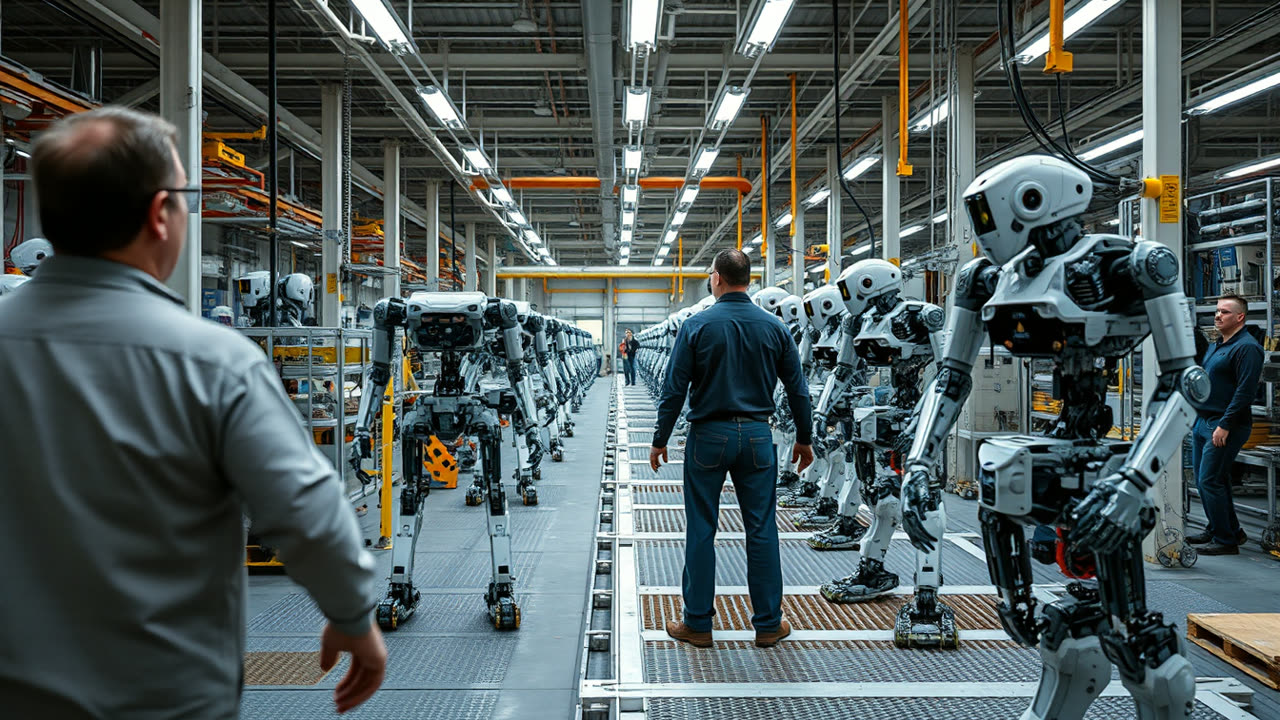
The Federal Communications Commission’s sweeping ban on new foreign-made advanced robotic systems, enacted on July 28, 2026, has forced North American distributor RoboStore to rapidly pivot its business model, launching a new US-based manufacturing and integration entity, Robo Inc.. This decisive action, stemming from a White House National Security Determination on July 27, 2026, adds mobile robots, including humanoids, quadrupeds, and even surface-level pool cleaners, to the "Covered List," effectively preventing new models from receiving the necessary FCC equipment authorization for import and sale in the United States. The ban explicitly cites risks of supply chain vulnerability and potential cybersecurity threats, such as foreign entities accessing sensitive data like camera feeds, microphone audio, and floor-plan maps from deployed robots.
RoboStore, which previously served as a primary distribution channel for Chinese robotics heavyweight Unitree Robotics in North America, has responded by establishing a 66,000-square-foot facility on Long Island, New York. This facility is slated to begin localized production by January 2027 and reach full operational capacity in the first quarter of 2027. The newly formed Robo Inc. aims to combine global robotics supply chains with US-based engineering, software, integration, production, testing, service, and support, crucially incorporating security and safety checkpoints into its processes to ensure American compliance. RoboStore has a significant installed base, having sold over 1,500 humanoid and quadruped robots to more than 4,500 customers, including prominent institutions like Nvidia, Amazon, Harvard, MIT, and Yale, underscoring the market's reliance on foreign-made systems until now.
This policy shift carries profound implications for both users and the burgeoning robotics industry. For businesses, the immediate challenge lies in sourcing compliant robotic solutions, especially given the ongoing labor shortages in sectors like manufacturing, where 1.9 million jobs are projected to be unfilled by 2033. While existing FCC-authorized foreign robots can continue to be sold and serviced, the ban halts the introduction of newer, potentially more advanced models from key global players. This creates a significant competitive vacuum, poised to benefit US-based robotics companies such as Boston Dynamics, Tesla, Figure AI, and Agility Robotics, which largely focus on AI capability, autonomous performance, and enterprise support.
The broader industry impact revolves around the restructuring of global supply chains and a potential rebalancing of innovation. Historically, Chinese manufacturers like Unitree have dominated the market on cost and speed, with models like the Unitree G1 humanoid priced around $13,500, significantly lower than comparable Western platforms. In fact, China accounted for over 80% of global humanoid robot installations in 2025, with Unitree and AGIBOT leading the market. The manufacturing cost for a China-built humanoid was estimated at $35,000 in 2025, compared to $90,000-$100,000 for pilot-stage Western development. The shift to US manufacturing will inevitably lead to higher initial production costs, potentially translating to increased prices for end-users. However, the long-term strategic goal is to foster a resilient domestic industry, reduce geopolitical risks, and ensure the security of critical technologies.
The humanoid robot market itself is experiencing explosive growth, having surged 272% year-over-year in the first half of 2026, reaching approximately 19,100 units globally. Projections indicate the market will hit $4.2 billion in 2026, expanding to $40.5 billion by 2033. This rapid expansion is fueled by advancements in vision-language AI models, electric actuator technology driven by the EV industry, and substantial venture capital investment, which exceeded $40.7 billion annually between 2023 and 2025. Companies like Tesla are targeting a $20,000-$30,000 price point for their Optimus robot, leveraging existing manufacturing infrastructure and AI capabilities. The transition from research demonstrations, like Boston Dynamics' Atlas, to commercially viable, task-specific deployments is accelerating, with multi-task capabilities in structured environments expected to be practical by 2027.
Looking ahead, Robo Inc.'s strategic pivot signals a growing trend towards "global-to-local" operating models in critical technology sectors. This approach, focusing on US-based assembly and integration while potentially sourcing components internationally, aims to balance cost-effectiveness with regulatory compliance and national security imperatives. This isn't an isolated incident; the current FCC ban follows similar restrictions on foreign-made drones in December 2025 and consumer routers in March 2026, indicating a broader, sustained effort by the US government to secure technology supply chains. While this policy could spur significant domestic investment and innovation in robotics, it also risks fragmenting the global market and potentially driving accelerated innovation in other regions, as seen with previous semiconductor export controls on China. The success of Robo Inc. and similar ventures will depend on their ability to quickly scale domestic production, manage potentially higher costs, and deliver robust, secure, and application-specific robotic solutions that meet the immediate operational needs of American businesses without compromising on performance or price competitiveness.