US Government Backs OpenAI in Copyright Battle, Prioritizing AI Advancement
The United States government has formally intervened in the contentious debate surrounding artificial intelligence and intellectual property, explicitly supporting OpenAI's position on the legality of training large language models using copyrighted material.
✨ This content was summarized and interpreted by AI; it may contain errors — please verify accuracy with the original sources. Learn more
Listen to this story
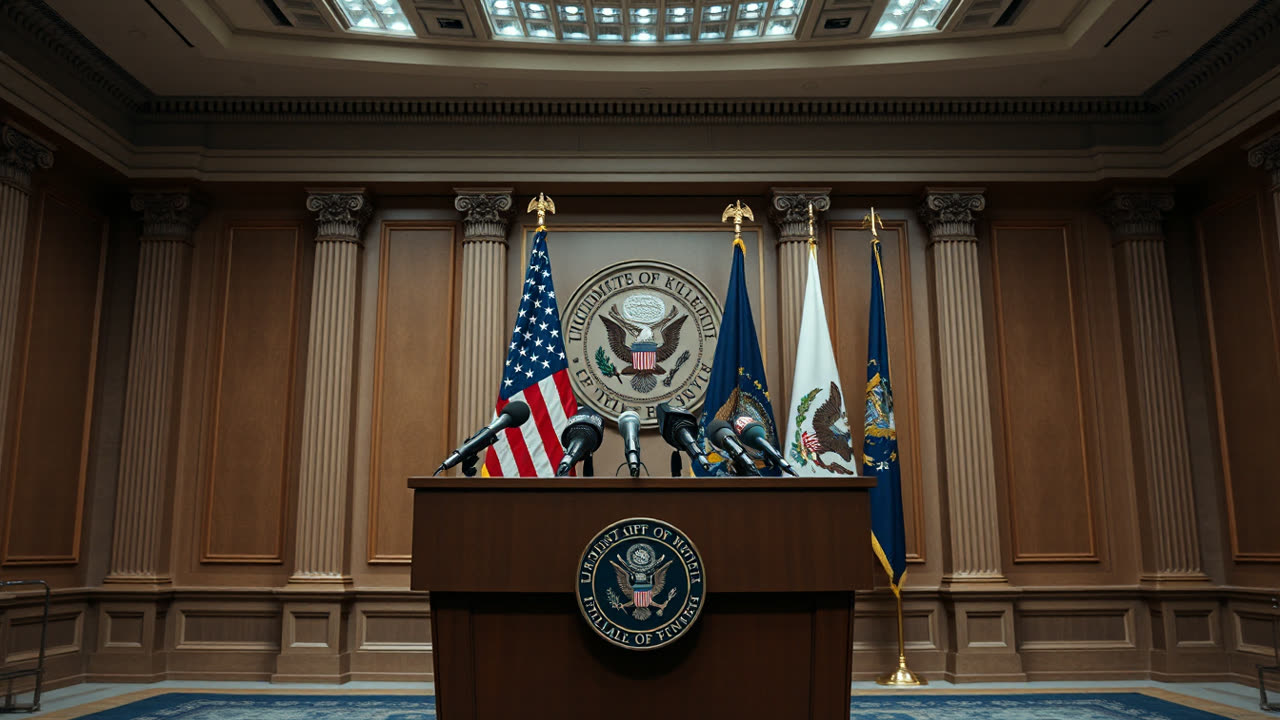
The United States government has formally intervened in the contentious debate surrounding artificial intelligence and intellectual property, filing an amicus brief that explicitly supports OpenAI's position on the legality of training large language models (LLMs) using copyrighted material. The brief, submitted by the Department of Justice, argues that "The United States has a strong interest in continuing to develop a robust and competitive artificial intelligence industry that sets the standard for the practice and procedure of AI use globally," directly challenging claims that such training constitutes copyright infringement. This move signals a significant policy alignment, prioritizing the rapid advancement of domestic AI capabilities over the concerns of content creators who seek compensation or control over their works used in training datasets.
This governmental endorsement carries profound implications for both the AI industry and the creative economy. For AI developers, the brief provides a crucial legal shield, potentially insulating them from a wave of expensive and protracted litigation that threatened to stifle innovation. Companies like OpenAI, Google, and Meta, which rely on vast datasets encompassing text, code, and imagery to train their foundational models, can now proceed with greater certainty, accelerating the development of more sophisticated and capable AI systems. The government's stance effectively frames the use of copyrighted material in AI training as transformative and falling under fair use principles, essential for fostering an environment where American AI companies can outpace international rivals. This could lead to a surge in investment and talent directed towards the US AI sector, cementing its global leadership.
Conversely, the decision is a significant blow to authors, artists, and other copyright holders who have initiated numerous lawsuits against AI companies, alleging unauthorized use of their creative works. Organizations like the Authors Guild, Getty Images, and various individual artists have argued that their copyrighted content is being exploited without permission or remuneration, devaluing human creativity and potentially eroding their livelihoods. The government's brief, while not a final ruling, strongly suggests that these legal challenges face an uphill battle. It implies that the economic benefits of a thriving AI industry, particularly in areas like national security, scientific research, and economic growth, outweigh the immediate claims of individual copyright holders. This could force creators to seek alternative legislative solutions or collective licensing agreements if traditional copyright frameworks are deemed inadequate for the AI era.
Historically, the debate around fair use and new technologies has always been contentious, from the advent of photocopiers to digital music sharing. However, the scale and scope of AI's data consumption are unprecedented. Previous generations of technology often involved direct copying or distribution of copyrighted works. In contrast, LLMs "learn" patterns and relationships from data, generating new content that is not a direct copy but rather an original synthesis, albeit one derived from copyrighted inputs. The government's brief leans into this distinction, asserting that the training process itself does not produce infringing copies and that the resulting models are transformative tools rather than mere repositories of pirated content. This aligns with a more permissive interpretation of fair use, emphasizing the public benefit derived from technological progress.
Looking ahead, this development will undoubtedly intensify the global AI race. Nations like China and the European Union are also grappling with similar legal and ethical questions, but their approaches have often been more cautious or focused on stricter regulatory frameworks. The US government's assertive pro-innovation stance could give American AI firms a competitive edge by allowing them greater freedom in data acquisition and model development. However, it also sets a precedent that may influence international legal discourse, potentially pushing other jurisdictions towards similar interpretations to remain competitive.
The immediate next steps will involve the ongoing legal cases where this brief has been filed. While the Department of Justice's opinion carries significant weight, it is not binding on the courts. Judges will still need to weigh the arguments presented by both sides, considering the nuances of copyright law and the transformative nature of AI technology. Beyond the courts, this decision will likely spur increased lobbying efforts from both the AI industry and creative sectors, pushing for new legislation that either codifies this interpretation or establishes new compensation mechanisms for creators. The long-term outlook suggests a future where AI development continues at a rapid pace, but the tension between innovation and intellectual property rights will remain a central challenge, possibly leading to new models of content licensing and revenue sharing that are specifically tailored for the AI age.