USB-C Flash Drives Redefine Portable Storage with Unmatched Speed and Versatility
The undeniable shift towards USB-C as the ubiquitous port standard fundamentally redefines the utility and performance expectations for portable storage, making USB-C flash drives inherently superior for modern workflows despite USB-A's lingering presence.
✨ This content was summarized and interpreted by AI; it may contain errors — please verify accuracy with the original sources. Learn more
Listen to this story
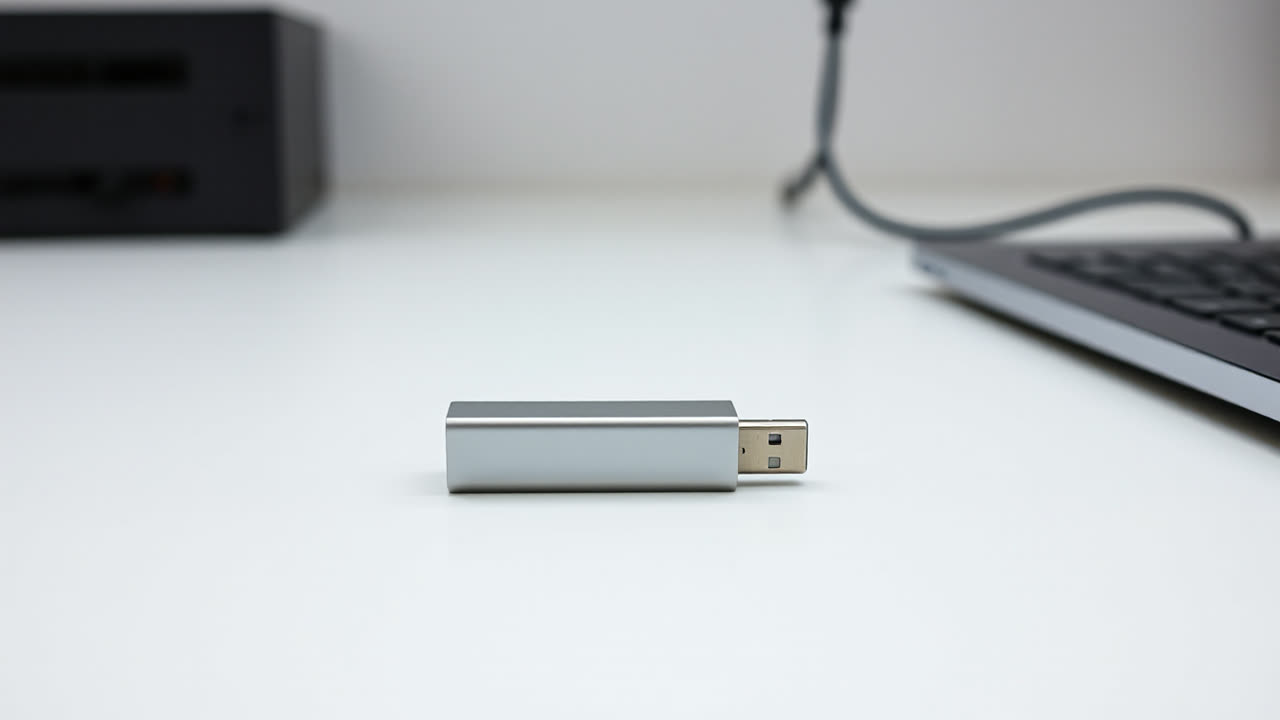
The undeniable shift towards USB-C as the ubiquitous port standard on new computing devices and smartphones fundamentally redefines the utility and performance expectations for portable storage, making USB-C flash drives inherently superior for modern workflows despite USB-A's lingering presence. While USB-A flash drives remain functional for legacy systems, their USB-C counterparts leverage advanced protocols like USB 3.2 Gen 2x2 and even early USB4 implementations to deliver significantly faster data transfer speeds, greater power delivery capabilities, and a reversible connector that drastically enhances user convenience.
The core advantage of USB-C flash drives lies in their ability to harness the full potential of newer USB standards. A typical high-end USB-C flash drive supporting USB 3.2 Gen 2x2 can achieve read speeds upwards of 2,000 MB/s and write speeds exceeding 1,800 MB/s, as exemplified by drives like the Kingston IronKey Vault Privacy 80ES or the SanDisk Extreme PRO USB 3.2 Solid State Flash Drive. This starkly contrasts with even the fastest USB-A drives, which are typically limited to USB 3.0 or USB 3.1 Gen 1 speeds, rarely surpassing 450 MB/s for reads and writes, and often much less. For users transferring large files—4K video, high-resolution photos, or extensive software installations—this difference translates from minutes to seconds, directly impacting productivity and workflow efficiency.
Beyond raw speed, the USB-C interface offers unparalleled versatility, embodying a single-cable solution for data, power, and video. While flash drives primarily focus on data, their integration into a USB-C ecosystem means they connect seamlessly to a wider array of devices, from the latest MacBook Pro models and Dell XPS laptops to iPads, Android smartphones, and even some gaming consoles, without requiring adapters. This universal compatibility streamlines the user experience, eliminating the clutter of multiple dongles and ensuring future-proofing as more devices adopt the standard, driven in part by regulatory mandates such as the European Union's directive for a common charging port by late 2024.
The industry impact of this transition is multifaceted. For peripheral manufacturers, the shift to USB-C necessitates retooling and design adaptations, but also opens avenues for innovation in higher-performance, more compact storage solutions. Companies like Samsung, Western Digital (SanDisk), and Kingston are actively pushing the envelope with USB-C flash drives that blur the line between traditional thumb drives and portable SSDs, offering capacities up to 2TB in incredibly small form factors. This competition drives down prices for higher-performance storage, making advanced speeds more accessible to the average consumer. For instance, a 1TB USB 3.2 Gen 2 USB-C flash drive can now be found for under $100, a price point that was once reserved for slower, lower-capacity options.
While USB-C’s technological superiority is clear, the pervasive installed base of USB-A ports on older computers, enterprise hardware, and public-access terminals means USB-A isn't disappearing overnight. This creates a market niche for dual-connector flash drives, featuring both USB-A and USB-C ends, providing a bridge solution for users navigating mixed environments. However, these hybrid drives often compromise on maximum speed, typically adhering to USB 3.1 Gen 1 standards to ensure broad compatibility rather than pushing the limits of USB 3.2 Gen 2x2. The continued demand for USB-A, even if dwindling, ensures a long tail for the older standard, particularly in cost-sensitive markets or for simple file transfers where speed is not paramount.
Looking ahead, the trajectory is unambiguous: USB-C will solidify its dominance. The advent of USB4 and Thunderbolt 4, both utilizing the USB-C physical connector, promises even greater bandwidth (up to 40 Gbps for Thunderbolt 4) and expanded capabilities, although true USB4 flash drives are still nascent. As these standards become more common, flash drives will evolve further, potentially integrating features like advanced encryption at faster speeds, or becoming integral components of modular storage systems. However, the ultimate "end-game" for flash drives might also see increasing competition from cloud storage services and increasingly robust wireless transfer protocols, especially for casual users. Nevertheless, for high-speed, secure, and offline data portability, the USB-C flash drive, with its inherent technological advantages and expanding ecosystem, will remain the gold standard, progressively rendering its USB-A predecessor a niche legacy product.