Valve's Modular 'Steam Frame' Gaming Device Accidentally Leaked in Detailed Videos
Valve's highly anticipated 'Steam Frame' modular gaming device has been inadvertently revealed through leaked unboxing and setup videos, offering a comprehensive look at its innovative design and upgradeable components.
✨ This content was summarized and interpreted by AI; it may contain errors — please verify accuracy with the original sources. Learn more
Listen to this story
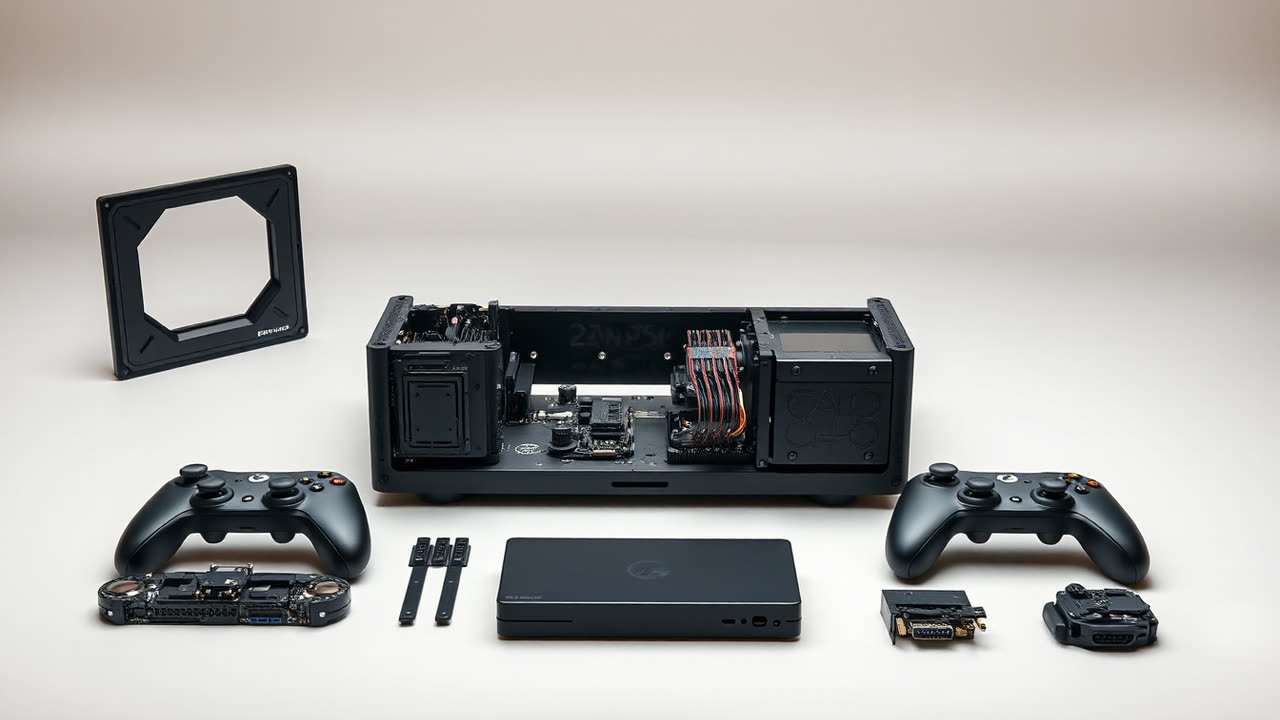
Valve's highly anticipated, and now inadvertently revealed, "Steam Frame" modular gaming device has been exposed in a series of detailed unboxing and setup videos, which briefly appeared on the ARM Steam client following a recent update before being swiftly pulled. The leaked footage offers a comprehensive first look at the device's innovative design, its core components, and a range of accessories, confirming long-standing rumors of Valve's foray into a more flexible and customizable handheld gaming ecosystem. This accidental disclosure not only pulls back the curtain on Valve's next major hardware initiative but also signals a significant strategic pivot, moving beyond the integrated design of the Steam Deck towards a more open, upgradeable platform that could redefine expectations for portable PC gaming.
The leaked videos meticulously showcased the Steam Frame's modular nature, starting with an unboxing experience that highlighted its individual components. Central to the design appears to be a main computing unit, likely housing the CPU, GPU, and core memory, which can be detached from a display module. Accessory footage detailed various swappable controllers, including both traditional gamepad layouts and more specialized input modules, suggesting a high degree of personalization for different game genres and user preferences. One particularly striking element was the demonstration of an external GPU (eGPU) dock, hinting at the Steam Frame's potential to seamlessly transition from a portable device to a powerful desktop-class gaming rig. The setup process, as depicted, emphasized ease of assembly, with magnetic connectors and intuitive locking mechanisms facilitating quick module changes, a stark contrast to the often-complex internal upgrades of traditional PC hardware.
This modular approach carries profound implications for both users and the broader industry, primarily addressing the perennial challenge of hardware obsolescence in a rapidly evolving technological landscape. For consumers, the Steam Frame promises unprecedented longevity and value, allowing users to upgrade specific components like the processor or graphics module without needing to replace the entire device. This could significantly reduce electronic waste and the financial burden of keeping up with the latest gaming hardware, fostering a more sustainable consumption model. Industrially, Valve is positioning itself as a leader in adaptable hardware, potentially inspiring other manufacturers to explore similar modular designs for gaming devices and even other consumer electronics. The ability to swap out components could also create a vibrant aftermarket for third-party modules, fostering innovation and competition in accessories and upgrades. Furthermore, the eGPU integration suggests Valve aims to bridge the gap between handheld convenience and high-fidelity desktop performance, offering a single ecosystem that caters to diverse gaming scenarios.
The Steam Frame represents a significant evolution from Valve's prior hardware endeavors, particularly when compared to the highly successful Steam Deck. While the Steam Deck proved the viability of a powerful, Linux-based handheld PC, its integrated design limits future upgrades primarily to storage. The Steam Frame, by contrast, appears to directly challenge this limitation, offering a future-proof architecture that could extend the device's lifespan considerably beyond its initial release. Compared to rivals like the ASUS ROG Ally or Lenovo Legion Go, which primarily focus on raw performance within a fixed handheld form factor, the Steam Frame's modularity sets it apart as a fundamentally different proposition. Its closest philosophical kin might be the concept phones of the past that never quite took off, but Valve's established software platform and hardware expertise give the Steam Frame a far greater chance of success. The inclusion of a robust eGPU solution also positions it against traditional gaming laptops and even entry-level desktops, potentially disrupting multiple segments of the PC gaming market.
Looking ahead, the accidental leak places Valve in an interesting position, potentially accelerating their official announcement timeline. An official reveal is now likely imminent, possibly at Gamescom or an independent Valve event later this year, where details on pricing, specific component options, and developer support for the modular ecosystem will be crucial. The success of the Steam Frame will hinge not only on its technical capabilities but also on the availability and affordability of upgrade modules, as well as Valve's ability to foster a robust marketplace for both first-party and third-party components. We can anticipate a gradual rollout of new modules, potentially tied to advancements in CPU and GPU technology, ensuring the Steam Frame remains competitive for years to come. This strategic move could solidify Valve's position as a dominant force in PC gaming hardware, pushing the boundaries of what a portable gaming device can be and setting a new standard for user control over their hardware investment.