Valve's Silence on Steam Deck 2: A Strategic Wait for a Generational Leap
Despite Valve's expansion into new hardware, the highly anticipated Steam Deck 2 remains without concrete details, signaling a meticulous, long-term strategy for its next-gen handheld.
✨ This content was summarized and interpreted by AI; it may contain errors — please verify accuracy with the original sources. Learn more
Listen to this story
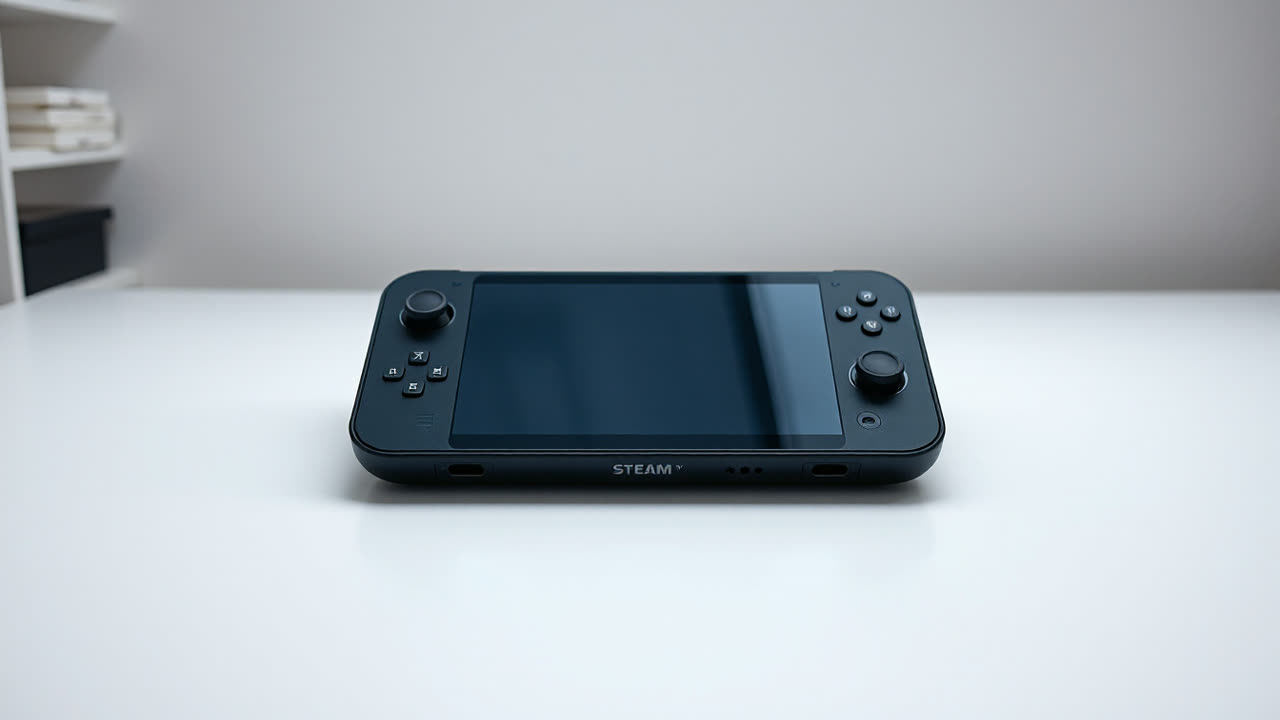
Despite Valve's recent expansion of its hardware ecosystem with the hypothetical launches of the Steam Controller, Steam Machine, and the new Steam Frame in 2026, the absence of concrete details regarding a next-generation Steam Deck 2 remains the most significant unresolved question for portable PC gaming enthusiasts. While the company has yet to commit to a "how and when," this deliberate ambiguity from Valve suggests a meticulous, rather than rushed, approach to its highly anticipated handheld successor, underscoring the complexities of evolving a market-defining product amidst an increasingly competitive landscape.
The current Steam Deck, particularly its OLED revision released in late 2023, continues to set a high bar for handheld PC gaming, offering an exceptional balance of performance, ergonomics, and software integration through SteamOS. The OLED model, with its vibrant display, extended battery life, and quieter fan, significantly refined the original experience without altering its core processing power. This incremental upgrade strategy, rather than a full generational leap, highlights Valve's pragmatic philosophy: refine what works while awaiting genuinely transformative technological advancements. The continued strong sales of the Steam Deck OLED, even years after its initial launch, demonstrate a robust market demand and user satisfaction that might alleviate immediate pressure for a full overhaul.
However, the "how and when" for a Steam Deck 2 is critically important because the competitive arena has intensified dramatically since the original Deck's 2022 debut. Rivals like ASUS's ROG Ally and Lenovo's Legion Go have entered the fray, offering their own takes on Windows-based handhelds with higher resolution screens, more potent processors (like AMD's Z1 Extreme), and sometimes novel form factors. While these devices often come with their own trade-offs, particularly in software optimization compared to SteamOS, they collectively push the boundaries of what consumers expect from a portable gaming PC. A Steam Deck 2, whenever it arrives, will need to deliver a compelling performance uplift to maintain its leadership, especially as future AAA titles become more demanding. Industry speculation points to the necessity of a significant leap in integrated graphics processing, potentially leveraging future RDNA or Xe architectures, to justify a new generation.
The impact of Valve's cautious approach reverberates across the industry. For users, it means continued investment in the existing Steam Deck ecosystem, with Valve dedicating resources to SteamOS 3.0 and beyond, ensuring compatibility and performance for new titles. This stability is a double-edged sword: it provides a reliable platform but can also foster impatience among those craving cutting-edge hardware. For the industry, Valve's measured pace could signal a maturation of the handheld PC market, where incremental improvements and software refinement are prioritized over annual hardware refreshes. It also provides a window for competitors to innovate and carve out niches, forcing Valve to ensure that when the Steam Deck 2 does arrive, it offers genuinely disruptive value. The market is increasingly segmenting, with some users prioritizing raw power and others valuing the seamless, curated Steam Deck experience.
Looking ahead, the "how" of Steam Deck 2 will likely involve a deep collaboration with AMD for a custom APU that delivers a substantial boost in both CPU and GPU performance while maintaining Valve's strict power and thermal envelopes. Given the current technological trajectory, a move to a more efficient process node, potentially 3nm or 2nm, alongside a next-generation RDNA architecture, seems inevitable to achieve the desired performance-per-watt improvements. The "when" is arguably more strategic. Valve has historically avoided rushing products, preferring to launch when the technology is mature and the user experience is thoroughly optimized. This suggests that a Steam Deck 2 release is unlikely until a truly significant leap in performance or battery efficiency is achievable without compromising the device's affordability or form factor. It is plausible that Valve is waiting for the next major architectural shift in mobile processors, perhaps targeting a release that aligns with a more widespread adoption of FSR 3.0 or even FSR 4.0, which could unlock even greater performance potential on future hardware.
Ultimately, Valve's continued silence on a Steam Deck 2 roadmap, even amidst new hardware launches, is not a sign of stagnation but rather a testament to their long-term vision. They are not chasing yearly upgrade cycles but rather aiming for a generational leap that will redefine handheld gaming once more, much as the original Steam Deck did. The eventual Steam Deck 2 will not merely be an incremental update; it will be a carefully considered answer to the evolving demands of PC gaming on the go, designed to once again set a new benchmark for performance, power efficiency, and user experience. The question is not *if* it will arrive, but rather *when* the technological stars align perfectly for Valve to deliver another paradigm shift.