Vintage Word for Windows 1.1a Now Runs Natively on Windows 11 x64
A developer has achieved a remarkable technical feat, porting Microsoft Word for Windows 1.1a to x64, enabling the seminal 1990 word processor to run directly on modern Windows 11 systems without emulation.
✨ This content was summarized and interpreted by AI; it may contain errors — please verify accuracy with the original sources. Learn more
Listen to this story
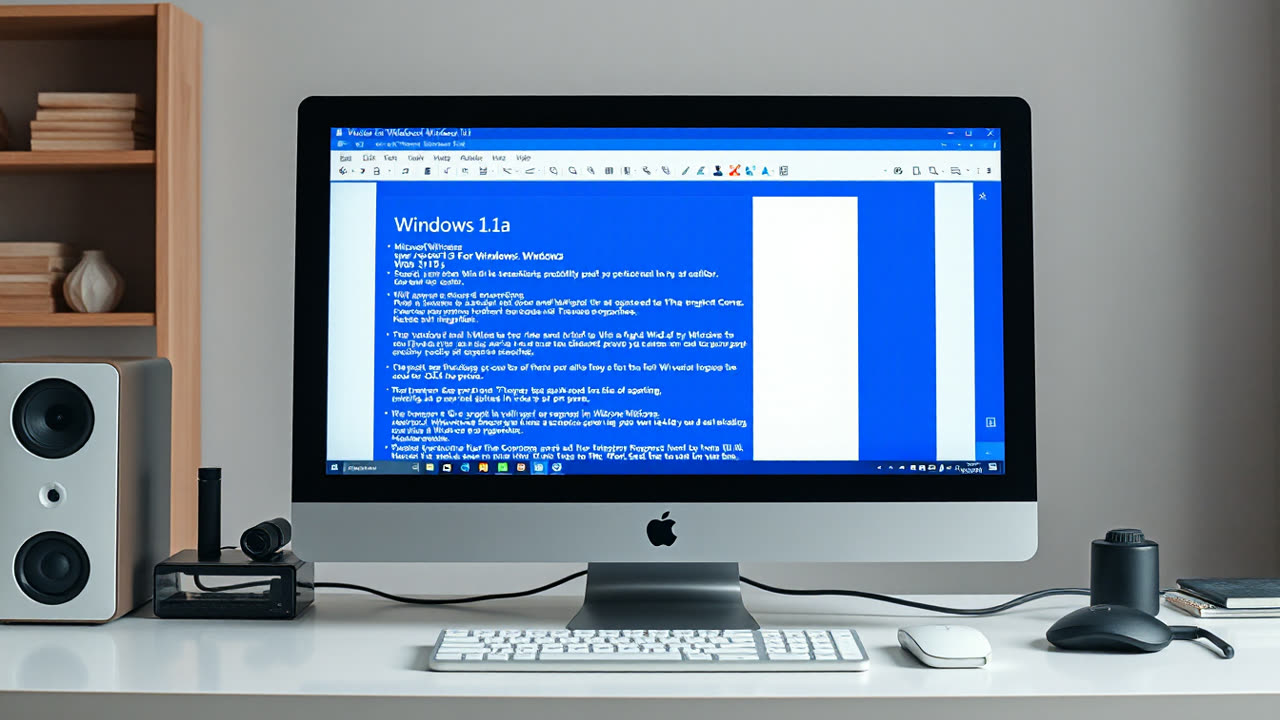
A developer has successfully ported Microsoft Word for Windows 1.1a, a seminal 1990 word processor, to x64, enabling it to run natively on Windows 11 systems without emulation layers. This remarkable technical feat, credited to "ntdev" on X (formerly Twitter) and detailed in a comprehensive blog post by "The Old New Thing" author Raymond Chen, resurrects a 16-bit application from an era dominated by DOS and early Windows, allowing it to execute directly on modern 64-bit hardware. The original Word for Windows 1.1a, released in 1990, was a 16-bit application designed for Windows 3.0, an environment far removed from the complex architecture of contemporary operating systems like Windows 11. Its native execution on a 64-bit platform bypasses the traditional reliance on virtual machines, DOSBox, or the now-defunct NTVDM (NT Virtual DOS Machine) subsystem, which Windows 11 no longer supports for 16-bit applications.
This port matters profoundly for several reasons, extending beyond mere nostalgic curiosity. For software preservationists and digital historians, it represents a significant victory, demonstrating that critical vintage software can be liberated from increasingly obsolete execution environments. The ability to run Word 1.1a natively offers an unadulterated experience, free from the performance overhead or behavioral quirks introduced by emulation, allowing researchers and enthusiasts to interact with a foundational piece of software history exactly as its original users would have, albeit on vastly more powerful hardware. Furthermore, it highlights the architectural flexibility and backward-compatibility challenges inherent in modern computing. Microsoft's own decision to drop NTVDM support in 64-bit Windows versions effectively rendered 16-bit applications unrunnable without third-party solutions, creating a gap that community-driven efforts like this port are now filling. This unofficial port underscores a community desire to maintain access to digital heritage that major corporations may not prioritize.
In its original context, Word for Windows 1.1a was a pivotal product that helped define the graphical user interface (GUI) word processing landscape. Priced around $495 at its launch, it faced stiff competition from established DOS-based giants like WordPerfect 5.1, which commanded an estimated 70% of the word processor market share in the late 1980s, and emerging GUI rivals such as Ami Pro. Word 1.1a introduced features that were revolutionary for its time, including true WYSIWYG ("What You See Is What You Get") editing, where on-screen text and graphics closely matched printed output, and the integration of basic desktop publishing capabilities. Its graphical interface, with toolbars and menus, provided a stark contrast to the command-line heavy interfaces of its DOS competitors, significantly lowering the barrier to entry for many users. The transition from 16-bit to 32-bit and then to 64-bit Windows saw Microsoft continuously refine Word, adding increasingly complex features, collaborative tools, and cloud integration, making the lean, focused functionality of Word 1.1a a stark reminder of software design priorities from over three decades ago. The technical challenge of porting such a system involved not just recompiling code, but meticulously re-implementing or re-interpreting thousands of 16-bit Windows API calls and data structures to align with the 64-bit Windows Application Binary Interface (ABI), a task requiring deep understanding of both historical and modern Windows internals.
Looking ahead, this successful x64 port could catalyze a broader movement within the retrocomputing and software preservation communities. It demonstrates that with sufficient skill and dedication, even deeply embedded legacy applications can be modernized for native execution on contemporary hardware. This might inspire similar efforts for other historically significant 16-bit Windows applications, potentially broadening the scope of accessible digital heritage beyond simple emulation. The implications extend to the industry as well; while unlikely to prompt Microsoft to re-introduce native 16-bit support, such projects highlight the ongoing demand for backward compatibility and the value users place on historical software. It also serves as an educational tool, offering insights into the evolution of operating systems and application development over decades. The future could see more hybrid approaches, where core components of vintage software are ported for native speed while less critical elements might still rely on lightweight virtualization. Ultimately, this x64 port of Word 1.1a is more than a novelty; it is a testament to the enduring power of community-driven development and a proof-of-concept for how the digital past can genuinely run in the digital present.