Viture's Vonder Glasses Redefine Wearable AI with Privacy-First Audio Focus
Viture's new Vonder Glasses discard cameras and displays, pioneering a privacy-centric "Personal Memory Graph" through bone-conduction microphones to record daily musings and offer ambient AI assistance.
✨ This content was summarized and interpreted by AI; it may contain errors — please verify accuracy with the original sources. Learn more
Listen to this story
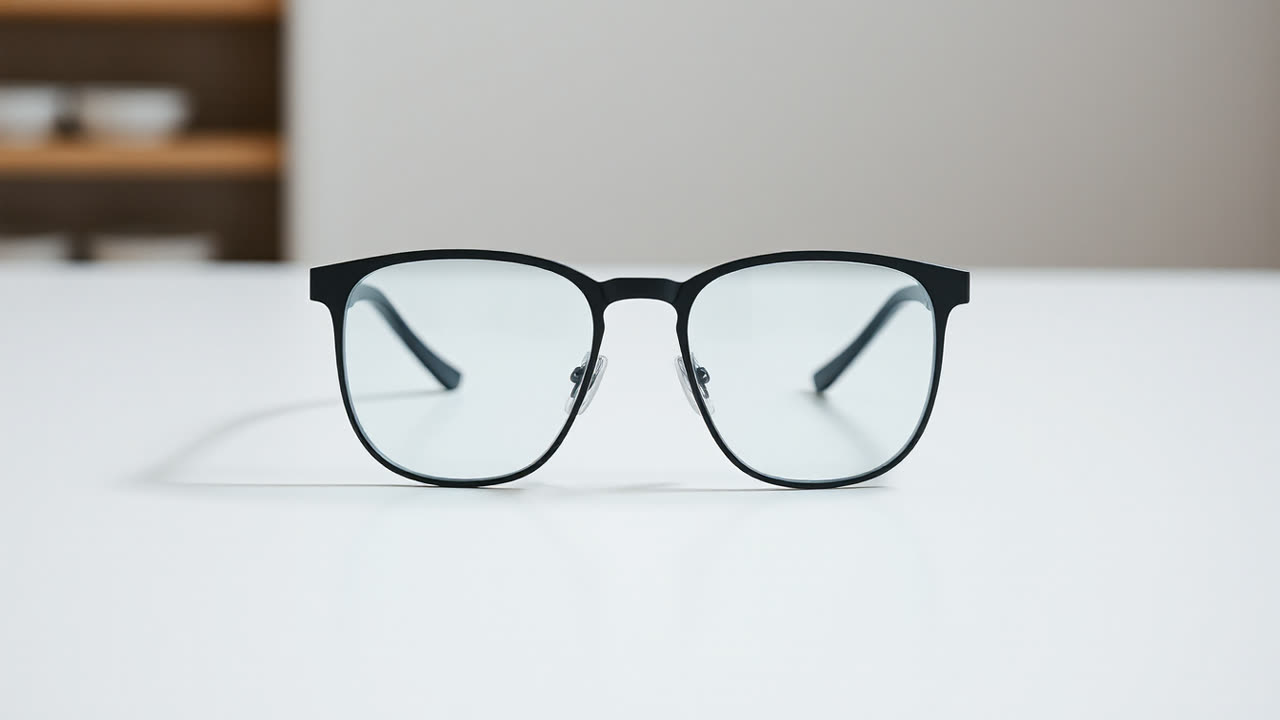
Viture's Vonder Glasses, launching with pre-orders on September 28, 2026, and shipping in November, boldly jettison both cameras and displays, instead focusing on bone-conduction microphones to privately record a user's daily musings, initiating a new paradigm for wearable artificial intelligence. This departure from conventional smart glasses, priced starting at $299 for the Basel model and $399 for premium acetate frames, positions Vonder as a "privacy-first intelligent eyewear" solution designed to integrate seamlessly into everyday life. The company, an offshoot of Viture, known as the leading XR glasses brand in the U.S. by shipments, is pivoting from immersive visual experiences to ambient, audio-driven intelligence.
At its core, Vonder aims to build a "Personal Memory Graph," a dynamic AI assistant trained on a user's private notes, conversations, and situational context. This graph is designed to surface patterns and information from daily interactions, enabling functions like summarizing meetings, recalling addresses, or providing personalized recommendations. The bone-conduction microphones are engineered to filter out ambient noise, capturing only the wearer's voice, ensuring privacy by design. For instances where recording a conversation or meeting is desired, a physical button on the glasses activates "Meeting Mode," accompanied by a small, visible white LED indicator to alert others, addressing the pervasive "pervert glasses" stigma that has plagued camera-equipped smart eyewear. Furthermore, Vonder converts recorded audio into text "memories" on-device, deleting the original audio files to enhance privacy. This data can then be routed through leading large language models (LLMs) such as ChatGPT, Claude, and Gemini, or Vonder's own combined AI, to deliver tailored assistance.
This strategic shift by Viture, a company founded in 2021 and co-headquartered in San Francisco and Beijing with $222 million in funding, signifies a critical evolution in the wearable tech landscape. Previous Viture products, like the Viture One XR glasses ($479) and Viture Pro 2 XR/AR glasses (currently $298.99), projected a 120-146 inch virtual screen for gaming and media consumption, emphasizing visual immersion. Vonder, however, represents a fundamental redefinition of smart glasses, moving beyond external digital displays or discreet photography to an "eyewear first, intelligence second" philosophy. The glasses are designed to look and feel like conventional eyewear, weighing under 30 grams and offering six frame styles across three colors, with full prescription, Transitions, and gradient tint lens compatibility supported by Essilor. This focus on aesthetics and practicality, spearheaded by new Co-Founder and Chief Brand Officer Guillaume Hamon (formerly of Rivian and Oura), aims to make the technology disappear, fostering broader user acceptance.
Vonder enters a burgeoning, yet often controversial, market of AI wearables. Competitors like Meta's Ray-Ban smart glasses integrate cameras, microphones, and speakers for photo/video capture and audio interaction, but have faced significant privacy concerns. Meanwhile, dedicated screen-free AI companions like the Humane AI Pin and Rabbit R1 have offered distinct approaches. The Humane AI Pin, a wearable device that used voice, gestures, and a laser projection display, launched at $699 with a $24/month subscription in November 2023, but was discontinued in February 2025 following "brutal reviews" and hardware defects. The Rabbit R1, a handheld device with a 2.88-inch touchscreen, scroll wheel, and rotating camera, launched at $199 in April 2024, utilizing a Large Action Model (LAM) to operate apps, and while also receiving "brutal reviews," remains available and updated. Vonder distinguishes itself by completely omitting cameras and displays, focusing instead on a truly private, audio-centric personal memory system, directly addressing the privacy anxieties that have plagued other wearables. Upcoming rivals, such as Apple's anticipated display-less smart glasses by early 2027 and Google's partnerships with Gentle Monster and Warby Parker for camera-equipped smart glasses, still appear to incorporate visual recording, further highlighting Vonder's unique privacy-first stance.
The impact of Vonder's approach could be profound, signaling a maturation of the wearable AI market. By prioritizing privacy and ambient intelligence over visual capture or external displays, Vonder could unlock a new segment of users who are eager for AI assistance but wary of surveillance. The "Personal Memory Graph" concept moves beyond reactive AI to a proactive, context-aware companion that genuinely understands and anticipates user needs based on their life history, offering a deeper level of personalization than current LLM integrations. However, challenges remain. The value proposition of an audio-only, memory-mapping device needs to be clearly communicated to consumers who are accustomed to visual interfaces. Demonstrating the tangible benefits of a constantly learning personal AI will be crucial for widespread adoption. Furthermore, while the audio-to-text conversion and deletion policy enhances privacy, long-term data security and the ethical implications of a "mind-mapping" technology, however benignly intended, will require ongoing scrutiny. If successful, Vonder could catalyze a broader industry shift towards more subtle, fashion-integrated, and privacy-conscious wearable AI, potentially leading to a market bifurcation where users choose between visually-enabled and purely audio-driven intelligent eyewear, ultimately making smart glasses truly indistinguishable from everyday accessories.