Vivo X Fold 6's Global Debut Feels Outmoded Due to Aspect Ratio
Vivo's X Fold 6 global launch reveals a design, particularly its wider and shorter aspect ratio, that now feels outdated against rapidly evolving foldable market trends, despite its premium specifications.
✨ This content was summarized and interpreted by AI; it may contain errors — please verify accuracy with the original sources. Learn more
Listen to this story
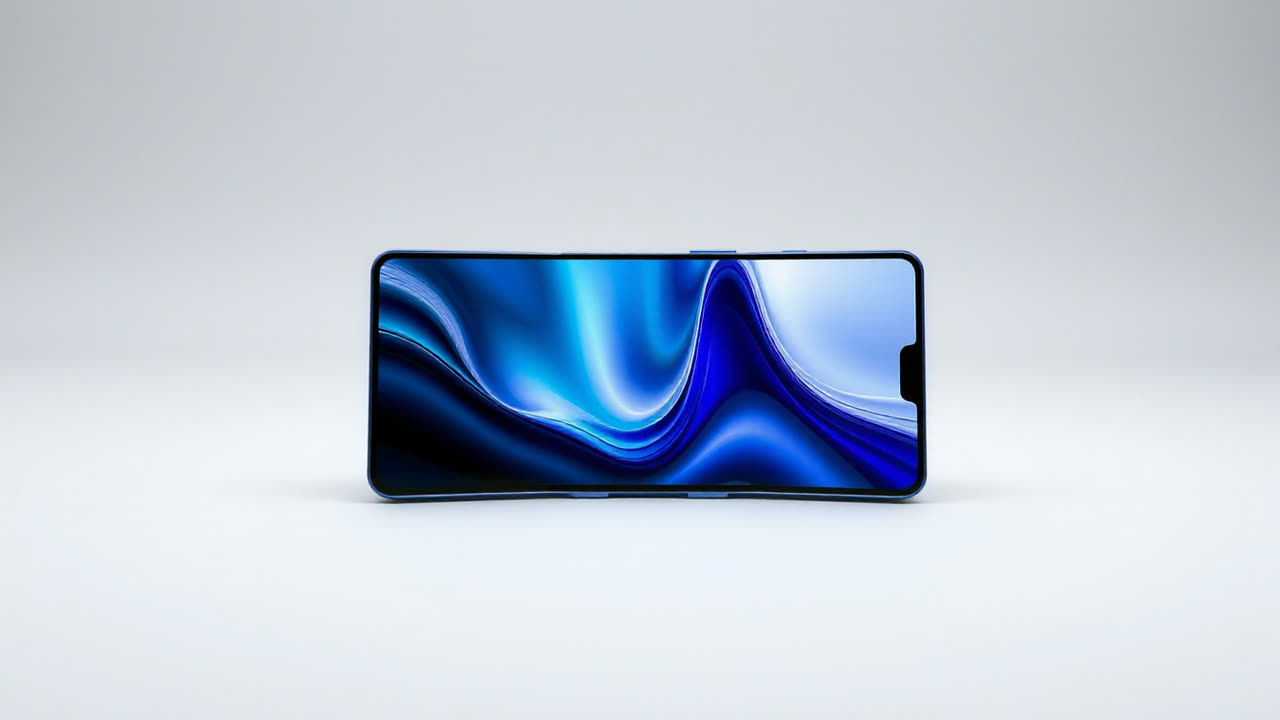
The global debut of Vivo's X Fold 6 this October presents a curious case of temporal displacement, its noticeably wider and shorter aspect ratio, a design choice perhaps unremarkable at its initial China launch in June, now feeling decidedly outmoded against the backdrop of an evolving foldable landscape. This specific design, which prioritizes a more traditional smartphone feel on its external display but results in a squarer internal screen, clashes with the prevailing industry trend towards taller, narrower external panels and more tablet-like unfolded experiences seen in recent competitors.
The X Fold 6, while boasting premium specifications typical of a flagship foldable, including a powerful Snapdragon 8 Gen 3 processor, a robust camera array, and a high refresh rate display, finds its global perception shaped less by its internal prowess and more by its physical dimensions. Its external screen, measuring 6.53 inches with an aspect ratio of 21:9, and its internal 8.03-inch display, offer a distinct user experience. This contrasts sharply with rivals like the Samsung Galaxy Z Fold 5, which features a narrower 6.2-inch external display (23.1:9 aspect ratio) that often feels cramped for typing, yet unfolds to a taller 7.6-inch main screen. More recent entrants, such as the OnePlus Open and Honor Magic V2, have further refined the foldable form factor, offering external displays that more closely mimic conventional smartphones (e.g., OnePlus Open's 6.31-inch external display with a 20:9 aspect ratio) while achieving remarkably thin and light designs. The X Fold 6's design, therefore, inadvertently positions it as a throwback, a device conceived before the market coalesced around specific ergonomic and aesthetic preferences for foldables.
For users, this aspect ratio choice by Vivo carries significant implications. A wider external screen, like that on the X Fold 6, provides a more comfortable and familiar typing and browsing experience without needing to unfold the device for every interaction. This could appeal to users who primarily use the external display for quick tasks and only unfold for specific, immersive activities. However, the trade-off is often a squarer internal display when unfolded, which can introduce black bars during video playback and potentially less optimized app layouts compared to taller internal screens. Conversely, devices with narrower external displays, while less convenient for quick tasks, offer a more expansive and conventional tablet experience when unfolded, better suited for media consumption and multitasking with split-screen applications. Vivo’s approach might cater to a niche segment valuing the single-screen usability, but it risks alienating those who seek the true tablet replacement experience from their foldable.
From an industry perspective, the X Fold 6's global release highlights the persistent fragmentation in foldable design philosophies, even as the market matures. While many manufacturers are converging on thinner, lighter designs with more conventional external display aspect ratios, Vivo appears to be charting a slightly different course, at least with this iteration. This divergence could be interpreted in several ways: perhaps Vivo is targeting a specific demographic with different preferences, or it reflects a design cycle that didn't fully anticipate the rapid evolution of competitors. The "quirk of the release calendar" mentioned in the source material underscores this; a design that felt current in China months ago now faces a more advanced global competitive landscape. This could either carve out a unique, albeit smaller, market segment for Vivo or make it harder for the X Fold 6 to gain significant traction against more 'modern' form factors.
Comparing the X Fold 6 to its immediate predecessor, the X Fold 5 (or X Fold+ in some markets), would likely reveal iterative improvements in internal specifications like processor and camera sensors, but the core design language, particularly the aspect ratio, appears to have largely carried over. This suggests a consistent design philosophy from Vivo, rather than a radical pivot. However, the market around it has shifted dramatically. The Honor Magic V2, for instance, launched with an unprecedented thinness of 9.9mm when folded and a weight of just 231g, fundamentally redefining expectations for foldable bulk. The X Fold 6, while not excessively thick, does not push these boundaries in the same way, retaining a more robust, albeit premium, feel.
Looking ahead, the X Fold 6's reception will be a crucial barometer for Vivo's global foldable strategy. If it struggles to find a significant audience outside of China, it may prompt Vivo to reconsider its design priorities for future iterations, potentially aligning more closely with the taller external displays and thinner profiles favored by competitors. Alternatively, if a segment of users genuinely appreciates the wider external screen and larger overall footprint, it could validate Vivo's unique approach, fostering continued differentiation in a crowded market. The foldable segment is still nascent enough that there isn't one universally accepted "best" design, leaving room for experimentation. However, the dominant trends suggest a preference for devices that minimize the compromises of the foldable form factor, particularly in terms of thickness, weight, and the usability of the external screen. Vivo's next foldable will either demonstrate an adaptation to these evolving expectations or a bold doubling down on its established design language, shaping its trajectory in the fiercely competitive premium smartphone arena.