Volkswagen's 'Mission Efficiency' EV Concept Promises Groundbreaking 1,000-Mile Range
Volkswagen's 'Mission Efficiency' concept redefines electric vehicle capabilities with a groundbreaking 1,000-mile range, signaling a major leap in EV development and challenging industry norms.
✨ This content was summarized and interpreted by AI; it may contain errors — please verify accuracy with the original sources. Learn more
Listen to this story
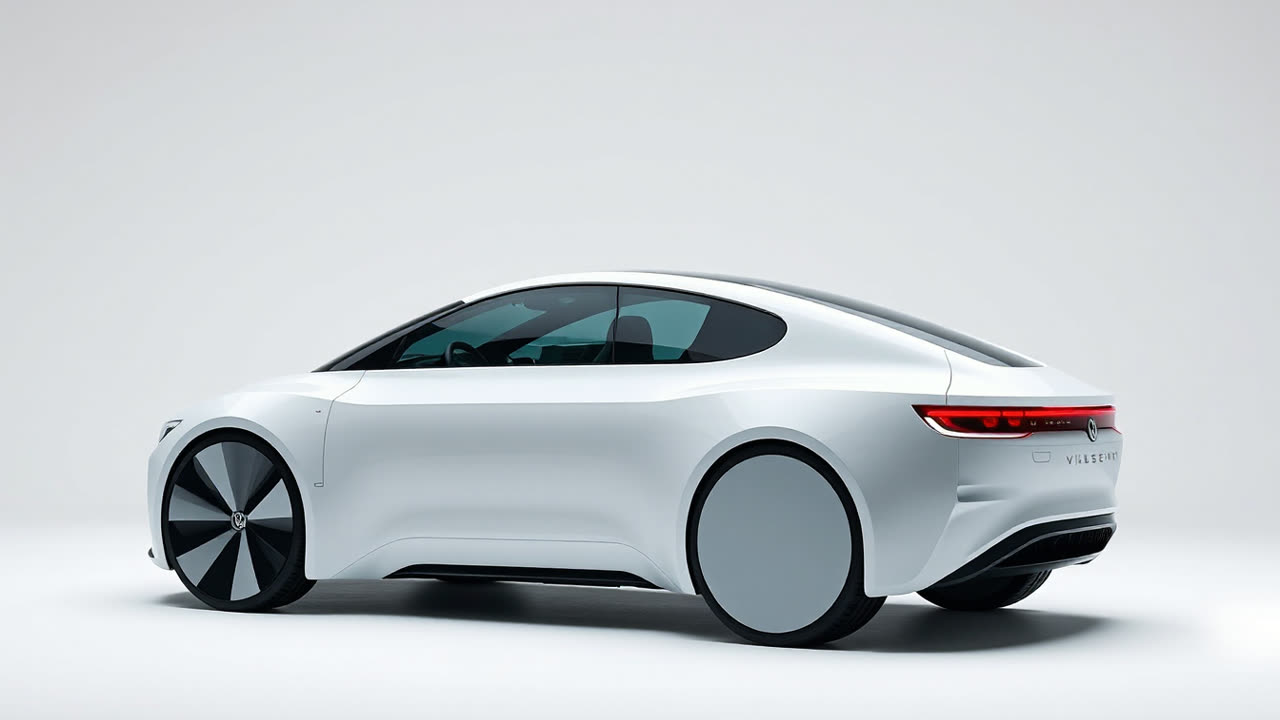
Volkswagen has just unveiled its "Mission Efficiency" concept, a near-production electric vehicle promising a groundbreaking 1,000-mile range, marking a significant leap in EV development and rekindling the spirit of the ultra-efficient XL1. This ambitious concept, revealed today, September 14, 2026, positions Volkswagen at the forefront of the quest for extreme electric vehicle efficiency, challenging conventional notions of battery capacity and aerodynamic design. The vehicle's striking silhouette immediately evokes its spiritual predecessor, the limited-production XL1, which debuted over a decade ago with an almost unbelievable fuel economy rating.
The core news details a vehicle that aims to redefine long-distance electric travel. While specific battery chemistry and capacity figures remain proprietary, Volkswagen indicates a breakthrough in energy density and thermal management, coupled with an exceptionally low drag coefficient, estimated to be below 0.15 Cd. This aerodynamic prowess, reminiscent of the XL1's teardrop shape and covered rear wheels, is critical to achieving the monumental 1,000-mile target. The Mission Efficiency concept also reportedly integrates advanced lightweight materials, including extensive use of carbon fiber reinforced polymer (CFRP) and aluminum alloys, to minimize curb weight, further enhancing its efficiency profile. Its "near-production" designation suggests that many of its underlying technologies and design principles are intended for integration into future Volkswagen production models, even if the 1,000-mile variant itself remains a niche offering.
This development matters profoundly for both users and the automotive industry. For consumers, a 1,000-mile range electric car virtually eradicates range anxiety, a persistent psychological barrier to widespread EV adoption. It transforms electric vehicles from primarily urban or regional commuters into undisputed long-haul champions, capable of crossing multiple states without a single charge stop. This level of autonomy could fundamentally alter travel habits, making road trips entirely electric and removing the need for extensive public charging infrastructure on every major route. The emphasis on efficiency also suggests lower energy consumption per mile, translating to reduced running costs for owners and a smaller carbon footprint throughout the vehicle's operational life.
From an industry perspective, the Mission Efficiency concept is a gauntlet thrown down. Achieving such a range without resorting to prohibitively massive and heavy battery packs implies significant advancements in powertrain efficiency, energy recovery systems, and lightweight construction. It pushes rivals like Lucid, Mercedes-Benz, and Tesla, which currently lead in long-range EVs with models like the Lucid Air Grand Touring (516 miles EPA range) and Mercedes-Benz EQS (up to 352 miles EPA range), to re-evaluate their own R&D priorities. Volkswagen's approach, mirroring the XL1's philosophy, underscores that range isn't solely about battery size but a holistic engineering challenge encompassing aerodynamics, weight, and powertrain optimization. This could spur a new wave of ultra-efficient EV designs, moving beyond the current trend of simply adding more battery cells.
The original Volkswagen XL1, produced in extremely limited numbers (around 250 units) between 2013 and 2016, was a diesel-electric plug-in hybrid that achieved an astonishing 261 miles per gallon (U.S.) or 0.9 liters per 100 km. Its two-seat, tandem layout and exotic materials made it a technological marvel but also incredibly expensive, with a price tag around €111,000. The Mission Efficiency concept, in essence, takes the XL1's core principle of extreme efficiency and applies it to a fully electric drivetrain, leveraging a decade of advancements in battery technology and electric motors. While current top-tier EVs like the Lucid Air Grand Touring offer impressive ranges, they often achieve this with large, heavy battery packs. The Mission Efficiency aims to achieve double that range, suggesting a paradigm shift in the efficiency equation rather than just an increase in stored energy.
Looking ahead, the road from "near-production" concept to mass-market availability for a 1,000-mile EV is fraught with challenges. The advanced materials and intricate aerodynamic designs required for such efficiency often come with high manufacturing costs and complex production processes, potentially pushing the vehicle into a premium or ultra-luxury segment. Volkswagen will need to demonstrate scalability and cost-effectiveness to democratize this technology. However, the Mission Efficiency concept is likely a technology demonstrator, with its innovations in battery management, lightweighting, and aerodynamics destined to trickle down into more mainstream Volkswagen ID. family vehicles. Expect future VW EVs to gradually adopt elements of this extreme efficiency, leading to smaller battery packs for equivalent ranges or significantly extended ranges with current battery sizes. This strategic unveiling signals Volkswagen's commitment to pushing the boundaries of electric mobility, setting a new benchmark for what's possible and fundamentally reshaping expectations for the next generation of EVs.