Volkswagen Unveils ID. California Cruise: Its First Fully Electric Camper Van
Volkswagen has officially unveiled the ID. California Cruise, marking its inaugural fully electric camper van and a pivotal moment for both the iconic California lineage and the burgeoning electric vehicle leisure market.
✨ This content was summarized and interpreted by AI; it may contain errors — please verify accuracy with the original sources. Learn more
Listen to this story
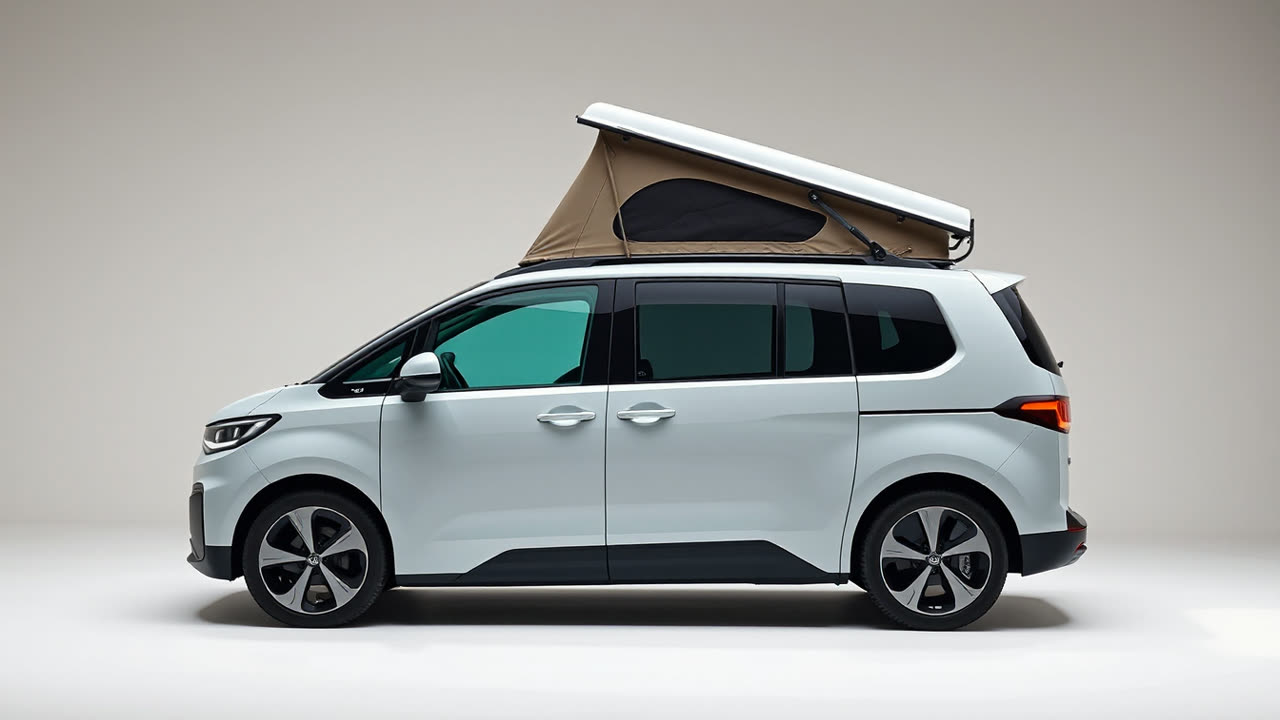
Volkswagen has officially unveiled the ID. California Cruise, marking its inaugural fully electric camper van and a pivotal moment for both the iconic California lineage and the burgeoning electric vehicle (EV) leisure market. Based on the acclaimed ID. Buzz platform, this new model directly addresses the growing demand for sustainable travel solutions, integrating a bed, window blinds, and comprehensive camping gear within its retro-futuristic design. This move is not merely an expansion of Volkswagen's ID. family but a strategic reinterpretation of the beloved California concept for the electric age, aiming to capture a new generation of eco-conscious adventurers.
The ID. California Cruise leverages the modular MEB platform, shared with the ID. Buzz, offering inherent advantages in packaging and interior space. While specific battery capacities and range figures for the California Cruise variant are yet to be fully detailed, it is expected to draw upon the ID. Buzz's powertrain options, which include a 77 kWh (net) battery providing an estimated range of up to 258 miles (415 km) in the passenger version. For a camper, however, auxiliary power draw for appliances will significantly impact real-world range, a critical consideration for extended off-grid travel. The integration of a pop-top roof, a hallmark of California models, is anticipated, providing crucial standing room and an additional sleeping area, thereby maximizing the usable interior volume of the ID. Buzz's relatively compact footprint. Furthermore, the vehicle is expected to feature a compact kitchen unit, storage solutions, and potentially an integrated solar charging system to mitigate range anxiety and support onboard utilities.
This electric iteration of the California is a significant departure from its internal combustion engine (ICE) predecessors, such as the Grand California and the T6.1 California. Those models, built on the Crafter and Transporter platforms respectively, offered established range and refueling infrastructure, albeit with higher emissions and operating costs. The ID. California Cruise, by contrast, promises zero tailpipe emissions and a quieter, smoother driving experience, aligning with environmental mandates and the preferences of a demographic increasingly prioritizing sustainability. However, it faces the inherent challenges of EV infrastructure, particularly in remote camping locations where charging stations remain sparse. This necessitates careful route planning and potentially a reliance on slower AC charging options at campsites.
The impact on users will be profound. For existing California owners, the ID. California Cruise represents an opportunity to transition to an EV without sacrificing the familiar versatility and robust design associated with the brand. New buyers, especially younger demographics and those drawn to the ID. Buzz's aesthetic, will find an appealing, environmentally friendly option that combines daily drivability with weekend adventure capabilities. The quieter operation of an EV camper enhances the immersive experience of nature, reducing noise pollution at campsites and during travel. However, the initial purchase price, which is likely to be at a premium compared to ICE equivalents due to battery technology costs, could be a barrier for some. Volkswagen's ability to offer competitive pricing and attractive financing will be crucial for widespread adoption.
Within the industry, the ID. California Cruise sets a new benchmark for mainstream electric camper vans. While several smaller startups and conversion companies have offered EV camper solutions based on vans like the Mercedes-Benz eVito or the Ford e-Transit, Volkswagen's entry brings significant brand recognition and manufacturing scale to the segment. This move will likely galvanize other major automotive manufacturers, potentially accelerating the development and release of rival electric camper models. The competition will increasingly focus not just on range and price, but on smart energy management systems, integrated renewable energy sources (like advanced solar panels), and innovative interior layouts that maximize space and utility within an electric platform.
Looking ahead, Volkswagen is poised to further integrate its EV technology across its commercial and leisure vehicle lines. Future iterations of the ID. California Cruise could see advancements in battery density, allowing for greater range or more compact battery packaging, freeing up interior space. The development of a robust charging network specifically tailored for larger vehicles and recreational vehicles will be critical, perhaps involving partnerships with campground operators to install high-speed chargers. Furthermore, Volkswagen might explore different sizes and configurations, potentially an "ID. Grand California" based on a larger electric platform, offering more extensive amenities and greater living space for longer trips. The success of the ID. California Cruise will not only validate Volkswagen's commitment to electric mobility in a niche but significant market but also provide invaluable data and insights for the broader evolution of electric recreational vehicles globally.