Volkswagen Unveils ID. ERA 5X SUV, Signaling Major Shift to Cost-Effective EV Strategy
The ID. ERA 5X is the first model on Volkswagen's new Compact Main Platform (CMP), designed to democratize electric mobility through significant cost reductions and aggressive market competition.
✨ This content was summarized and interpreted by AI; it may contain errors — please verify accuracy with the original sources. Learn more
Listen to this story
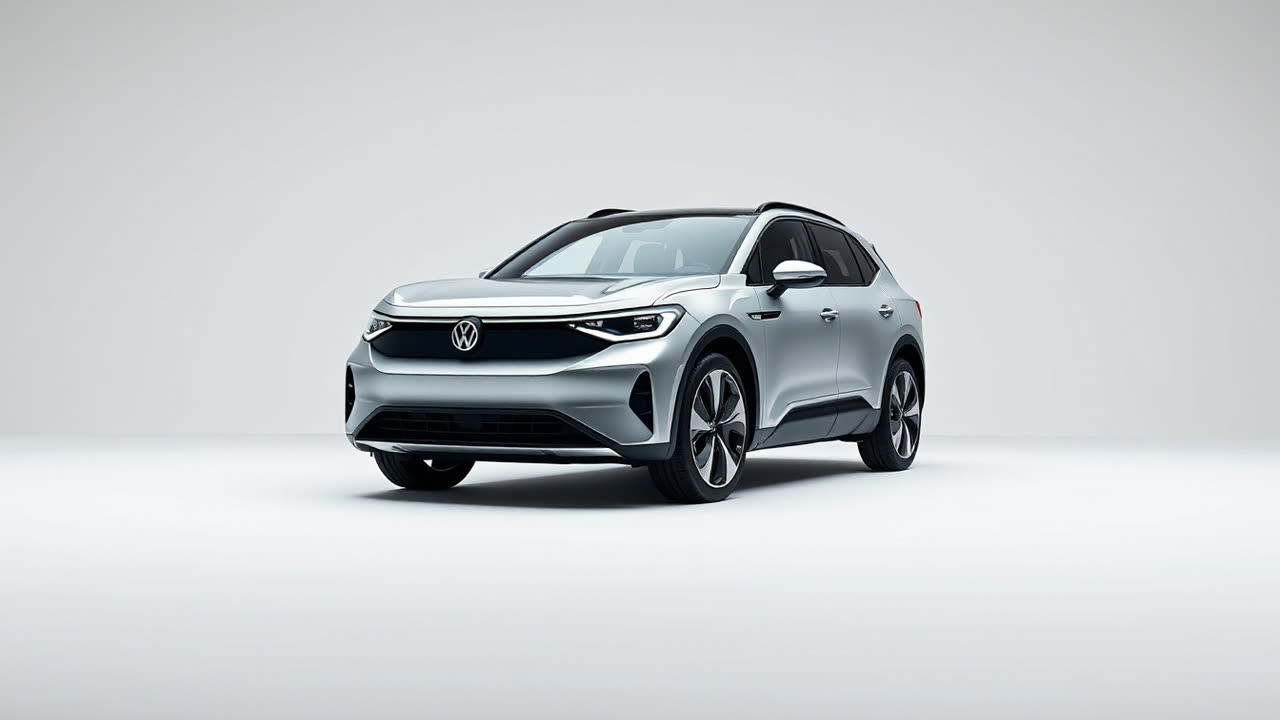
Volkswagen’s newly revealed ID. ERA 5X SUV, unveiled through a recent filing with China’s Ministry of Industry and Information Technology (MIIT), marks a pivotal moment, signaling the brand's definitive shift into a more cost-effective and scalable electric vehicle strategy. This compact battery-electric vehicle (BEV) is not just another addition to the burgeoning EV market; it is the inaugural model built on Volkswagen’s new Compact Main Platform (CMP), a foundational architecture designed to underpin a new generation of more accessible electric vehicles globally. The MIIT filing, a standard precursor to market introduction in China, details a vehicle poised to challenge the status quo in the competitive compact SUV segment, emphasizing efficiency and localized production.
The significance of the ID. ERA 5X and its CMP foundation extends far beyond its immediate specifications. For users, the CMP platform promises to democratize electric mobility by driving down production costs, translating into more competitive pricing without sacrificing essential features or safety standards. This strategic pivot directly addresses one of the primary barriers to broader EV adoption: upfront cost. Unlike the premium positioning often associated with early BEVs, the ID. ERA 5X is expected to target a segment where affordability and value are paramount, potentially opening up EV ownership to a much wider demographic, particularly in high-volume markets like China and eventually other emerging economies. The design language, while distinctly VW ID. family, appears optimized for interior space and urban maneuverability, crucial attributes for its target audience. Early indications from the MIIT filing suggest a focus on practical range and robust, reliable electric powertrains, rather than chasing segment-leading performance figures, aligning with its role as a mainstream offering.
From an industry perspective, the CMP represents Volkswagen’s most direct response yet to the aggressive pricing and rapid innovation demonstrated by Chinese domestic EV manufacturers such as BYD, Nio, and XPeng, which have increasingly captured market share in the world’s largest EV market. The previous Modular Electric Drive Matrix (MEB) platform, while successful in launching models like the ID.3 and ID.4, was initially conceived with a broader, more premium global scope. The CMP, conversely, appears purpose-built for cost optimization through simplified manufacturing processes, greater component commonality, and potentially higher localization rates in key production hubs. This platform shift is critical for Volkswagen to regain traction and profitability in segments where margins are tighter and competition fiercer. Analysts suggest that by streamlining the supply chain and manufacturing complexity, the CMP could achieve cost reductions upwards of 20-30% per vehicle compared to early MEB models, a monumental leap in efficiency. This move also allows Volkswagen to maintain technological relevance while competing on price, a balance that has proven challenging for legacy automakers in the EV transition.
Comparing the ID. ERA 5X to its predecessors and rivals, it positions itself distinctly. While models like the ID.4 offered a compelling package, they often faced scrutiny over pricing relative to equally capable or more feature-rich local competitors in markets like China. The ID. ERA 5X, built on the CMP, is expected to directly compete with popular compact electric SUVs such as BYD's Yuan Plus (also known as Atto 3) and models from Geely or Chery, which dominate the sub-200,000 RMB (approximately $27,500 USD) segment in China. Its architecture is likely designed for more flexible battery configurations and potentially supports a wider range of motor options tailored for different market needs, contrasting with the somewhat more standardized approach of the MEB. This flexibility will be key in adapting to diverse regulatory environments and consumer preferences across various regions.
Looking ahead, the ID. ERA 5X is merely the vanguard of a broader CMP-based offensive. Volkswagen is expected to rapidly expand its CMP portfolio, introducing multiple body styles including sedans, hatchbacks, and possibly even smaller city cars, all leveraging the shared architecture to achieve economies of scale. This strategy mirrors the highly successful modular platform approaches seen in internal combustion engine vehicles, adapted for the electric age. The success of the CMP will dictate Volkswagen’s ability to not only maintain but potentially expand its global market share in the face of relentless competition. Furthermore, the lessons learned from the CMP’s development and deployment, particularly in cost reduction and localized supply chains, will undoubtedly inform Volkswagen’s future larger-scale platforms, potentially influencing the design of next-generation MEB or even more advanced architectures. The ID. ERA 5X doesn't just represent a new model; it embodies Volkswagen's pragmatic and aggressive commitment to making electric vehicles a viable and attractive option for the masses, fundamentally reshaping its competitive stance in the global EV landscape.